
Unable to find what you're searching for?
We're here to help you find itBuild automated approval systems, design event-driven processes, and implement state persistence using SAP Workflow, Nintex, and BPMN. Koenig delivers hands-on labs and official training by certified instructors to prepare for SAP and Nintex certification exams.


500K+ certified professionals



























Explore Workflows certification and training courses — delivered live by certified instructors.
Workflows is a fully managed serverless orchestration platform by Google Cloud that automates and coordinates the execution of services in a defined sequence, solving complex integration and process automation challenges. It sits within Google Cloud’s application development and integration suite, enabling reliable, scalable execution of business, operational, and technical processes without infrastructure management. Key components include Workflows for defining step-by-step processes using YAML or JSON, HTTP calls to connect with Cloud Run, Cloud Vision AI, BigQuery, and external APIs, Connectors for simplified integration with Google Cloud services, Subworkflows to encapsulate reusable logic, and Error handling with retries and custom exception management. Additional capabilities include Parallel steps for concurrent execution, Conditions and Loops for control flow, and Callbacks or Sleep steps to wait for external events or time-based triggers. Workflows is designed for developers, cloud architects, and automation engineers who need to coordinate distributed services, streamline business processes, or build resilient, event-driven applications on Google Cloud.
Google Cloud Workflows Syntax
Learner must have experience writing Google Cloud Workflows definitions using YAML or JSON syntax.
Google Cloud CLI Access
Learner must have active CLI access to a Google Cloud project and familiarity with the gcloud SDK for deploying Workflows.
Conditional Logic
Learner must have experience implementing switch blocks for conditional branching within Google Cloud Workflows.
Iteration Control
Learner must have experience using for loops to iterate over data collections in Google Cloud Workflows.
Parallel Execution
Learner must have experience configuring parallel steps for concurrent operations in Google Cloud Workflows.
Subworkflows
Learner must have experience creating and invoking subworkflows with parameters and results in Google Cloud Workflows.
The building blocks every Workflows solution is made of
See what your official Workflows certification looks like. Download a sample — then let our advisors map the fastest path to earning the real one.
 IBM-BAW-V20IBM: Business Automation Workflow v20.0.0.x Developer
SN-FLOW-DESIGNERServiceNow: Flow Designer Micro-Certification
SF-FLOW-BUILDERSalesforce: Flow Builder Specialist
Official credential badges — shareable on LinkedIn
IBM-BAW-V20IBM: Business Automation Workflow v20.0.0.x Developer
SN-FLOW-DESIGNERServiceNow: Flow Designer Micro-Certification
SF-FLOW-BUILDERSalesforce: Flow Builder Specialist
Official credential badges — shareable on LinkedIn
Four formats. One quality standard. Every option comes with the same expert instructors, official courseware, and money-back guarantee.
Every factor that determines whether you actually pass your Workflows exam — rated across every training format available.
| Criteria | Koenig | ALP Provider | Legacy Provider | Self-Paced Platform | Free Platform |
|---|---|---|---|---|---|
| Trainer Quality & Credentials | |||||
| MCT-Certified Trainers | ✘ | ✘ | ✘ | ||
| Live Instructor-Led | ✘ | ✘ | |||
| 1-on-1 Private Training | Partial | ✘ | ✘ | ✘ | |
| Okta Authorization | |||||
| Official Okta ALP Status | ✘ | ✘ | ✘ | ||
| Okta Official Courseware | ✘ | ✘ | |||
| Training Units Accepted | ✘ | ✘ | ✘ | ||
| Flexibility & Access | |||||
| Any-Day/Flexi Start | ✘ | ✘ | |||
| On-Site/Fly-Me Trainer | Partial | ✘ | ✘ | ✘ | |
| Global Delivery Reach | Partial | ✘ | |||
| Results & Trust | |||||
| Entry Price | ~$1,850 | ~$1,850+ | N/A | $15-30/mo | Free |
| Verified Reviews | 18,400+ · 4.9★ | Limited | Limited | Limited | Limited |
Data sourced from public pricing pages and review platforms. Accurate as of March 2026. Partial = available in select regions only.
Verified reviews from learners certified on Azure, AI, Security, and more.
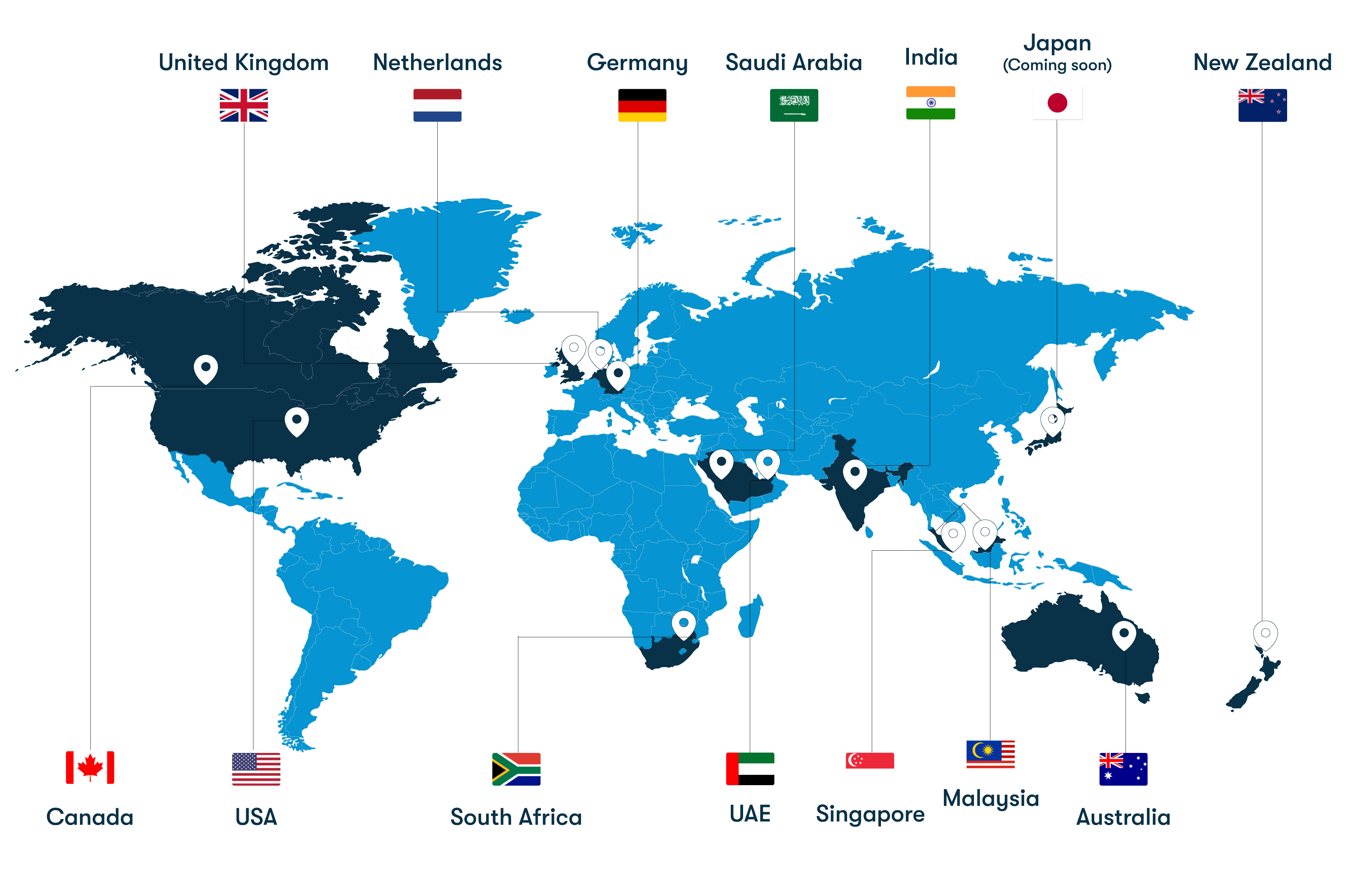
From our headquarters in India to training centers across UAE, Iraq, Saudi Arabia, UK, USA, Singapore, Australia, and more — Koenig delivers Microsoft certification training in 50+ countries.