
Unable to find what you're searching for?
We're here to help you find itCollect, analyze, and visualize telemetry data using Elastic Observability, OpenTelemetry Collector, and Google Cloud Monitoring to diagnose system issues and optimize performance. Koenig delivers hands-on training with official labs and real-world scenarios, preparing learners for the Elastic Certified Observability Engineer and OpenTelemetry Certified Associate certifications.


500K+ certified professionals



























Explore Observability certification and training courses — delivered live by certified instructors.
Observability is the ability to assess the internal state of a complex system based on its external outputs—specifically logs, metrics, and traces—enabling rapid diagnosis of performance issues without prior knowledge of the system's internals. Published as a core practice in modern IT operations, it solves the challenge of monitoring distributed, cloud-native environments where traditional monitoring falls short. Within the technology stack, observability sits at the intersection of development, operations, and security, providing a unified view across services. The foundation of observability rests on three primary components: logs, which are time-stamped records of discrete events; metrics, which are numerical measurements of system performance over time; and traces, which track the end-to-end journey of requests across distributed services. Additional tools like the OpenTelemetry Collector standardize telemetry ingestion, while backends such as Jaeger and Grafana Tempo enable trace storage and visualization. These components work together to correlate data and reveal system behavior. Observability is for site reliability engineers, DevOps teams, and platform engineers who need to troubleshoot complex, dynamic systems efficiently. By providing contextual, correlated insights across logs, metrics, and traces, it enables these practitioners to identify root causes faster, reduce mean time to resolution, and maintain system reliability in high-velocity environments.
Telemetry Fundamentals
Explain metrics, logs, and traces in distributed systems
OpenTelemetry Skills
Instrument applications using OpenTelemetry SDK and OTLP
Docker Operations
Run and manage containers using Docker and Compose
Kubernetes Knowledge
Deploy workloads and manage resources in Kubernetes clusters
YAML/JSON Proficiency
Write and edit configuration files for observability tools
Linux Command Line
Navigate filesystems and execute commands in Linux environments
The building blocks every Observability solution is made of
See what your official Observability certification looks like. Download a sample — then let our advisors map the fastest path to earning the real one.
 NVFNew Relic Verified Foundation
APAAPM Practitioner - Associate
PEPPerformance Engineer - Professional
REPReliability Engineer - Professional
Elastic Certified Observability EngineerElastic Certified Observability Engineer
Observability FoundationObservability Foundation
Official credential badges — shareable on LinkedIn
NVFNew Relic Verified Foundation
APAAPM Practitioner - Associate
PEPPerformance Engineer - Professional
REPReliability Engineer - Professional
Elastic Certified Observability EngineerElastic Certified Observability Engineer
Observability FoundationObservability Foundation
Official credential badges — shareable on LinkedIn
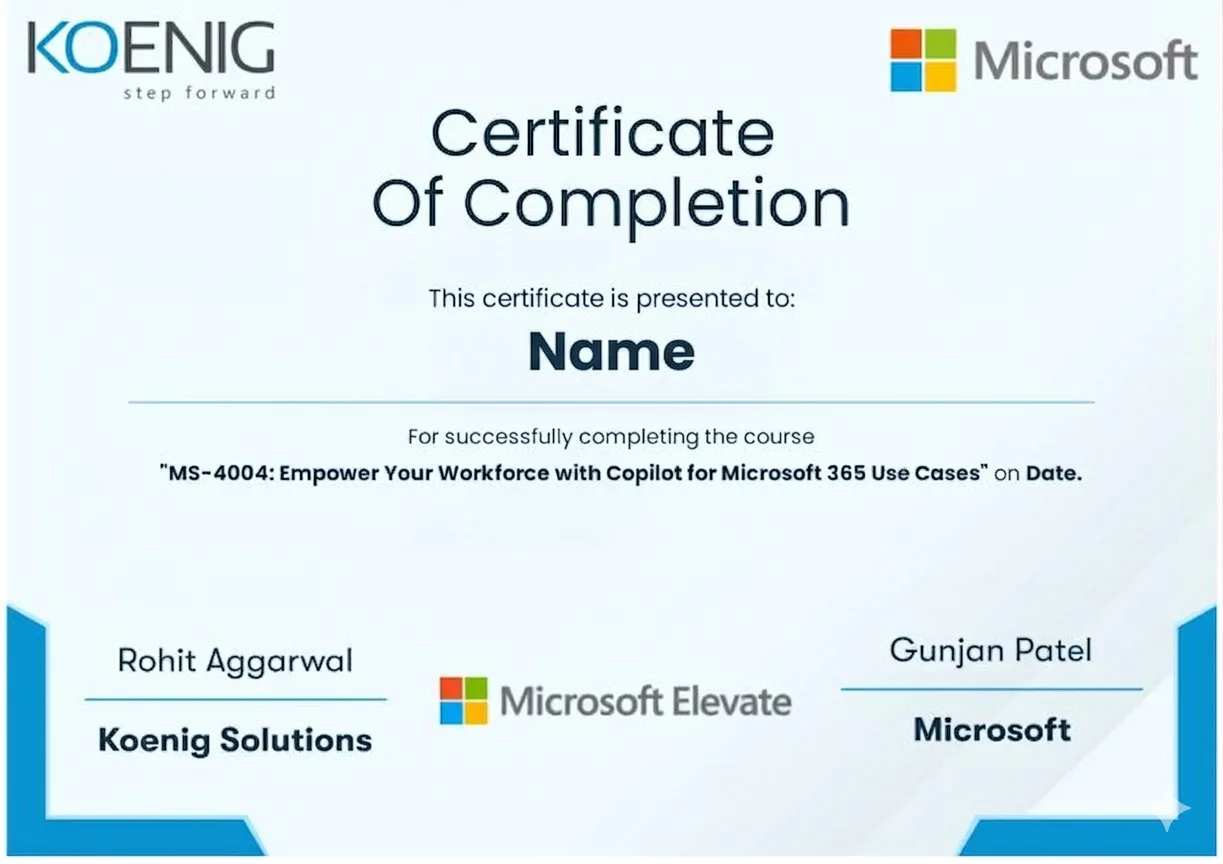
Four formats. One quality standard. Every option comes with the same expert instructors, official courseware, and money-back guarantee.
Every factor that determines whether you actually pass your Observability exam — rated across every training format available.
| Criteria | Koenig | ALP Provider | Legacy Provider | Self-Paced Platform | Free Platform |
|---|---|---|---|---|---|
| Trainer Quality | |||||
| Accredited Instructors | ✖ | ✖ | ✖ | ||
| Live Instructor-Led | ✖ | ✖ | ✖ | ||
| 1-on-1 Private Training | Partial | ✖ | ✖ | ✖ | |
| DevOps Institute | |||||
| Official ALP Status | ✖ | ✖ | |||
| Official Courseware | Partial | ✖ | |||
| Training Credits Accepted | ✖ | ✖ | ✖ | ✖ | |
| Flexibility & Access | |||||
| Hands-on Labs/Sandbox Environment | ✖ | ✖ | ✖ | ||
| Any-Day/Flexi Start | ✖ | ✖ | |||
| On-Site Delivery | Partial | ✖ | ✖ | ✖ | |
| Results & Trust | |||||
| Exam Pass Rate | Partial | ✖ | ✖ | ✖ | |
| Total Cost of Certification | $745 | $1,500+ | $150/yr | $0 | $0 |
| Verified Reviews | 18,400+ · 4.9★ | Limited | N/A | N/A | N/A |
Data sourced from public pricing pages and review platforms. Accurate as of March 2026. Partial = available in select regions only.
Verified reviews from learners certified on Azure, AI, Security, and more.
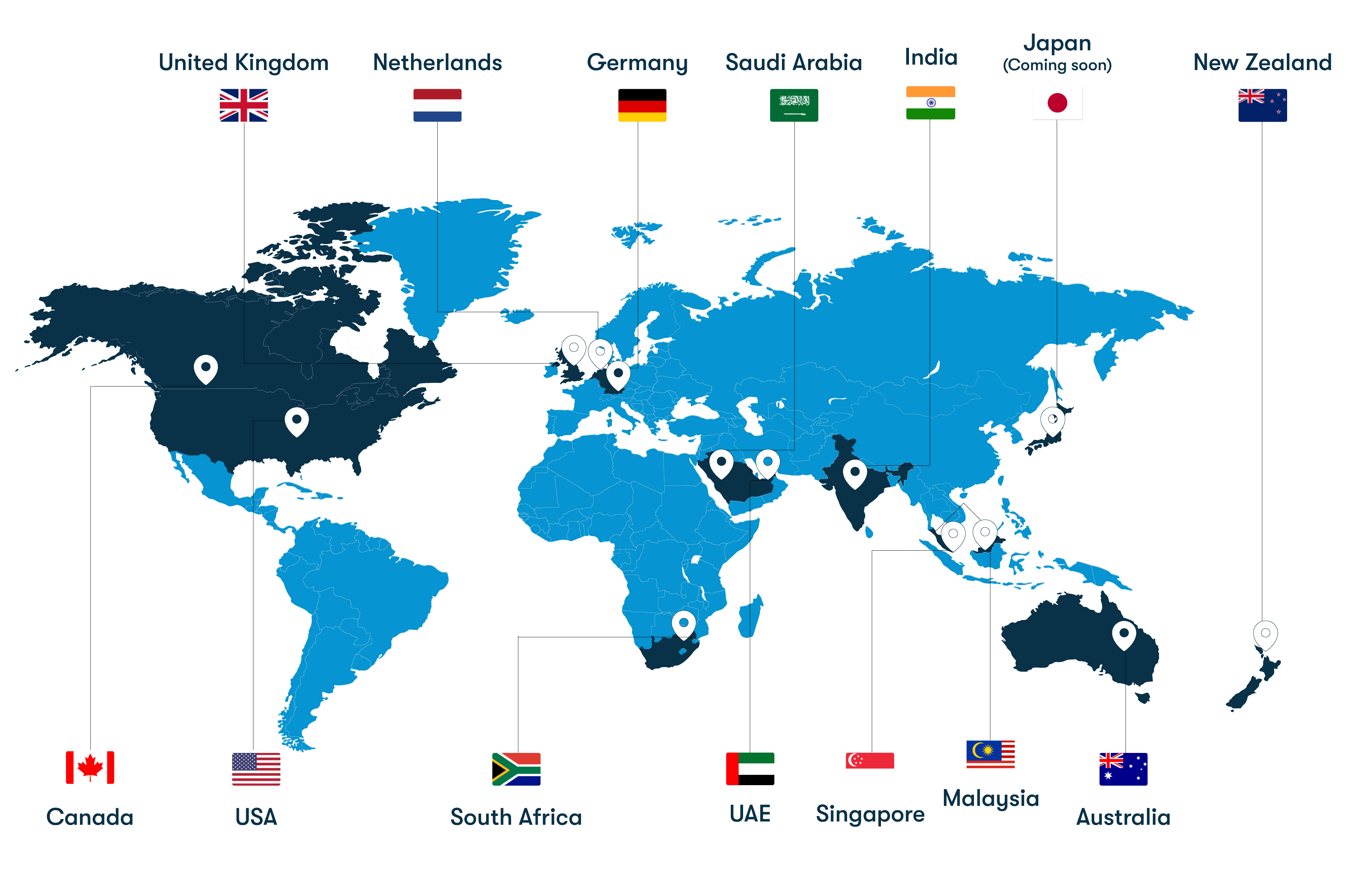
From our headquarters in India to training centers across UAE, Iraq, Saudi Arabia, UK, USA, Singapore, Australia, and more — Koenig delivers Microsoft certification training in 50+ countries.