
Unable to find what you're searching for?
We're here to help you find itMaster multicloud architectures and secure hybrid environments with Koenig. Gain hands-on expertise to earn your Oracle Cloud Infrastructure 2025 Multicloud Architect Professional certification.


500K+ certified professionals



























Explore Multi-Cloud Management certification and training courses — delivered live by certified instructors.
Multi-Cloud Management is a standardized approach defined by the International Telecommunication Union (ITU-T Y.3537) for managing cloud services from multiple independent providers as a unified, composed service, solving the complexity of fragmented cloud environments. It operates as a coordination layer within cloud computing architectures, enabling single-point control across heterogeneous public cloud platforms. The technology comprises six logical components: Service Discovery identifies and provisions optimal cloud services from provider catalogues; Access Management coordinates identities and security credentials across providers; Service Management composes and controls provisioned services to meet SLAs; Connectivity Management establishes network and data connectivity such as VPNs and load balancing across services; Monitoring and Reporting aggregates performance and usage data from multiple providers; and Policy Management governs cost, compliance, and automation policies across the multi-cloud environment. This technology is for cloud architects, IT operations managers, and enterprise infrastructure teams responsible for integrating and governing cloud services across multiple providers, as it enables unified control, consistent policy enforcement, and operational efficiency without vendor lock-in.
Cloud Core Concepts
Understand compute, storage, networking and identity across public clouds
Multi-Cloud Networking
Configure VPCs, VNets, peering and secure connectivity between clouds
Identity Management
Implement federated identity and role-based access across providers
Infrastructure as Code
Use Terraform or equivalent to automate multi-cloud deployments
Security Governance
Apply consistent policies for compliance, encryption and threat protection
Operations Monitoring
Deploy centralized logging, monitoring and cost management tools
The building blocks every Multi-Cloud Management solution is made of
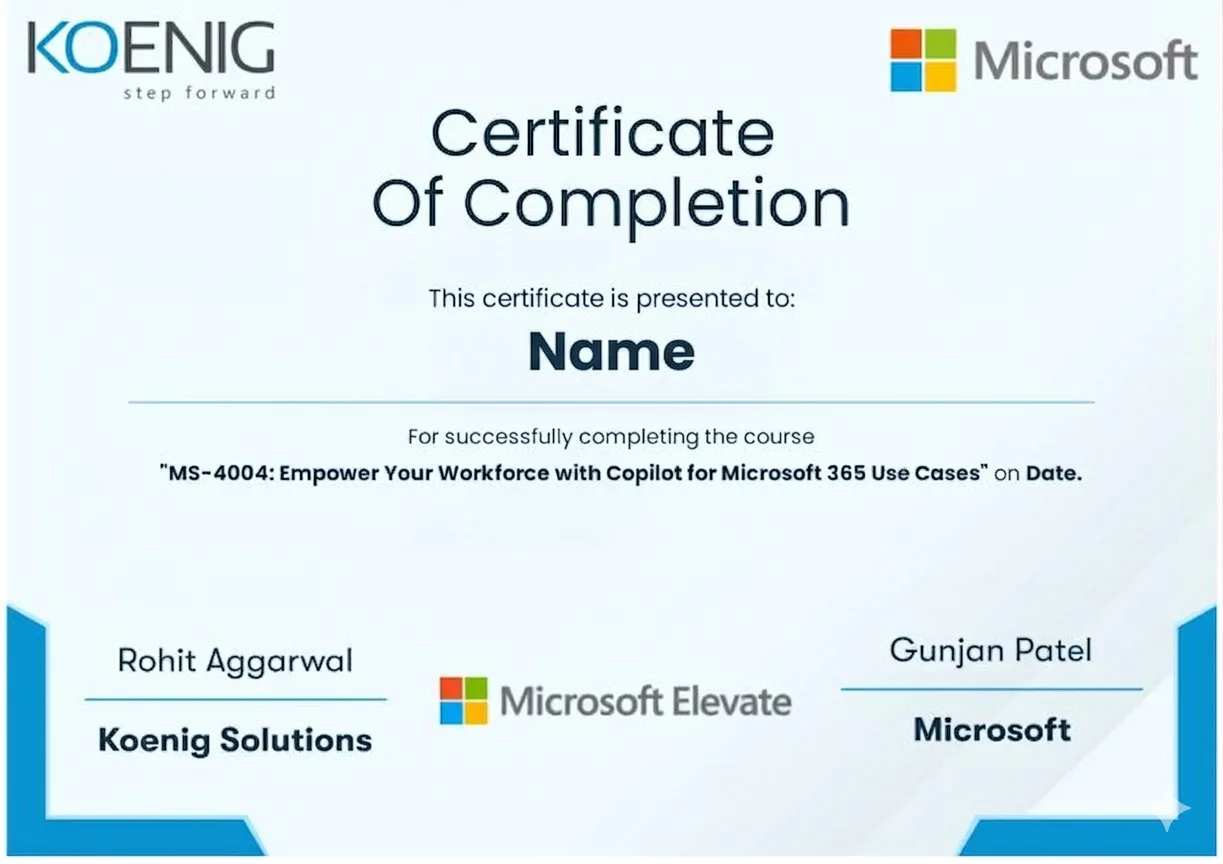
See what your official Multi-Cloud Management certification looks like. Download a sample — then let our advisors map the fastest path to earning the real one.
 CV0-004CompTIA Cloud+ (CompTIA)
SAA-C03AWS Certified Solutions Architect (Amazon Web Services)
AZ-305Azure Solutions Architect Expert (Microsoft)
NCP-MCI 7.5Multicloud Infrastructure (Nutanix)
EX480Red Hat Certified Specialist in Multi-cluster Management (Red Hat)
2V0-33.22VMware Cloud Professional (VMware)
Official credential badges — shareable on LinkedIn
CV0-004CompTIA Cloud+ (CompTIA)
SAA-C03AWS Certified Solutions Architect (Amazon Web Services)
AZ-305Azure Solutions Architect Expert (Microsoft)
NCP-MCI 7.5Multicloud Infrastructure (Nutanix)
EX480Red Hat Certified Specialist in Multi-cluster Management (Red Hat)
2V0-33.22VMware Cloud Professional (VMware)
Official credential badges — shareable on LinkedIn
Four formats. One quality standard. Every option comes with the same expert instructors, official courseware, and money-back guarantee.
Every factor that determines whether you actually pass your Multi-Cloud Management exam — rated across every training format available.
| Criteria | Koenig | ALP Provider | Legacy Provider | Self-Paced Platform | Free Platform |
|---|---|---|---|---|---|
| Instructor Expertise | |||||
| Oracle Authorized Instructors | ✘ | ✘ | ✘ | ||
| Live Instructor-Led Delivery | Partial | ✘ | ✘ | ||
| 1-on-1 Private Training | ✘ | ✘ | ✘ | ✘ | |
| Oracle Partner Authorization | |||||
| Official Oracle ALP Status | ✘ | ✘ | ✘ | ||
| Oracle Official Courseware | Partial | ||||
| Oracle Training Credits Accepted | ✘ | ✘ | ✘ | ||
| Delivery Flexibility | |||||
| Any-Day/Flexi Start | ✘ | ✘ | |||
| On-Site or Fly-Me Trainer | ✘ | Partial | ✘ | ✘ | |
| Global Delivery Reach | Partial | Partial | |||
| Performance & Trust | |||||
| Exam Pass Rate | 95% | N/A | N/A | N/A | N/A |
| Entry Price (Fundamentals) | ~$745 · best value | ~$1,500+ | $15-30/mo | Free | Free |
| Verified Learner Reviews | 18,400+ · 4.9★ | Limited | N/A | N/A | N/A |
Data sourced from public pricing pages and review platforms. Accurate as of March 2026. Partial = available in select regions only.
Verified reviews from learners certified on Azure, AI, Security, and more.
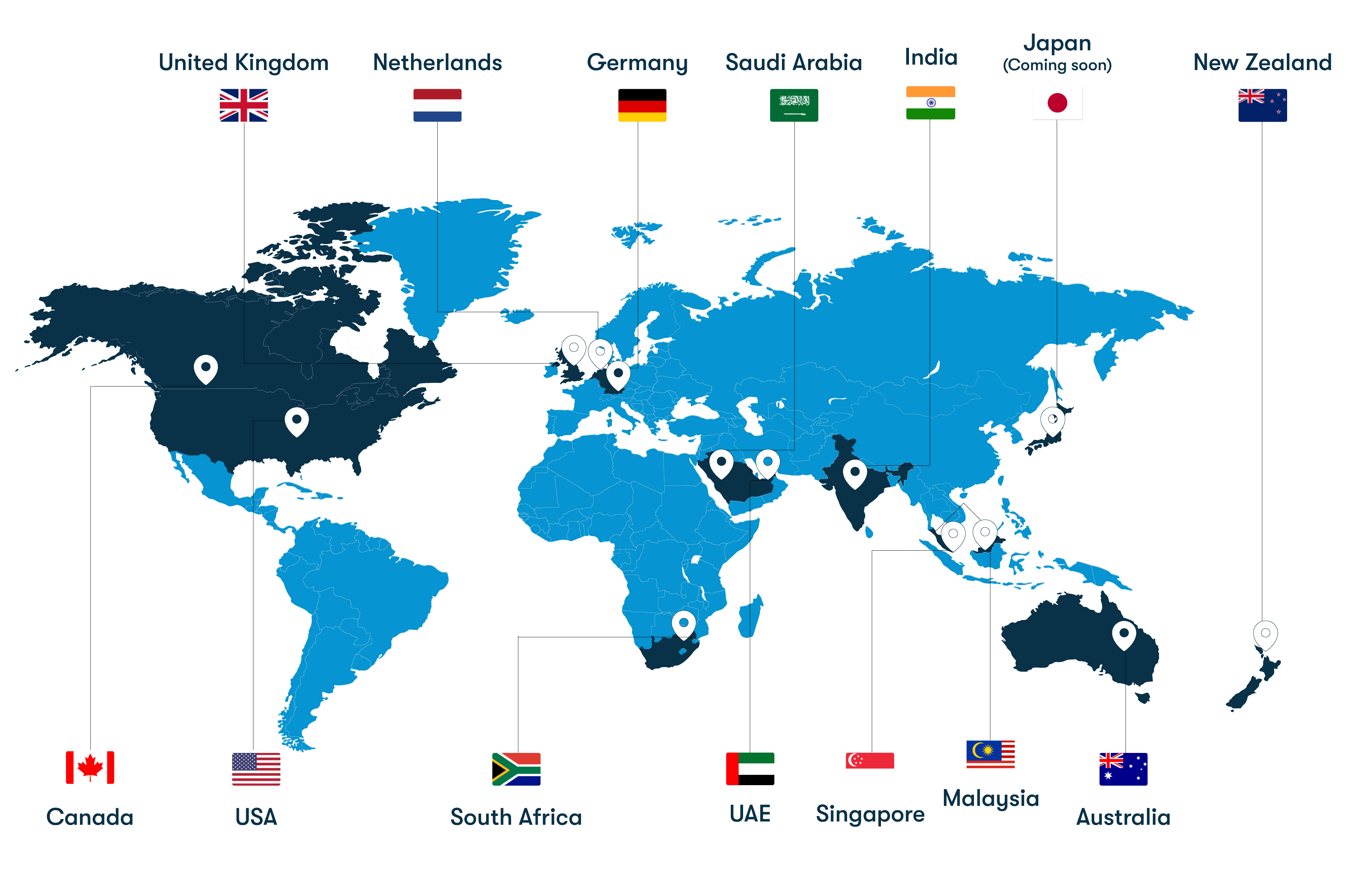
From our headquarters in India to training centers across UAE, Iraq, Saudi Arabia, UK, USA, Singapore, Australia, and more — Koenig delivers Microsoft certification training in 50+ countries.