
Unable to find what you're searching for?
We're here to help you find itMaster ITIL 4 Service Desk practices with Koenig to resolve incidents, manage requests, and earn your ITIL 4 Practitioner: Service Desk certification.
500K+ certified professionals
























Explore IT Service Desk certification and training courses — delivered live by certified instructors.
IT Service Desk is a centralized support function that serves as the single point of contact (SPOC) between IT organizations and users, managing service requests, incidents, and operational issues. Published as part of the IT Infrastructure Library (ITIL) framework, it solves the challenge of fragmented IT support by standardizing communication, resolution processes, and service delivery. It sits at the core of IT Service Management (ITSM), integrating with broader organizational systems to ensure consistent, measurable, and user-focused IT operations. Key components include Incident Management, which restores normal service quickly after disruptions; Problem Management, focused on identifying root causes to prevent recurrence; Change Management, ensuring controlled implementation of IT changes; Configuration Management Database (CMDB), maintaining an authoritative inventory of IT assets and dependencies; Service Level Management, defining and tracking performance against agreed service levels; Knowledge Management, capturing and sharing solutions to improve efficiency; and Self-Service Portals, enabling users to resolve common issues independently. This technology is for IT support analysts, service desk managers, and ITSM practitioners who are responsible for maintaining system availability, meeting service level agreements, and improving end-user satisfaction through structured, repeatable processes.
ITIL 4 Foundation
Hold ITIL 4 Foundation or equivalent prior certification
Incident Management
Resolve unplanned service interruptions using standardized workflows
Service Desk Tools
Use ITSM platforms for ticketing, knowledge base, and remote support
Security Principles
Apply confidentiality, integrity, and availability in support operations
Service Request Handling
Process user-initiated service actions per defined procedures
Change Lifecycle
Support normal, standard, and emergency change processes
The building blocks every IT Service Desk solution is made of
See what your official IT Service Desk certification looks like. Download a sample — then let our advisors map the fastest path to earning the real one.
 ITIL4FNDFoundation
ITIL4PSDService Desk
ITIL4MSFMonitor, Support and Fulfil
ITIL4CDSCreate, Deliver and Support
ITIL4DSVDrive Stakeholder Value
ITIL4MPTManaging Professional Transition
Official credential badges — shareable on LinkedIn
ITIL4FNDFoundation
ITIL4PSDService Desk
ITIL4MSFMonitor, Support and Fulfil
ITIL4CDSCreate, Deliver and Support
ITIL4DSVDrive Stakeholder Value
ITIL4MPTManaging Professional Transition
Official credential badges — shareable on LinkedIn
Four formats. One quality standard. Every option comes with the same expert instructors, official courseware, and money-back guarantee.
Every factor that determines whether you actually pass your IT Service Desk exam — rated across every training format available.
| Criteria | Koenig | Free Platform | Self-Paced Platform | Mass Market Elearning | Traditional Classroom |
|---|---|---|---|---|---|
| Trainer Expertise & Delivery | |||||
| SDI-Certified Trainers | ✖ | ✖ | ✖ | ||
| Live Instructor-Led Training | ✖ | ✖ | |||
| 1-on-1 Personalized Coaching | ✖ | ✖ | Partial | ✖ | |
| SDI Authorization Standards | |||||
| Official SDI ALP Status | ✖ | ✖ | |||
| Official SDI Courseware | ✖ | ✖ | |||
| PeopleCert Exam Access | Partial | Partial | ✖ | ||
| Flexibility & Global Reach | |||||
| Any-Day/Flexi Start Dates | ✖ | ✖ | |||
| On-Site/Custom Training | ✖ | ✖ | Partial | ✖ | |
| Global Delivery Reach | ✖ | ||||
| Results & Proven Trust | |||||
| Exam Pass Rate | 94% | N/A | 68% | N/A | N/A |
| Entry Price (Fundamentals) | ~$1,150 | Free | $645-695 | ~$1,395+ | ~$1,495 |
| Verified Learner Reviews | 18,400+ · 4.9★ | N/A | Limited | Limited | Limited |
Data sourced from public pricing pages and review platforms. Accurate as of March 2026. Partial = available in select regions only.
Verified reviews from learners certified on Azure, AI, Security, and more.
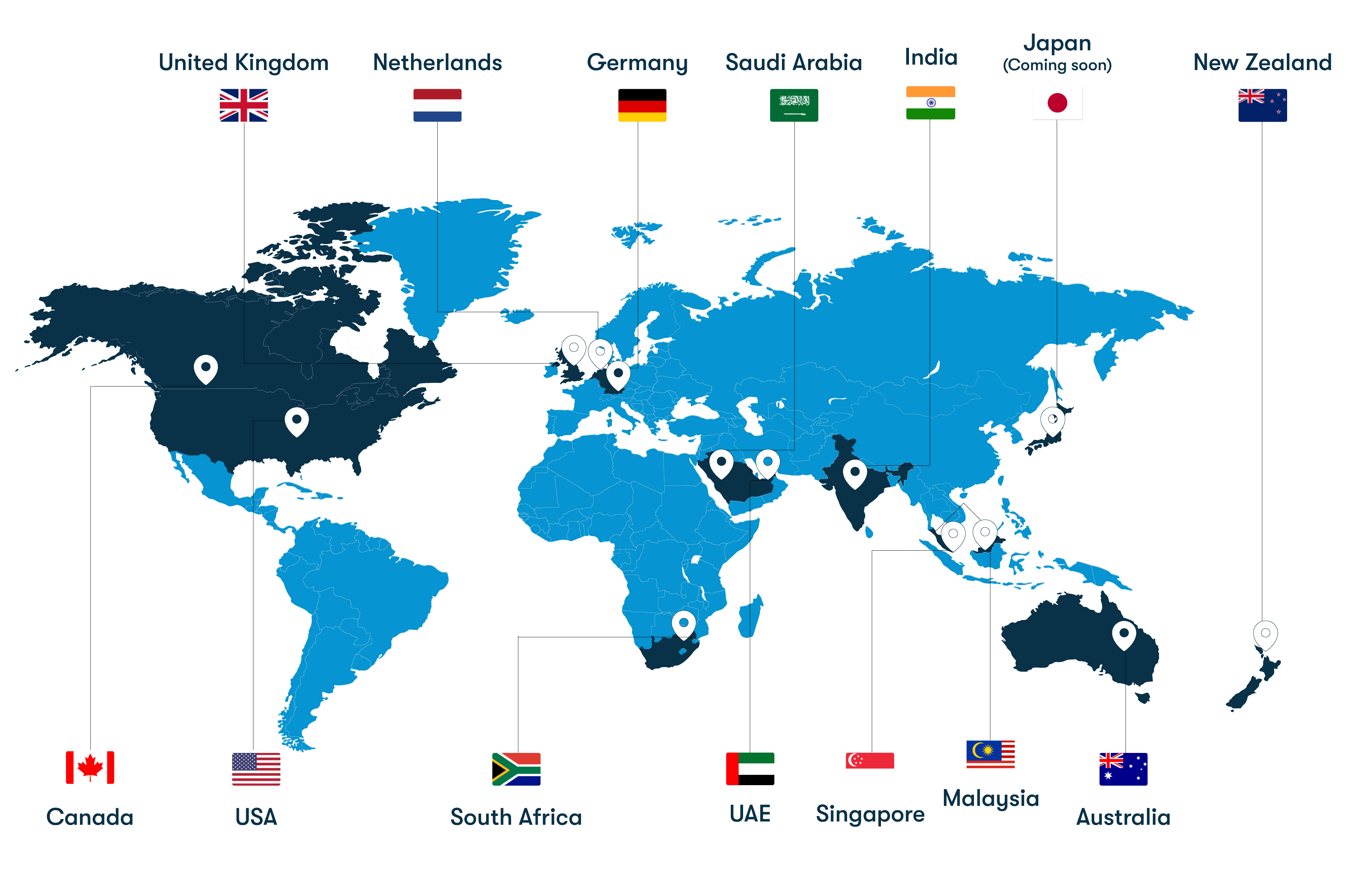
From our headquarters in India to training centers across UAE, Iraq, Saudi Arabia, UK, USA, Singapore, Australia, and more — Koenig delivers Microsoft certification training in 195+ countries.