
Unable to find what you're searching for?
We're here to help you find itVendor: Cisco Master network threat detection using Cisco Secure Firewall. Learn Snort rule writing and policy configuration through hands-on training for the Cisco Certified Specialist certification.


500K+ certified professionals



























Explore Intrusion Detection System certification and training courses — delivered live by certified instructors.
An Intrusion Detection System (IDS) is a security technology designed to monitor network or system activities for malicious actions or policy violations, as defined by the National Institute of Standards and Technology (NIST). It identifies potential security incidents by analyzing traffic and system behavior, logging pertinent data, and alerting administrators. IDS functions as a core component within broader cybersecurity architectures, often integrated alongside firewalls and security information and event management (SIEM) systems. The system comprises several key components: Sensors that monitor network traffic for suspicious activity, Agents installed on hosts to detect anomalies at the endpoint level, Analyzers that process and assess collected data for threats, and Management Servers that coordinate multiple sensors or agents. Additional elements include Database Servers for storing event logs and Consoles that provide administrative interfaces for monitoring, configuration, and reporting. This technology is intended for cybersecurity professionals, network administrators, and security operations center (SOC) analysts who are responsible for identifying, investigating, and responding to potential threats within enterprise environments.
TCP/IP Fundamentals
Understand TCP/IP model, IP addressing, and core protocols like TCP, UDP, and ICMP
Network Traffic Analysis
Analyze packet captures using tools like Wireshark and tcpdump for behavioral patterns
IDS Technologies
Configure and monitor open-source IDS platforms such as Snort and Zeek
Application Protocols
Dissect and interpret HTTP, DNS, SMTP, and other common application layer protocols
Log Source Integration
Correlate data from firewall, proxy, DNS, and Windows event logs for threat detection
Intrusion Detection Rules
Write and tune IDS rules to identify malicious network activity and evasion techniques
The building blocks every Intrusion Detection System solution is made of
See what your official Intrusion Detection System certification looks like. Download a sample — then let our advisors map the fastest path to earning the real one.
 GCIAGIAC Certified Intrusion Analyst (Issuer: GIAC)
CS0-003CompTIA CySA+ (Issuer: CompTIA)
CBROPSCisco Certified CyberOps Associate (Issuer: Cisco)
GCIHGIAC Certified Incident Handler (Issuer: GIAC)
GCEDGIAC Certified Enterprise Defender (Issuer: GIAC)
GCIHGIAC Certified Incident Handler (Issuer: GIAC)
Official credential badges — shareable on LinkedIn
GCIAGIAC Certified Intrusion Analyst (Issuer: GIAC)
CS0-003CompTIA CySA+ (Issuer: CompTIA)
CBROPSCisco Certified CyberOps Associate (Issuer: Cisco)
GCIHGIAC Certified Incident Handler (Issuer: GIAC)
GCEDGIAC Certified Enterprise Defender (Issuer: GIAC)
GCIHGIAC Certified Incident Handler (Issuer: GIAC)
Official credential badges — shareable on LinkedIn

Four formats. One quality standard. Every option comes with the same expert instructors, official courseware, and money-back guarantee.
Every factor that determines whether you actually pass your Intrusion Detection System exam — rated across every training format available.
| Criteria | Koenig | Free Platform | Self-Paced Platform | ALP Provider | Legacy Provider | Note |
|---|---|---|---|---|---|---|
| Trainer Expertise | ||||||
| MCT-Certified Trainers | ✘ | ✘ | ✘ | — | ||
| Live Instructor-Led | ✘ | ✘ | Partial | — | ||
| 1-on-1 Private Training | ✘ | ✘ | ✘ | ✘ | — | |
| Cisco Authorization | ||||||
| Official Cisco ALP Status | ✘ | ✘ | ✘ | — | ||
| Cisco Official Courseware | Partial | Partial | Partial | — | ||
| CLC / Training Credits | ✘ | ✘ | ✘ | — | ||
| Flexibility & Access | ||||||
| Any-Day / Flexi Start | ✘ | ✘ | — | |||
| On-Site / Fly Trainer | ✘ | ✘ | ✘ | Partial | — | |
| Global Delivery Reach | Partial | — | ||||
| Results & Trust | ||||||
| Exam Readiness Support | ✘ | ✘ | ✘ | Verified for Intrusion Detection System certification | ||
| Entry Price (Fundamentals) | ~$745 · best value | Free | $15-30/mo | ~$1,500+ | ~$1,200 | — |
| Learner Reviews | 18,400+ · 4.9★ | 10K+ · 4.7★ | 100K+ · 4.5★ | Limited | Limited | — |
Data sourced from public pricing pages and review platforms. Accurate as of March 2026. Partial = available in select regions only.
Verified reviews from learners certified on Azure, AI, Security, and more.
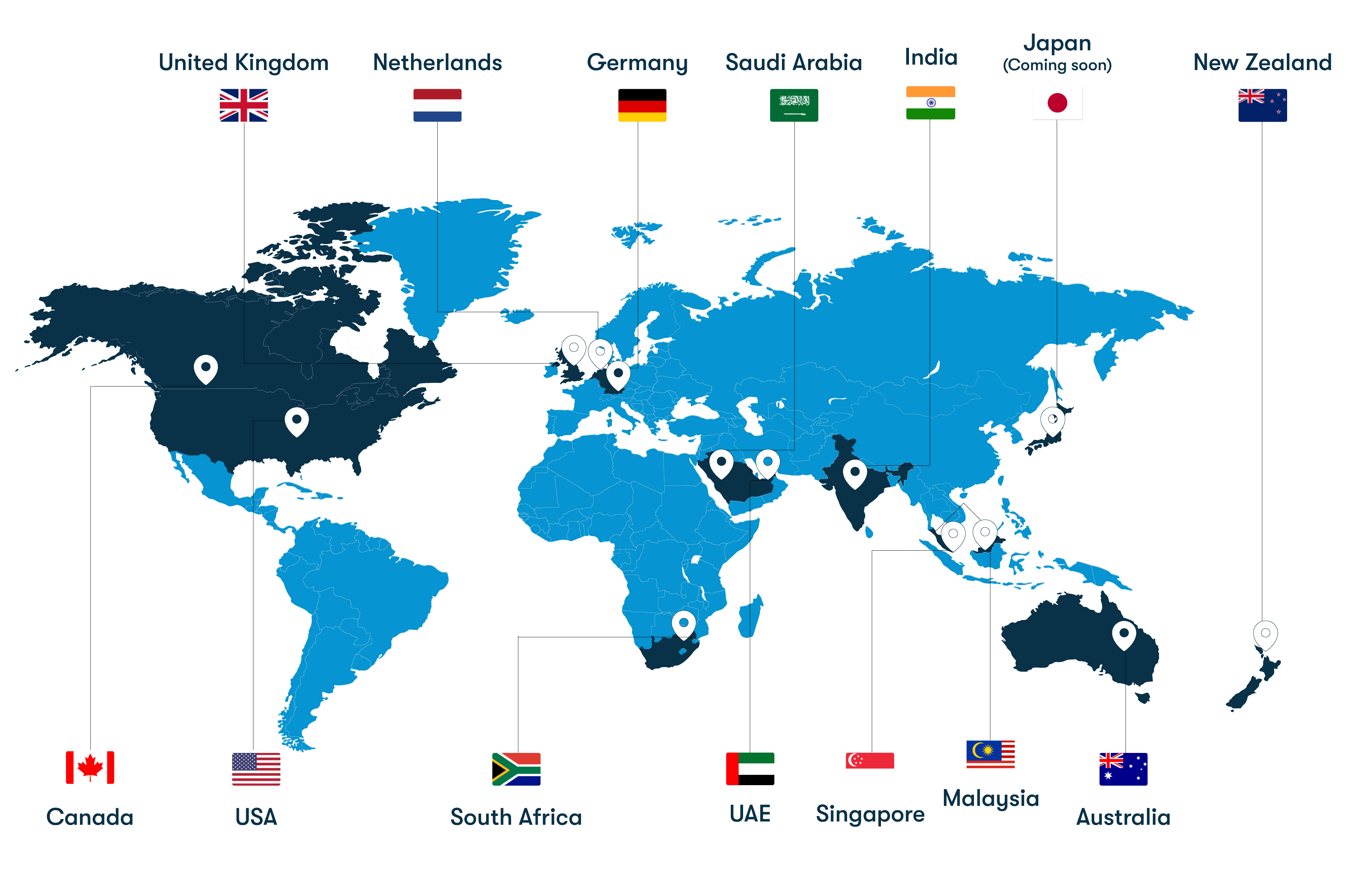
From our headquarters in India to training centers across UAE, Iraq, Saudi Arabia, UK, USA, Singapore, Australia, and more — Koenig delivers Microsoft certification training in 50+ countries.