
Unable to find what you're searching for?
We're here to help you find itMaster structural modeling and nonlinear dynamics in Finite Element Analysis (FEA). Gain hands-on expertise through project-based learning aligned with official Ansys Associate Certification standards.


500K+ certified professionals



























Explore Finite Element Analysis (FEA) certification and training courses — delivered live by certified instructors.
Finite Element Analysis (FEA) is a computational method used to predict how structures and materials behave under various physical conditions, solving complex engineering problems through numerical approximation. Published as a core simulation methodology by Ansys, FEA breaks down intricate systems into smaller, manageable elements to analyze stress, vibration, heat transfer, and deformation. It serves as the foundation of Ansys’s physics simulation suite, enabling virtual testing across product development cycles. Key components include Ansys Mechanical for structural and thermal analysis, Ansys Fluent for fluid-structure interaction, Ansys LS-DYNA for advanced nonlinear dynamics, and Ansys Autodyn for impact and explosion modeling. Additional tools like Ansys Sherlock apply FEA principles to electronics reliability, while Ansys Additive Suite supports metal 3D printing simulations using finite element methods tailored to manufacturing processes. This technology is for mechanical engineers, structural analysts, and design validation specialists who need to simulate real-world performance of components and assemblies before prototyping. It enables accurate prediction of failure points, optimization of material use, and compliance with safety standards in industries such as aerospace, automotive, and biomedical engineering.
Mechanics Fundamentals
Apply concepts of stress, strain and equilibrium in structural systems
Material Behavior
Define linear elastic properties like Young's modulus and Poisson's ratio
Geometry Handling
Import and prepare CAD models for finite element discretization
Matrix Algebra
Perform basic operations on matrices used in stiffness equations
Boundary Conditions
Apply loads and constraints to simulate real-world physical interactions
Element Types
Select appropriate elements for beams, shells or solid geometries
The building blocks every Finite Element Analysis (FEA) solution is made of
See what your official Finite Element Analysis (FEA) certification looks like. Download a sample — then let our advisors map the fastest path to earning the real one.
 ANSYS-MECH-ASSOC-001Ansys Mechanical Associate
ANSYS-MECH-PROF-001Ansys Mechanical Professional
ANSYS-MECH-EXPERT-001Ansys Mechanical Expert
ANSYS-DISC-ASSOC-001Ansys Discovery Associate
ANSYS-MECH-LINEAR-PROFAnsys Mechanical Linear Professional
ANSYS-MECH-DYNAMICS-PROFAnsys Mechanical Dynamics Professional
Official credential badges — shareable on LinkedIn
ANSYS-MECH-ASSOC-001Ansys Mechanical Associate
ANSYS-MECH-PROF-001Ansys Mechanical Professional
ANSYS-MECH-EXPERT-001Ansys Mechanical Expert
ANSYS-DISC-ASSOC-001Ansys Discovery Associate
ANSYS-MECH-LINEAR-PROFAnsys Mechanical Linear Professional
ANSYS-MECH-DYNAMICS-PROFAnsys Mechanical Dynamics Professional
Official credential badges — shareable on LinkedIn
Four formats. One quality standard. Every option comes with the same expert instructors, official courseware, and money-back guarantee.
Every factor that determines whether you actually pass your Finite Element Analysis (FEA) exam — rated across every training format available.
| Criteria | Koenig | Free Platform | Self-Paced Platform | ALP Provider | Legacy Provider | Note |
|---|---|---|---|---|---|---|
| Trainer Quality & Credentials | ||||||
| MCT-Certified Trainers | — | |||||
| Live Instructor-Led Delivery | Partial | — | ||||
| 1-on-1 Private Training | — | |||||
| SIMULIA Authorization | ||||||
| Official SIMULIA ALP Status | — | |||||
| Official SIMULIA Courseware | Partial | Partial | — | |||
| ESI / EA Credits Accepted | — | |||||
| Flexibility & Access | ||||||
| Any-Day/Flexi Start | — | |||||
| On-Site or Fly-Me Trainer | Partial | — | ||||
| Global Delivery Reach | Partial | Partial | — | |||
| Results & Trust | ||||||
| Exam Pass Rate | 94% · verified | N/A | N/A | N/A | N/A | Row omitted on live page: unverified for this vendor |
| Entry Price (Fundamentals) | ~$745 · best value | Free | $995/mo | ~$1,295+ | Limited | — |
| Verified Learner Reviews | 18,400+ · 4.9★ | 10,000+ · 3.8★ | 50,000+ · 4.1★ | 1,200+ · 4.7★ | 850+ · 4.3★ | — |
Data sourced from public pricing pages and review platforms. Accurate as of March 2026. Partial = available in select regions only.
Verified reviews from learners certified on Azure, AI, Security, and more.
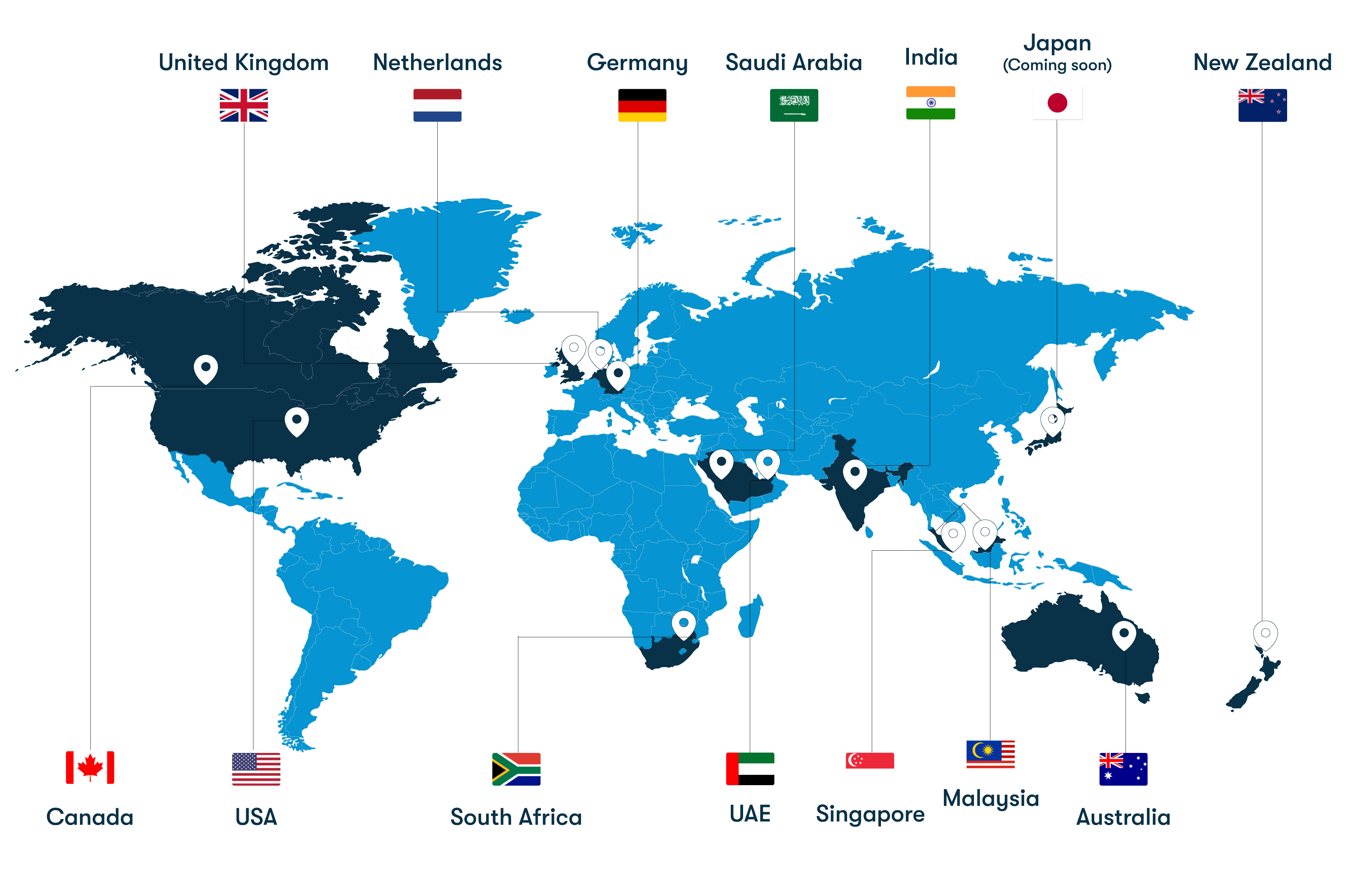
From our headquarters in India to training centers across UAE, Iraq, Saudi Arabia, UK, USA, Singapore, Australia, and more — Koenig delivers Microsoft certification training in 50+ countries.