
Unable to find what you're searching for?
We're here to help you find itMaster Event-Driven Architecture with Kafka and ksqlDB. Build scalable, real-time data pipelines and earn your Confluent Certified Developer for Apache Kafka certification through expert-led training.


500K+ certified professionals



























Explore Event-Driven Architecture certification and training courses — delivered live by certified instructors.
Event-Driven Architecture is a software design pattern published by Microsoft as part of its Azure cloud platform, enabling systems to respond in real time to changes in state by decoupling producers and consumers of events. It forms a core architectural style within Azure’s cloud-native application framework, supporting scalable, asynchronous communication across distributed services. Key components include Azure Event Grid, which manages publish-subscribe event routing for serverless and reactive applications; Azure Event Hubs, a high-throughput streaming platform for ingesting millions of events per second from IoT devices, logs, and telemetry; and Azure Service Bus, used for enterprise messaging with guaranteed delivery, sessions, and transaction support. These services collectively enable event ingestion, filtering, routing, and processing at scale. This technology is for software architects, cloud developers, and DevOps engineers who design and maintain scalable, resilient systems requiring real-time responsiveness, loose coupling, and asynchronous workflows across microservices or hybrid environments.
Event Fundamentals
Define events as immutable state changes and identify producers, brokers, and consumers
Messaging Systems
Use publish-subscribe and event streaming models with platforms like Kafka
Decoupled Services
Design independent microservices that communicate asynchronously via events
Event Routing
Configure event brokers to filter, route, and deliver events to consumers
Event Schema Management
Apply schema registries to maintain versioned, interoperable event contracts
Asynchronous Processing
Implement event-driven workflows with error handling and replay capabilities
The building blocks every Event-Driven Architecture solution is made of
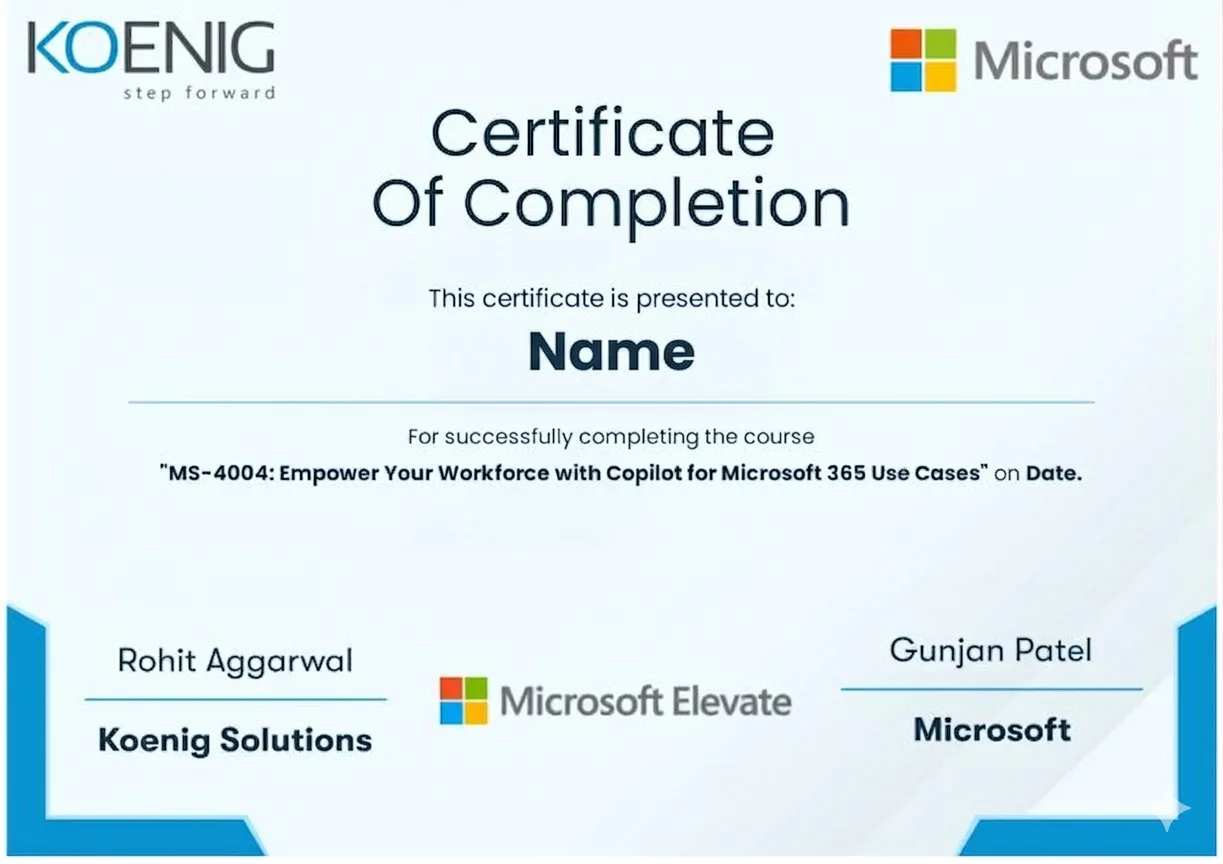
See what your official Event-Driven Architecture certification looks like. Download a sample — then let our advisors map the fastest path to earning the real one.
 CCDAKConfluent Certified Developer for Apache Kafka
AWS-CDAAWS Certified Developer – Associate
AZ-204Azure Developer Associate
CCAAKConfluent Certified Administrator for Apache Kafka
AWS-SAPAWS Certified Solutions Architect – Professional
AZ-400Microsoft Certified: DevOps Engineer Expert
Official credential badges — shareable on LinkedIn
CCDAKConfluent Certified Developer for Apache Kafka
AWS-CDAAWS Certified Developer – Associate
AZ-204Azure Developer Associate
CCAAKConfluent Certified Administrator for Apache Kafka
AWS-SAPAWS Certified Solutions Architect – Professional
AZ-400Microsoft Certified: DevOps Engineer Expert
Official credential badges — shareable on LinkedIn
Four formats. One quality standard. Every option comes with the same expert instructors, official courseware, and money-back guarantee.
Every factor that determines whether you actually pass your Event-Driven Architecture exam — rated across every training format available.
| Criteria | Koenig | Free Platform | Note | Self-Paced Platform | ALP Provider | Legacy Provider |
|---|---|---|---|---|---|---|
| Trainer quality and credentials | ||||||
| Instructor Experience | Certified Experts | N/A | Based on industry certification and field experience in Event-Driven Architecture. | N/A | Generalist | Academic |
| Post-training Support | Availability of mentorship after completion of Event-Driven Architecture training. | Community | Limited | |||
| Real-world Architecture Patterns | Comprehensive | Limited | Depth of coverage for complex distributed systems. | Basic | Moderate | Basic |
| Microsoft | ||||||
| Azure Event Grid Coverage | Deep Dive | Basic | Specific focus on Azure-native event routing. | Overview | Standard | Overview |
| Kafka vs. RabbitMQ | Comparative Analysis | Comparison of messaging middleware in Event-Driven Architecture. | Basic | Overview | Basic | |
| Cloud-native Lab Environments | Live Sandbox | Access to live cloud environments for practical implementation. | Simulated | |||
| Flexibility and access | ||||||
| Hands-on Labs | Extensive | Practical exercises per Event-Driven Architecture module. | Moderate | Limited | ||
| Scheduling | Flexible | On-demand | Availability of training sessions. | On-demand | Fixed | Fixed |
| Course Duration | 40 Hours | Variable | Total guided learning hours. | Variable | 32 Hours | 24 Hours |
| Results and trust | ||||||
| Industry Recognition | High | Low | Market reputation of the training provider. | Low | Medium | Medium |
| Project-based Learning | Application of Event-Driven Architecture to real-world scenarios. | Optional | ||||
| Certification Prep | Comprehensive | Alignment with professional certification standards. | Basic | |||
Data sourced from public pricing pages and review platforms. Accurate as of March 2026. Partial = available in select regions only.
Verified reviews from learners certified on Azure, AI, Security, and more.
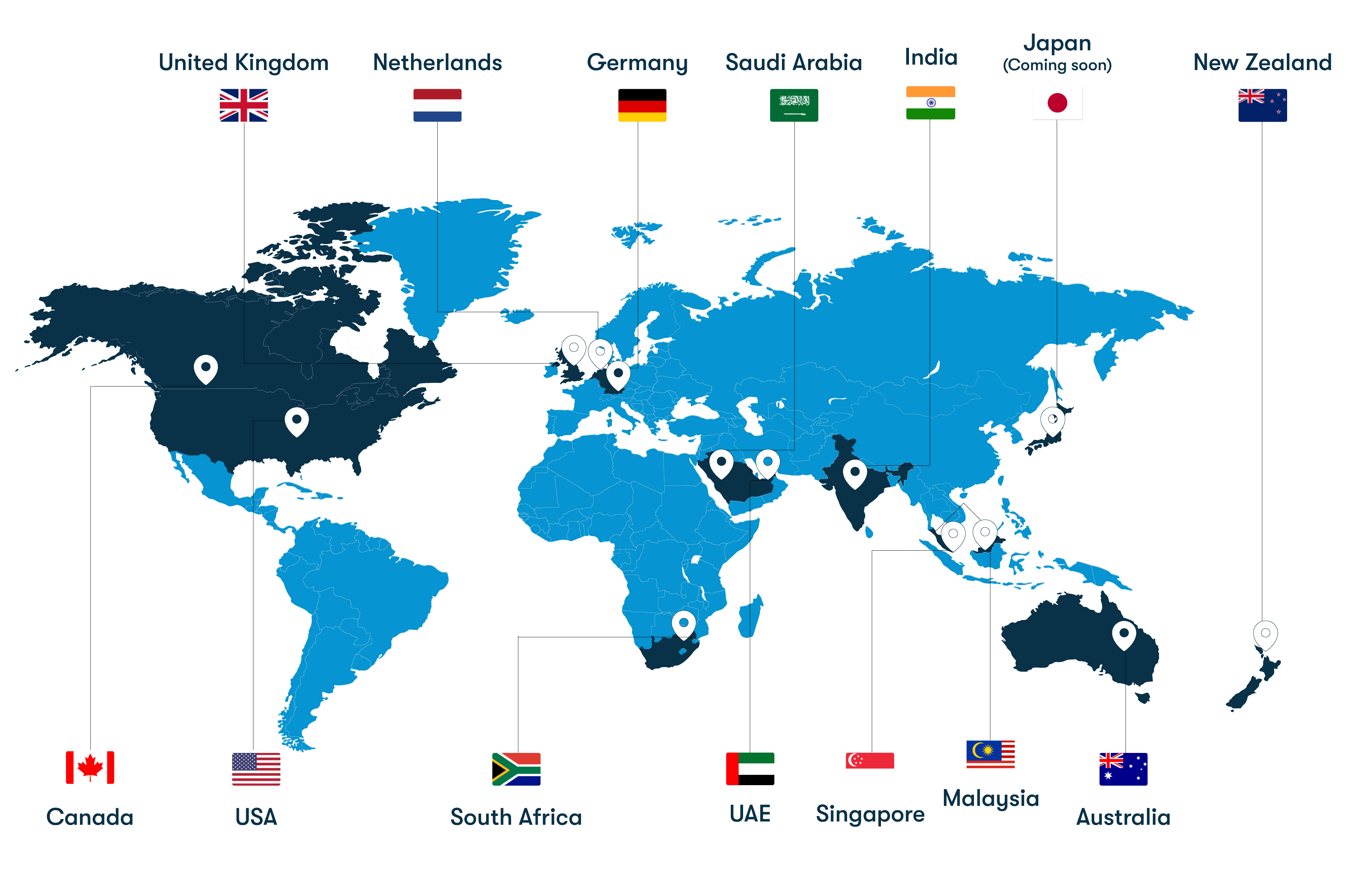
From our headquarters in India to training centers across UAE, Iraq, Saudi Arabia, UK, USA, Singapore, Australia, and more — Koenig delivers Microsoft certification training in 50+ countries.