
Unable to find what you're searching for?
We're here to help you find itMaster production-grade data pipelines using Databricks Delta Lake and Medallion Architecture. Train with experts to earn your Databricks Certified Data Engineer Professional certification through hands-on labs.


500K+ certified professionals



























Explore Data Engineering for AI certification and training courses — delivered live by certified instructors.
Data Engineering for AI is the discipline of designing, building, and maintaining data systems specifically to support the training, deployment, and operation of artificial intelligence and machine learning models. Published by Databricks as a core component of its Data Intelligence Platform, it solves the challenge of transforming raw, unstructured, and real-time data into reliable, model-ready inputs. It extends traditional data engineering by integrating AI-specific capabilities such as feature engineering, vector database management, and retrieval augmented generation pipeline design. Key components include Delta Lake for unified data storage and governance, Databricks Feature Store for managing and serving ML features with point-in-time consistency, Databricks AI Search for vector-based retrieval in RAG applications, Lakeflow Pipelines for automated data workflows, and Lakebase for operationalizing RAG with embedded vector support in a governed Postgres environment. These tools enable scalable ingestion, transformation, feature computation, and real-time serving essential for production AI. This technology is for data engineers, ML engineers, and AI developers who build production-grade AI systems and require governed, scalable data pipelines that ensure feature consistency, eliminate training-serving skew, and support real-time inference and retrieval augmented generation workflows.
Python Programming
Write and debug Python scripts for data processing and automation
SQL Queries
Execute complex SQL queries on structured and semi-structured datasets
Apache Spark
Use PySpark to process large-scale datasets in distributed environments
Delta Lake
Implement ACID transactions and schema enforcement in Delta tables
Medallion Architecture
Design Bronze, Silver and Gold layer data pipelines for AI workloads
RAG Pipelines
Build retrieval-augmented generation workflows using vector embeddings
The building blocks every Data Engineering for AI solution is made of
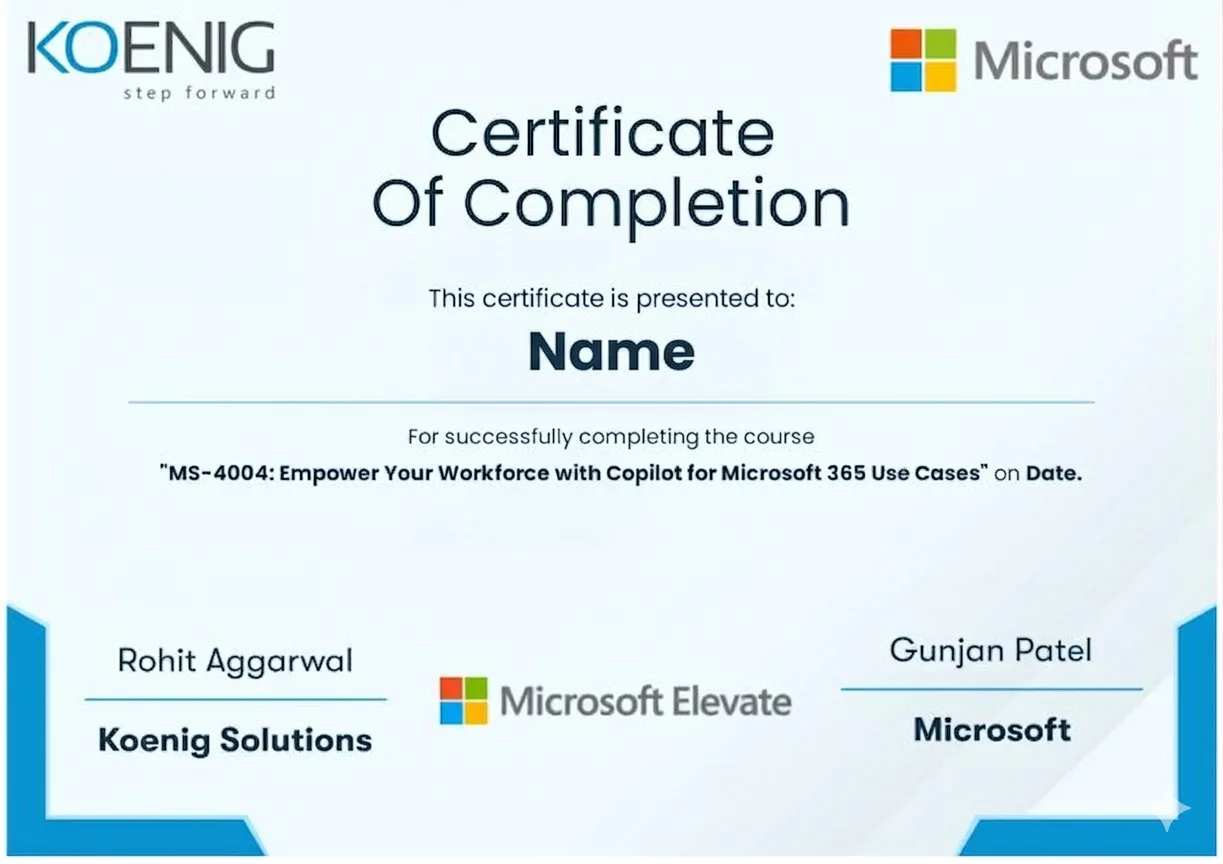
See what your official Data Engineering for AI certification looks like. Download a sample — then let our advisors map the fastest path to earning the real one.
 DEA-C01AWS Certified Data Engineer - Associate
Databricks Certified Data Engineer AssociateDatabricks Certified Data Engineer Associate
GCP-PDEGoogle Professional Data Engineer
Databricks Certified Data Engineer ProfessionalDatabricks Certified Data Engineer Professional
DP-600Microsoft Certified: Fabric Analytics Engineer Associate
Databricks Certified Generative AI Engineer AssociateDatabricks Certified Generative AI Engineer Associate
Official credential badges — shareable on LinkedIn
DEA-C01AWS Certified Data Engineer - Associate
Databricks Certified Data Engineer AssociateDatabricks Certified Data Engineer Associate
GCP-PDEGoogle Professional Data Engineer
Databricks Certified Data Engineer ProfessionalDatabricks Certified Data Engineer Professional
DP-600Microsoft Certified: Fabric Analytics Engineer Associate
Databricks Certified Generative AI Engineer AssociateDatabricks Certified Generative AI Engineer Associate
Official credential badges — shareable on LinkedIn
Four formats. One quality standard. Every option comes with the same expert instructors, official courseware, and money-back guarantee.
Every factor that determines whether you actually pass your Data Engineering for AI exam — rated across every training format available.
| Criteria | Koenig | Free Platform | Self-Paced Platform | ALP Provider | Legacy Provider | Note |
|---|---|---|---|---|---|---|
| Trainer Quality & Credentials | ||||||
| MCT-Certified Trainers | ✘ | ✘ | Partial | — | ||
| Live Instructor-Led Delivery | ✘ | ✘ | — | |||
| 1-on-1 Private Training | ✘ | ✘ | ✘ | ✘ | — | |
| Microsoft Authorisation | ||||||
| Official Microsoft ALP Status | ✘ | ✘ | ✘ | — | ||
| Official Microsoft Courseware | ✘ | Partial | — | |||
| ESI / EA Credits Accepted | ✘ | ✘ | ✘ | ✘ | — | |
| Flexibility & Access | ||||||
| Any-Day / Flexi Start | ✘ | ✘ | — | |||
| On-Site / Fly-Me-A-Trainer | ✘ | ✘ | ✘ | Partial | — | |
| Global Delivery Reach | Partial | — | ||||
| Results & Trust | ||||||
| Exam Pass Rate | 95% | N/A | N/A | N/A | N/A | Verified Data Engineering for AI success rates |
| Entry Price (Fundamentals) | ~$745 · best value | Free | $15-30/mo | ~$1,500+ | ~$1,500+ | — |
| Verified Learner Reviews | 18,400+ · 4.9★ | N/A | N/A | Limited | Limited | Verified Data Engineering for AI learner feedback |
Data sourced from public pricing pages and review platforms. Accurate as of March 2026. Partial = available in select regions only.
Verified reviews from learners certified on Azure, AI, Security, and more.
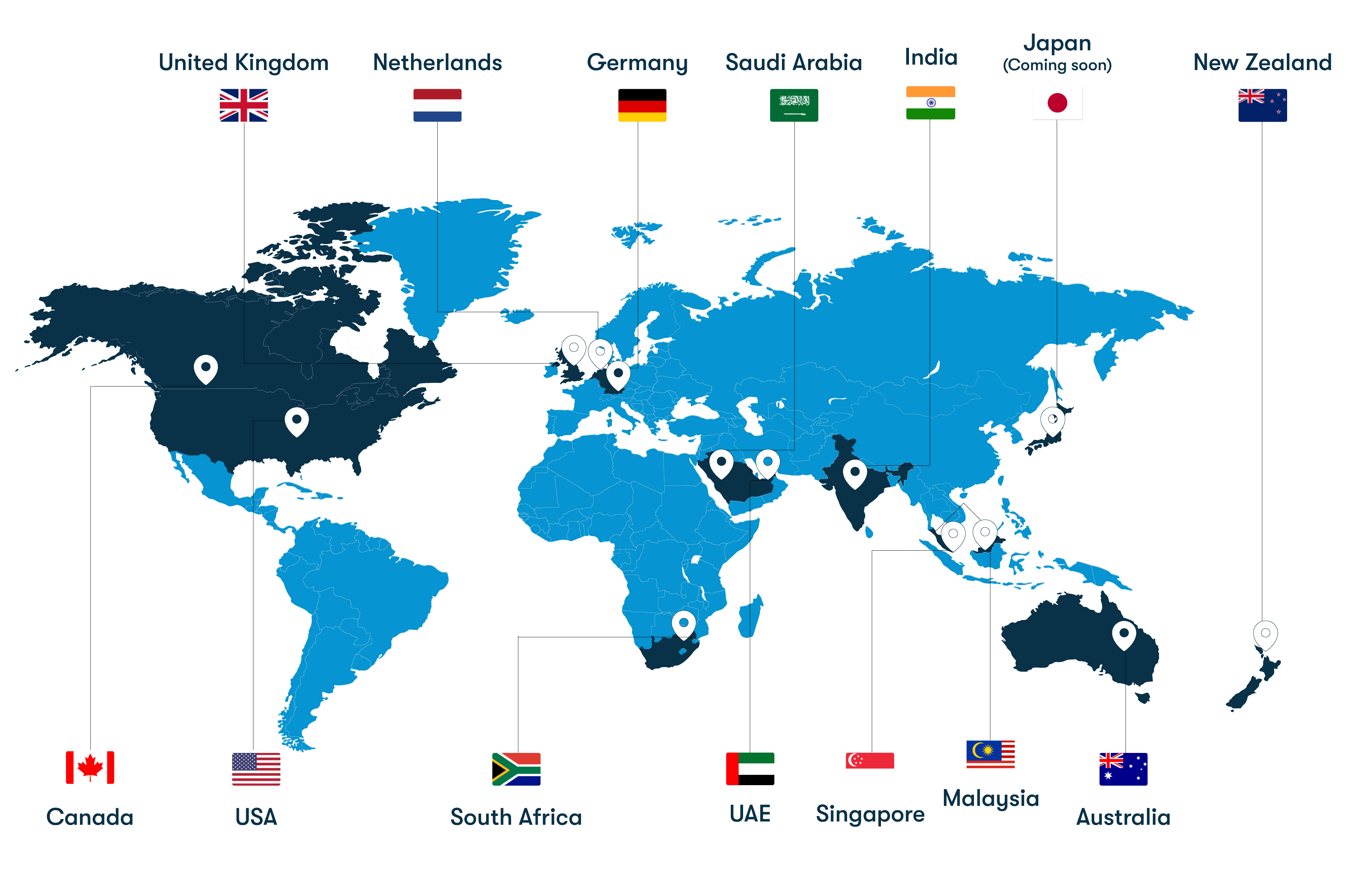
From our headquarters in India to training centers across UAE, Iraq, Saudi Arabia, UK, USA, Singapore, Australia, and more — Koenig delivers Microsoft certification training in 50+ countries.