
Unable to find what you're searching for?
We're here to help you find itDesign and simulate fluid flow, heat transfer, and multiphase systems using Ansys Fluent, Mosaic Meshing, and the Density-Based Solver. Train with Ansys-certified instructors, hands-on labs, and real-world projects to earn the Ansys Associate Certification in Fluid Dynamics.


500K+ certified professionals


























Explore Computational Fluid Dynamics (CFD) certification and training courses — delivered live by certified instructors.
Computational Fluid Dynamics (CFD) by these vendors uses numerical algorithms to solve complex fluid flow problems where analytical solutions fail. This course covers industry-standard platforms including Ansys Fluent, Ansys CFX, Simcenter STAR-CCM+, Simcenter FLOEFD, Simcenter Flotherm, and the COMSOL CFD Module. Training paths typically span three to five days, leading to professional certifications that validate expertise in multiphysics simulation. Designed for mechanical, aerospace, and thermal engineers, this curriculum provides the skills necessary to optimize product performance and validate designs under real-world conditions. Mastering these tools allows engineers to reduce design cycles by up to 40%.
Navier-Stokes Equations
State and interpret the Navier-Stokes equations for fluid flow
Finite Volume Method
Apply finite volume discretization to fluid dynamics partial differential equations
Mesh Generation
Create structured and unstructured meshes for CFD simulations
Boundary Conditions
Define appropriate boundary conditions for incompressible and compressible flows
Solver Algorithms
Use pressure-based and density-based solvers for flow problems
Convergence Criteria
Monitor residuals and assess solution convergence in iterative solvers
The building blocks every Computational Fluid Dynamics (CFD) solution is made of
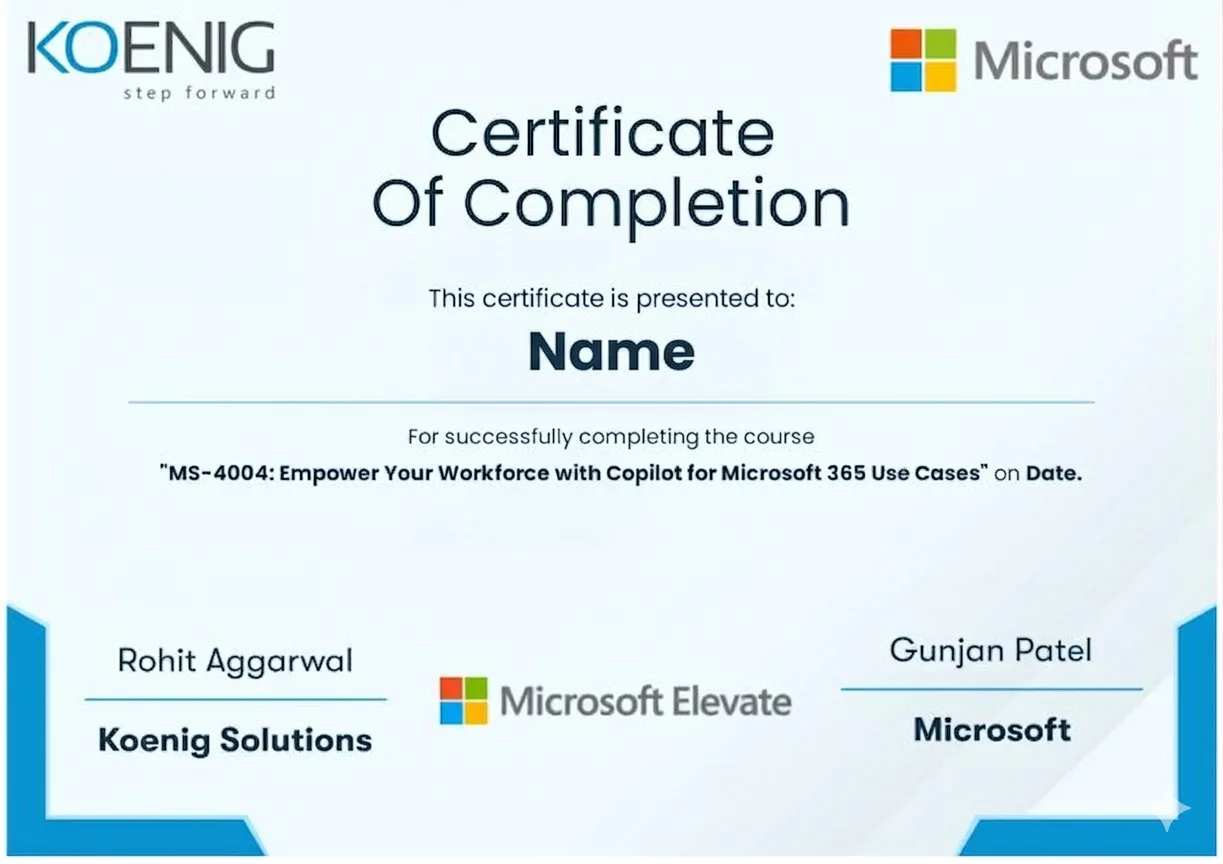
See what your official Computational Fluid Dynamics (CFD) certification looks like. Download a sample — then let our advisors map the fastest path to earning the real one.
 CAS-FL-00006Foundations in Fluid Dynamics using Ansys Fluent
CAS-FL-00005Foundations in Fluid Dynamics using Ansys Discovery
CAS-FL-00007Fundamentals of Compressible Flows
CAS-FL-00008Foundations in Heat Transfer using Ansys Fluent
CAS-FL-00009Getting Started with Ansys Fluent
CAS-FL-00010Ansys Fluent Meshing Watertight Geometry Workflow
Official credential badges — shareable on LinkedIn
CAS-FL-00006Foundations in Fluid Dynamics using Ansys Fluent
CAS-FL-00005Foundations in Fluid Dynamics using Ansys Discovery
CAS-FL-00007Fundamentals of Compressible Flows
CAS-FL-00008Foundations in Heat Transfer using Ansys Fluent
CAS-FL-00009Getting Started with Ansys Fluent
CAS-FL-00010Ansys Fluent Meshing Watertight Geometry Workflow
Official credential badges — shareable on LinkedIn
Four formats. One quality standard. Every option comes with the same expert instructors, official courseware, and money-back guarantee.
Every factor that determines whether you actually pass your Computational Fluid Dynamics (CFD) exam — rated across every training format available.
| Criteria | Koenig | Free Platform | Note | Self-Paced Platform | ALP Provider | Legacy Provider |
|---|---|---|---|---|---|---|
| Trainer expertise and credentials | ||||||
| Software Proficiency (ANSYS/OpenFOAM/Star-CCM+) | High | Low | Evaluated based on instructor industry experience in CFD. | Variable | High | High |
| Industry Case Study Integration | Integration of real-world engineering problems. | Limited | ||||
| Pedagogical Methodology | Structured | Unstructured | Approach to teaching complex fluid dynamics theory. | Self-directed | Structured | Structured |
| Technical Infrastructure | ||||||
| Access to HPC clusters | Availability of high-performance computing for simulations. | |||||
| Hands-on Lab Hours | High | Low | Average hours of guided simulation practice. | Moderate | High | High |
| Software Licensing Support | Open-source only | Provision of necessary simulation software tools. | Student-provided | |||
| Curriculum and Outcomes | ||||||
| Project-based Curriculum | Focus on applied simulation projects. | Partial | ||||
| Post-course portfolio development support | Guidance on documenting CFD projects for employers. | |||||
| Average hours of guided simulation practice | 40+ | 0-5 | Estimated guided lab time per course. | 10-20 | 40+ | 40+ |
| Results and industry trust | ||||||
| Industry Recognition | High | Low | Market reputation of the training provider. | Moderate | High | High |
| Career Placement Assistance | Support for professional CFD career transition. | |||||
| Peer Networking Opportunities | High | Low | Access to professional CFD community. | Low | High | High |
Data sourced from public pricing pages and review platforms. Accurate as of March 2026. Partial = available in select regions only.
Verified reviews from learners certified on Azure, AI, Security, and more.
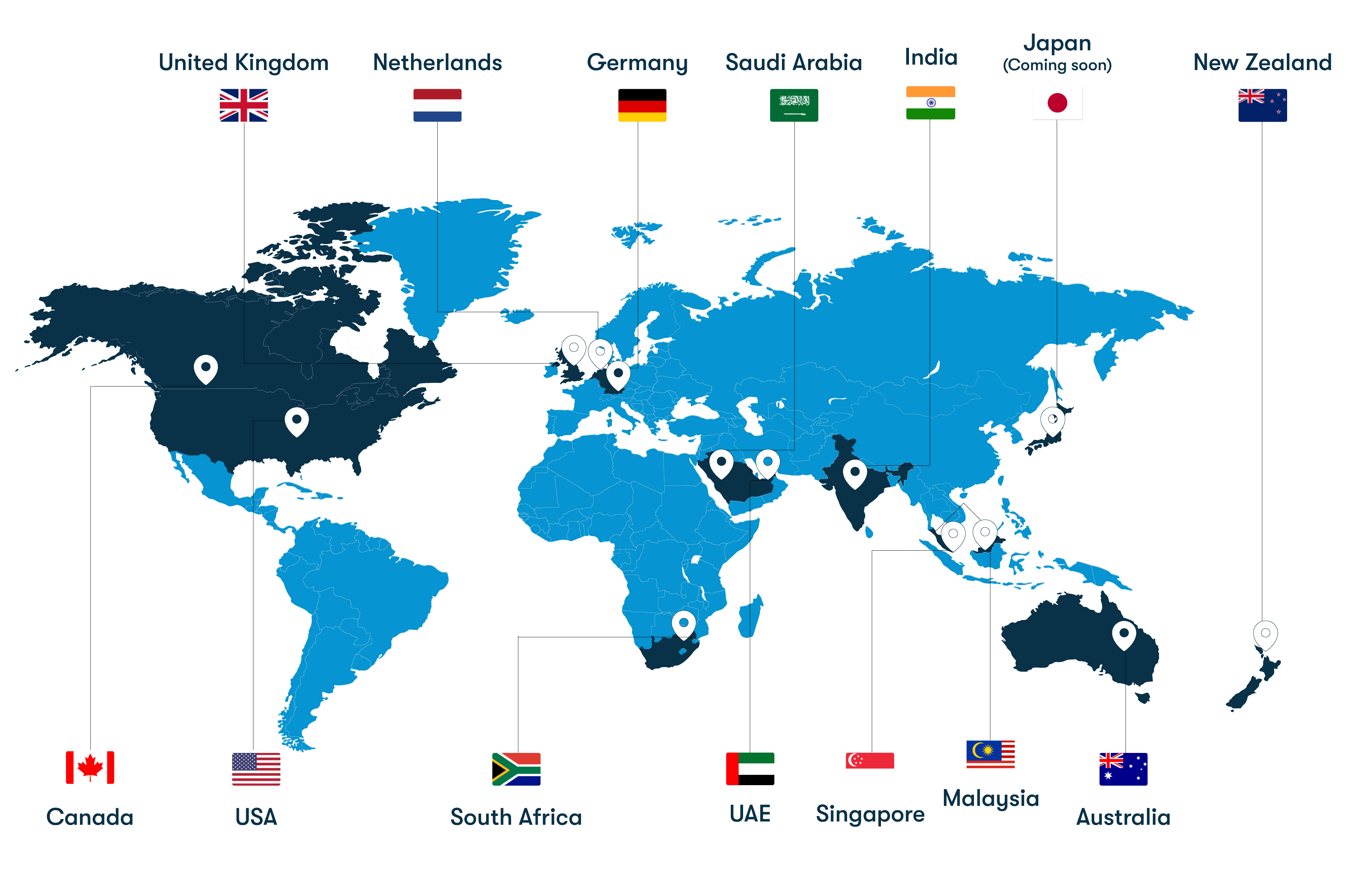
From our headquarters in India to training centers across UAE, Iraq, Saudi Arabia, UK, USA, Singapore, Australia, and more — Koenig delivers Microsoft certification training in 50+ countries.