
Unable to find what you're searching for?
We're here to help you find itDesign, simulate, and manufacture products using Autodesk Fusion's integrated CAD, CAM, and generative design tools. Koenig delivers hands-on training by certified instructors, real-world projects, and lab-intensive courses aligned to the Autodesk Certified Professional in Design for Manufacturing exam.


500K+ certified professionals



























Explore Autodesk Fusion certification and training courses — delivered live by certified instructors.
Autodesk Fusion is a cloud-based 3D design, engineering, manufacturing, and electronics platform developed by Autodesk that integrates CAD, CAM, CAE, PCB, and data management into a single solution for end-to-end product development. It serves as Autodesk’s unified environment for design and manufacturing, connecting workflows across disciplines in a collaborative, real-time setting. The platform includes Design for parametric, freeform, and surface modeling; Manufacturing for 2D to 5-axis CNC programming and toolpath generation; Electronics for schematic capture and PCB layout; Simulation for structural, thermal, and modal analysis; Generative Design for AI-driven optimized forms; and Data Management for version control, collaboration, and workflow automation across teams. Autodesk Fusion is for mechanical engineers, industrial designers, manufacturing engineers, and electronics developers who need an integrated, cloud-based environment to collaborate, iterate rapidly, and streamline the transition from concept to production.
Interface Navigation
Identify Fusion browser, timeline and workspace components
Sketch Creation
Create fully constrained sketches with dimensions and constraints
Parametric Modeling
Use Extrude, Revolve, Hole and Shell features
Direct Editing
Modify geometry using Press/Pull and delete tools
Assembly Fundamentals
Create components, joints and rigid groups in assemblies
Drawing Documentation
Generate detailed drawings with views and annotations
The building blocks every Autodesk Fusion solution is made of
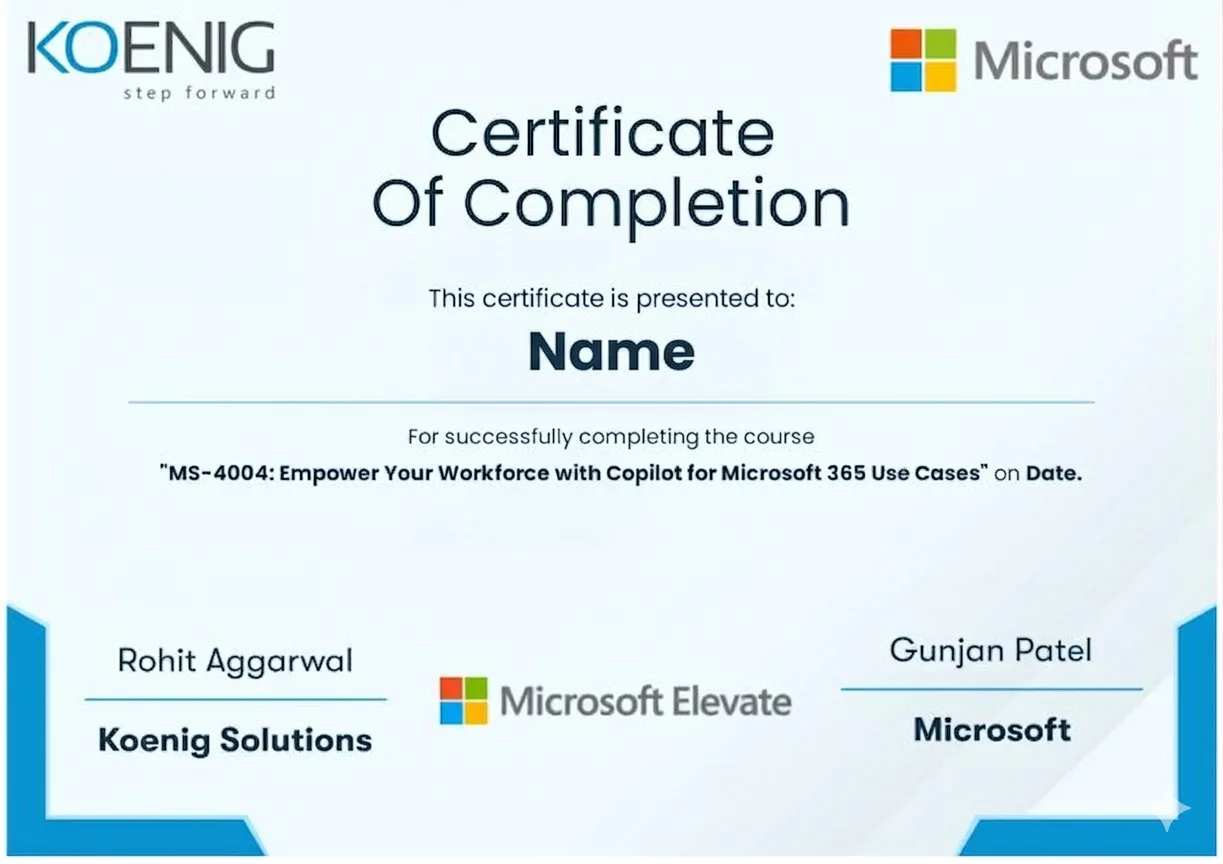
See what your official Autodesk Fusion certification looks like. Download a sample — then let our advisors map the fastest path to earning the real one.
 Official credential badges — shareable on LinkedIn
Four formats. One quality standard. Every option comes with the same expert instructors, official courseware, and money-back guarantee.
Every factor that determines whether you actually pass your Autodesk Fusion exam — rated across every training format available.
| Criteria | Koenig | Free Platform | Self-Paced Platform | ALP Provider | Legacy Provider | Note |
|---|---|---|---|---|---|---|
| Trainer Quality & Credentials | ||||||
| ACI-Certified Trainers | ✖ | ✖ | ✖ | — | ||
| Live Instructor-Led | ✖ | ✖ | Partial | — | ||
| 1-on-1 Private Training | ✖ | ✖ | Partial | ✖ | — | |
| Autodesk Authorization | ||||||
| Official Autodesk ALP Status | ✖ | ✖ | — | |||
| Official Courseware | Partial | ✖ | ✖ | — | ||
| Training Credits Accepted | ✖ | ✖ | ✖ | — | ||
| Flexibility & Access | ||||||
| Any-Day/Flexi Start | Partial | ✖ | — | |||
| On-Site Delivery | ✖ | ✖ | Partial | ✖ | — | |
| Global Delivery Reach | Partial | — | ||||
| Results & Trust | ||||||
| Exam Pass Rate | N/A | N/A | N/A | N/A | Row omitted on live page: unverified for this vendor | |
| Entry Price | ~$199 (Introductory Module) | Free | $15-30/mo | ~$745 | ~$1,500+ | — |
| Verified Reviews | 18,400+ · 4.9★ | N/A | N/A | Limited | Limited | — |
Data sourced from public pricing pages and review platforms. Accurate as of March 2026. Partial = available in select regions only.
Verified reviews from learners certified on Azure, AI, Security, and more.
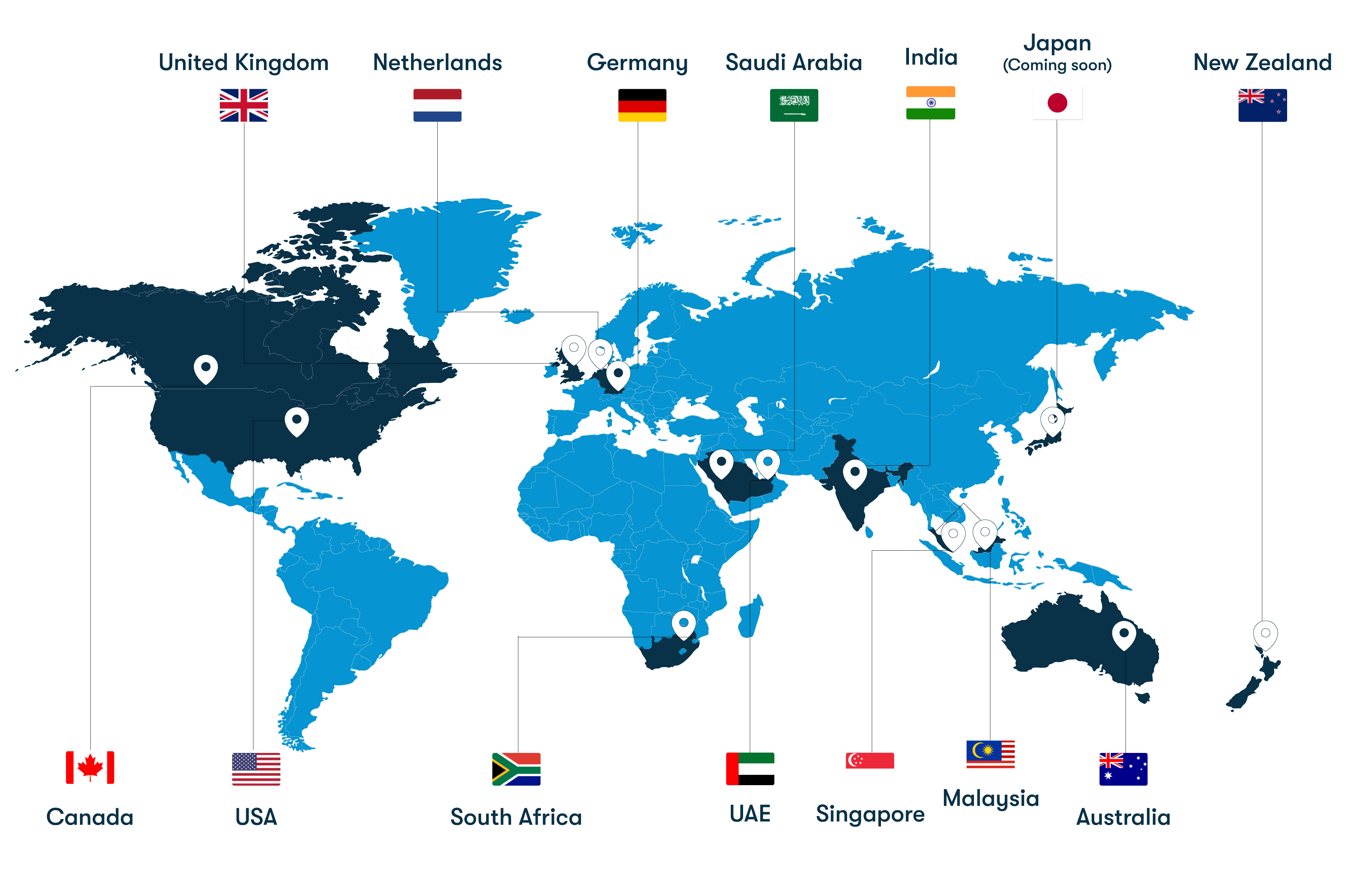
From our headquarters in India to training centers across UAE, Iraq, Saudi Arabia, UK, USA, Singapore, Australia, and more — Koenig delivers Microsoft certification training in 50+ countries.