
Unable to find what you're searching for?
We're here to help you find itMaster autonomous agent workflows with Microsoft. Build scalable, multi-agent systems through hands-on labs to earn your Microsoft Certified: Multi-Agent AI Solutions Expert credential in AI Agents & Autonomous Systems.


500K+ certified professionals



























Explore AI Agents & Autonomous Systems certification and training courses — delivered live by certified instructors.
AI Agents & Autonomous Systems are autonomous software systems that use large language models to perceive context, plan actions, execute tasks, and adapt behavior toward defined goals, as defined by AWS and the OECD. They extend traditional AI by enabling multi-step reasoning, tool use, and decision-making without continuous human input. Within the AI technology stack, they sit above foundational models, acting as intelligent orchestrators of complex workflows. Core components include Perception Modules for interpreting inputs, Large Language Models (LLMs) as reasoning engines, Planning Engines for multi-step task decomposition, Memory Systems to retain context across interactions, Tool Integrations that enable external API or software access, and Action Executors that implement decisions in digital or physical environments. Advanced implementations may incorporate Multi-Agent Coordination Frameworks for distributed problem-solving. Practitioners in software engineering, automation, data science, and enterprise architecture benefit most, as these systems enable scalable, intelligent process automation, dynamic decision support, and adaptive user interactions across complex digital ecosystems.
Python Programming
Write and debug Python scripts using functions, classes and async patterns
LLM Fundamentals
Explain prompts, completions, tool calling and model context management
Agent Frameworks
Build agents using LangGraph or similar multi-agent orchestration frameworks
RAG Systems
Implement hybrid retrieval with vector databases and re-ranking models
MCP Integration
Connect agents to tools and data via Model Context Protocol servers
API Development
Design and consume REST APIs for agent-to-agent and system integration
The building blocks every AI Agents & Autonomous Systems solution is made of
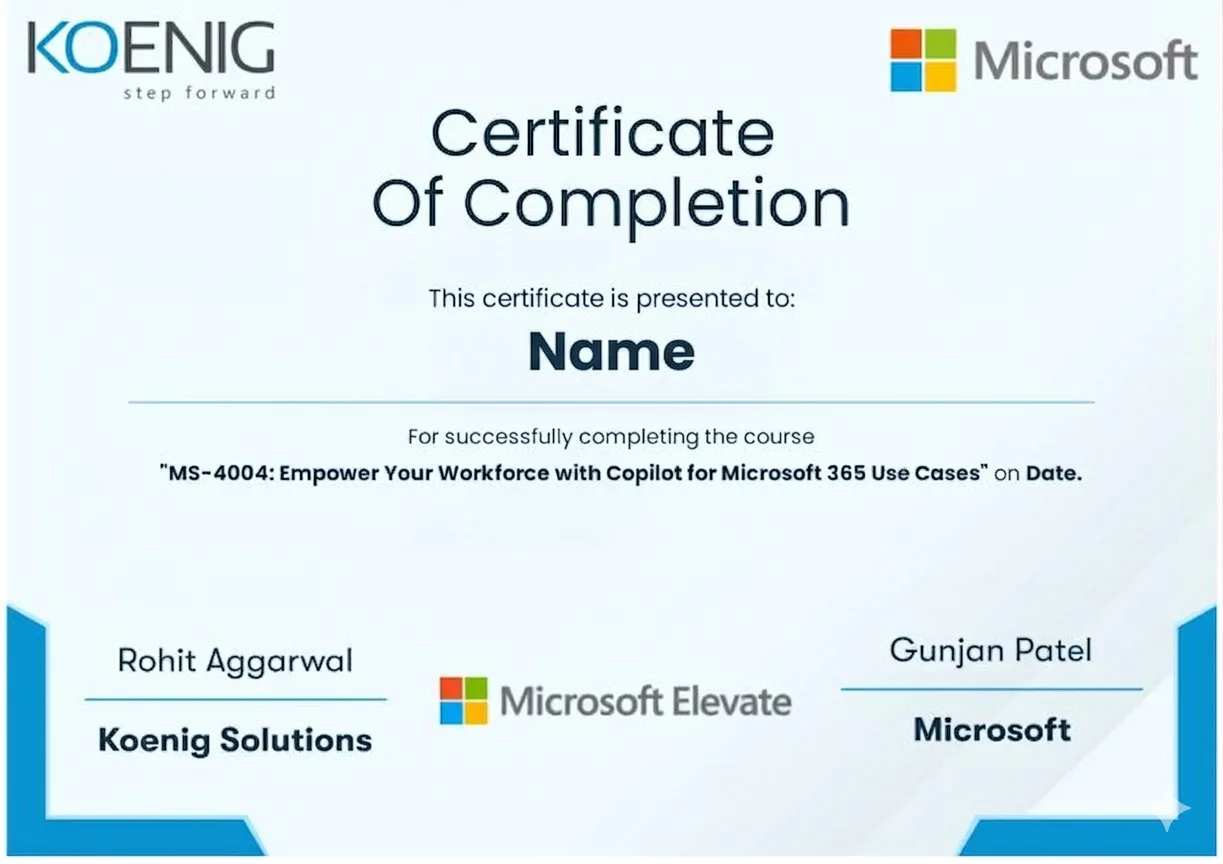
See what your official AI Agents & Autonomous Systems certification looks like. Download a sample — then let our advisors map the fastest path to earning the real one.
 AI-102Azure AI Engineer Associate
AWS-MLSAWS Certified Machine Learning - Specialty
GCP-MLEGoogle Professional Machine Learning Engineer
Official credential badges — shareable on LinkedIn
AI-102Azure AI Engineer Associate
AWS-MLSAWS Certified Machine Learning - Specialty
GCP-MLEGoogle Professional Machine Learning Engineer
Official credential badges — shareable on LinkedIn
Four formats. One quality standard. Every option comes with the same expert instructors, official courseware, and money-back guarantee.
Every factor that determines whether you actually pass your AI Agents & Autonomous Systems exam — rated across every training format available.
| Criteria | Koenig | ALP Provider | Legacy Provider | Self-Paced Platform | Free Platform |
|---|---|---|---|---|---|
| Trainer Quality & Credentials | |||||
| MCT-Certified Trainers | ✘ | ✘ | ✘ | ||
| Live Instructor-Led Delivery | Partial | ✘ | ✘ | ||
| 1-on-1 Private Training | ✘ | ✘ | ✘ | ||
| Microsoft Authorization | |||||
| Official Microsoft ALP Status | ✘ | ✘ | ✘ | ||
| Official Microsoft Courseware | ✘ | ✘ | |||
| ESI / EA Credits Accepted | ✘ | ✘ | ✘ | ||
| Flexibility & Access | |||||
| Any-Day/Flexi Start | ✘ | ✘ | |||
| On-Site or Fly-Me Trainer | Partial | ✘ | ✘ | ✘ | |
| Global Delivery Reach | Partial | ||||
| Results & Trust | |||||
| Hands-on Lab Hours | High | Standard | Low | Variable | Minimal |
| Entry Price (Fundamentals) | ~$745 · best value | ~$1,500+ | $15-30/mo | $15-30/mo | Free |
| Verified Learner Reviews | 18,400+ · 4.9★ | Limited | Limited | N/A | N/A |
Data sourced from public pricing pages and review platforms. Accurate as of March 2026. Partial = available in select regions only.
Verified reviews from learners certified on Azure, AI, Security, and more.
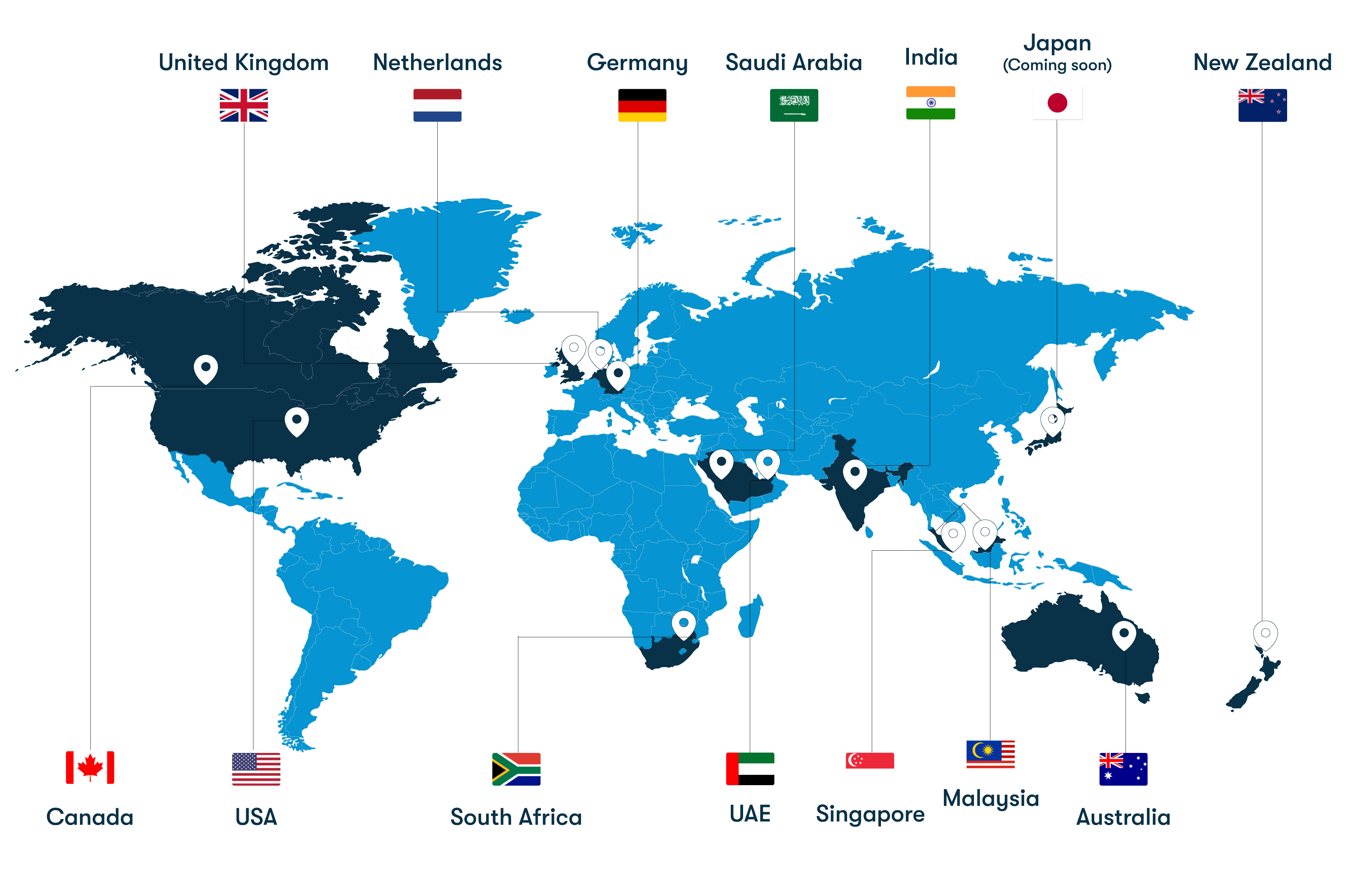
From our headquarters in India to training centers across UAE, Iraq, Saudi Arabia, UK, USA, Singapore, Australia, and more — Koenig delivers Microsoft certification training in 50+ countries.