
Unable to find what you're searching for?
We're here to help you find itDesign, configure, and troubleshoot AC500 PLC systems, program with Automation Builder, and implement safety logic using AC500-S modules. Koenig delivers hands-on labs and real-world projects through ABB-certified trainers, preparing learners for official ABB PLC certification.


500K+ certified professionals



























Explore ABB PLC certification and training courses — delivered live by certified instructors.
An ABB PLC is a programmable logic controller developed by ABB for industrial automation, providing reliable, scalable control solutions for complex manufacturing and process environments. Part of ABB’s broader automation and motion portfolio, it integrates seamlessly with safety, drives, and HMI systems to deliver unified control across diverse applications. The technology includes the AC500 PLC platform, available in multiple CPU classes for varying performance needs, and supports local and decentralized I/O expansion through I/O modules and terminal units. Communication is enabled via communication modules supporting protocols like PROFINET, Modbus, and OPC UA, while the FBP interface module allows fieldbus-neutral integration. Safety functions are handled by the AC500-S safety PLC, and engineering is unified through Control Builder AC500, which supports IEC 61131-3 programming. Human-machine interaction is facilitated by the CP400 and CP500 HMI families. ABB PLCs are designed for automation engineers, control system integrators, and industrial maintenance professionals who require scalable, long-term reliable control systems with integrated safety and multi-protocol connectivity for applications in machine building, water, marine, and process industries.
PLC Fundamentals
Understand basic operation and components of Programmable Logic Controllers
Windows Environment
Navigate and operate effectively in a Microsoft Windows environment
IEC 61131-3 Basics
Apply core concepts of IEC 61131-3 programming standards
AC500 Hardware
Identify and configure AC500 PLC system architecture and I/O modules
Automation Builder
Use Automation Builder software for project creation and management
F880 Completion
Complete F880 AC500 V3 PLC Basic Training or equivalent
The building blocks every ABB PLC solution is made of
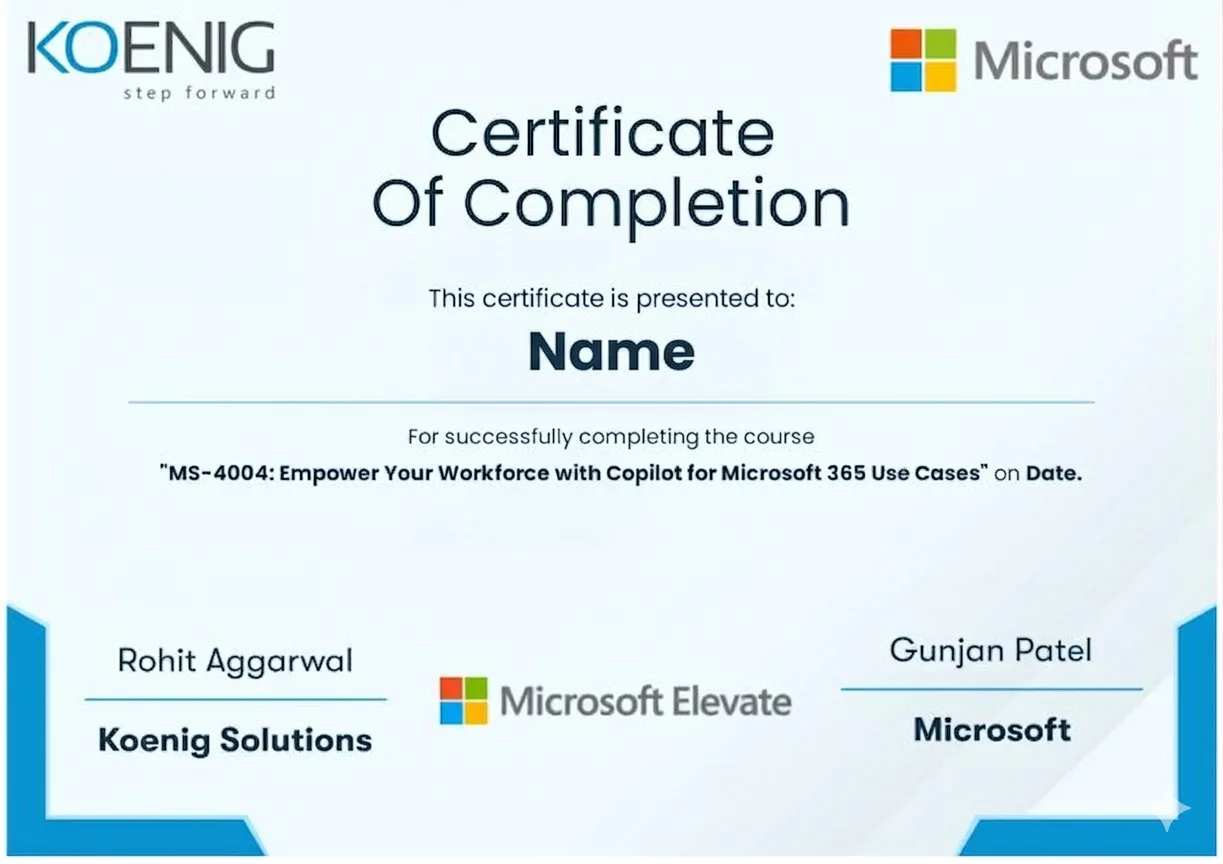
See what your official ABB PLC certification looks like. Download a sample — then let our advisors map the fastest path to earning the real one.
 T710e-01Engineering with Control Builder M
T710e-03System Administration and Maintenance
T710e-06PLC Connect
T710e-12AC 800M HI Safety Engineering
T730Engineering using AC 800M
T731System Administration and Maintenance
Official credential badges — shareable on LinkedIn
T710e-01Engineering with Control Builder M
T710e-03System Administration and Maintenance
T710e-06PLC Connect
T710e-12AC 800M HI Safety Engineering
T730Engineering using AC 800M
T731System Administration and Maintenance
Official credential badges — shareable on LinkedIn
Four formats. One quality standard. Every option comes with the same expert instructors, official courseware, and money-back guarantee.
Every factor that determines whether you actually pass your ABB PLC exam — rated across every training format available.
| Criteria | Koenig | ALP Provider | Legacy Provider | Self-Paced Platform | Free Platform |
|---|---|---|---|---|---|
| Trainer Quality & Credentials | |||||
| ABB-Certified Instructors | |||||
| Live Instructor-Led | Partial | Partial | |||
| 1-on-1 Private Training | |||||
| ABB Authorization | |||||
| Official ABB ALP Status | Partial | ||||
| ABB Official Courseware | Partial | Partial | Partial | ||
| ABB Training Credits Accepted | |||||
| Flexibility & Access | |||||
| Any-Day/Flexi Start | |||||
| On-Site Delivery | Partial | ||||
| Global Delivery Reach | Partial | Partial | |||
| Results & Trust | |||||
| Exam Pass Rate | 98% | 95% | N/A | N/A | N/A |
| Entry Price (Fundamentals)* | ~$745 | ~$1,460 | ~$1,500+ | $15-30/mo | Free |
| Verified Learner Reviews | 18,400+ · 4.9★ | Limited | Limited | 100,000+ · 4.5★ | N/A |
Data sourced from public pricing pages and review platforms. Accurate as of March 2026. Partial = available in select regions only.
Verified reviews from learners certified on Azure, AI, Security, and more.
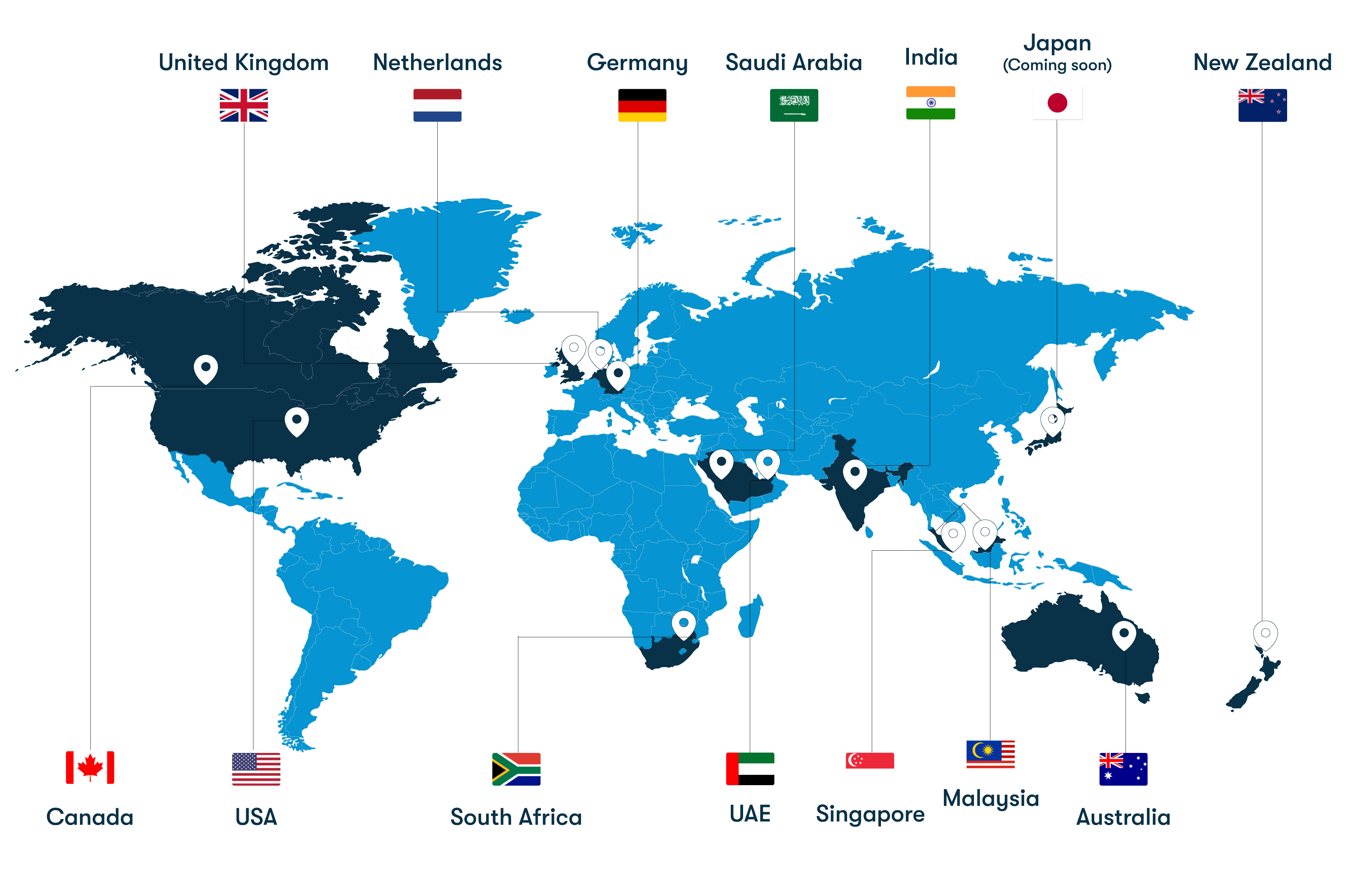
From our headquarters in India to training centers across UAE, Iraq, Saudi Arabia, UK, USA, Singapore, Australia, and more — Koenig delivers Microsoft certification training in 50+ countries.