
Unable to find what you're searching for?
We're here to help you find itMaster User Experience Designing by building responsive layouts and interactive prototypes in Figma and Framer. Gain hands-on expertise to pass the Uxcel Certified Figma Specialty exam.
500K+ certified professionals



























Explore User Experience Designing certification and training courses — delivered live by certified instructors.
User Experience Designing is the practice of creating products, systems, and services that deliver meaningful, usable, and accessible interactions for users, as defined by standards such as ISO 9241-210. It focuses on understanding user needs, behaviors, and contexts to solve real-world problems through human-centered design. Within the broader digital design ecosystem, it serves as the foundation for shaping how users engage with technology across websites, applications, and digital platforms. Core components include User Research, which gathers insights through interviews and surveys; Information Architecture, which organizes content for intuitive navigation; Interaction Design, which defines how users engage with interfaces; Wireframing and Prototyping, using tools like Figma and Sketch to visualize solutions; and Usability Testing, which validates designs through real-user feedback. These elements work iteratively to refine the user journey and ensure accessibility, functionality, and satisfaction across touchpoints. This discipline is for designers, product managers, and developers who aim to build solutions centered on user needs, ensuring products are not only functional but also intuitive and inclusive.
Core UX Concepts
Understand user-centered design, personas, and user journey mapping
Design Tools
Navigate Figma interface for creating frames and components
Wireframing
Build low-fidelity layouts with text, shapes, and placeholders
Prototyping
Link frames and set interactions for clickable prototypes
User Research
Conduct usability studies and interpret feedback effectively
Visual Design
Apply typography, color theory, and spacing in interfaces
The building blocks every User Experience Designing solution is made of
See what your official User Experience Designing certification looks like. Download a sample — then let our advisors map the fastest path to earning the real one.
 NN/g UXCUX Certification
NN/g UXMCUX Master Certification
HFI-CUACertified Usability Analyst
HFI-CXACertified User Experience Analyst
GoogleUXGoogle UX Design Professional Certificate
NN/g UXSCUX Specialty Certification
Official credential badges — shareable on LinkedIn
NN/g UXCUX Certification
NN/g UXMCUX Master Certification
HFI-CUACertified Usability Analyst
HFI-CXACertified User Experience Analyst
GoogleUXGoogle UX Design Professional Certificate
NN/g UXSCUX Specialty Certification
Official credential badges — shareable on LinkedIn

Four formats. One quality standard. Every option comes with the same expert instructors, official courseware, and money-back guarantee.
Every factor that determines whether you actually pass your User Experience Designing exam — rated across every training format available.
| Criteria | Koenig | ALP Provider | Legacy Provider | Self-Paced Platform | Free Platform |
|---|---|---|---|---|---|
| Trainer Expertise & Certification | |||||
| MCT-Certified Experts | |||||
| Live Instructor-Led Training | Partial | Partial | |||
| 1-on-1 Personalized Mentoring | |||||
| Nielsen Norman Group Standards | |||||
| Official ALP* Status | |||||
| Official Courseware Access | Partial | Partial | |||
| Training Credit Recognition | |||||
| Flexibility & Global Reach | |||||
| Any-Day/Flexi Start Dates | |||||
| On-Site or Fly-Me Trainers | |||||
| Global Delivery Reach | Partial | ||||
| Results & Learner Trust | |||||
| Certification Support | Dedicated Exam Prep | Standard Support | |||
| Entry Price (Fundamentals) | ~$1,700 · Best Value | ~$1,100 | $15-30/mo | Free | Free |
| Verified Learner Reviews | 2,340+ · 4.8★ | Limited | N/A | N/A | N/A |
Data sourced from public pricing pages and review platforms. Accurate as of March 2026. Partial = available in select regions only.
Verified reviews from learners certified on Azure, AI, Security, and more.
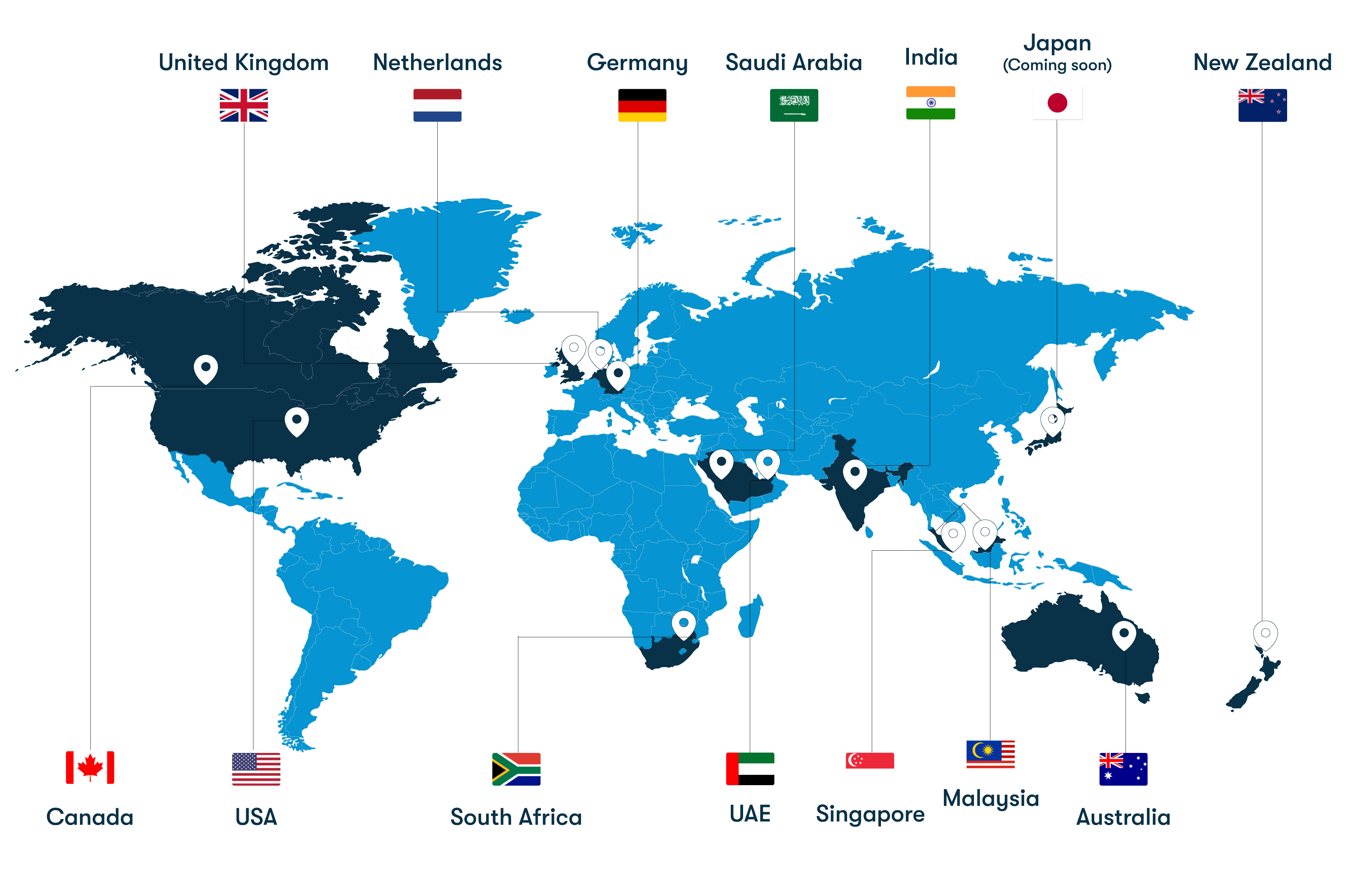
From our headquarters in India to training centers across UAE, Iraq, Saudi Arabia, UK, USA, Singapore, Australia, and more — Koenig delivers Microsoft certification training in 195+ countries.