
Unable to find what you're searching for?
We're here to help you find itKoenig Robotics / Automation Engineering enables you to master ROS, PLC programming, and AI-driven control through hands-on labs, leading to professional certification and advanced industrial automation expertise.


500K+ certified professionals



























Explore Robotics / Automation Engineering certification and training courses — delivered live by certified instructors.
Robotics / Automation Engineering is a multidisciplinary field focused on the design, programming, and deployment of systems that perform tasks with minimal human intervention, integrating mechanical, electronic, and computational engineering to solve complex automation challenges. It sits at the intersection of control systems, artificial intelligence, and industrial engineering within the broader technology stack. Core components include Industrial Robots, which are reprogrammable manipulators used in manufacturing for tasks like welding and assembly; Service Robots, designed for professional or personal use in environments such as healthcare and logistics; and Control Systems, the hardware and software enablers that manage robot behavior through sensing, decision-making, and actuation. This technology is for engineers, technicians, and systems integrators who design, deploy, or maintain automated solutions in manufacturing, logistics, healthcare, and other industries where precision, efficiency, and reliability in physical task execution are critical.
Programming Fundamentals
Write functions and control structures in Python or C
Circuit Analysis
Analyze DC and AC circuits using mesh and node methods
Engineering Mathematics
Apply calculus and differential equations to dynamic systems
Physics and Mechanics
Solve statics and dynamics problems using Newtonian mechanics
Microcontroller Basics
Program microcontrollers and interface with sensors and actuators
Control Systems
Design and analyze PID controllers for feedback systems
The building blocks every Robotics / Automation Engineering solution is made of
See what your official Robotics / Automation Engineering certification looks like. Download a sample — then let our advisors map the fastest path to earning the real one.
 FANUC-CERT-ROFANUC Certified Robot Operator
ABB-RC-01ABB Robotics Certification - Programming
YASKAWA-MOTOMAN-01Yaskawa Motoman Programming Certification
A3-RIA-R1RIA Certified Robot Integrator - Level I
A3-RIA-R2RIA Certified Robot Integrator - Level II
FANUC-CERT-RPFANUC Certified Robot Programmer
Official credential badges — shareable on LinkedIn
FANUC-CERT-ROFANUC Certified Robot Operator
ABB-RC-01ABB Robotics Certification - Programming
YASKAWA-MOTOMAN-01Yaskawa Motoman Programming Certification
A3-RIA-R1RIA Certified Robot Integrator - Level I
A3-RIA-R2RIA Certified Robot Integrator - Level II
FANUC-CERT-RPFANUC Certified Robot Programmer
Official credential badges — shareable on LinkedIn
Four formats. One quality standard. Every option comes with the same expert instructors, official courseware, and money-back guarantee.
Every factor that determines whether you actually pass your Robotics / Automation Engineering exam — rated across every training format available.
| Criteria | Koenig | Free Platform | Self-Paced Platform | ALP Provider | Legacy Provider | Note |
|---|---|---|---|---|---|---|
| Instructor Expertise and Credentials | ||||||
| MCT-Certified Trainers | — | |||||
| Live Instructor-Led Delivery | Partial | — | ||||
| 1-on-1 Private Training | — | |||||
| Official Robotics Authorization | ||||||
| Official ALP Status | — | |||||
| Official Courseware | Partial | Partial | — | |||
| ESI / EA Credits Accepted | — | |||||
| Learning Flexibility and Access | ||||||
| Any-Day/Flexi Start | — | |||||
| On-Site or Fly-Me-A-Trainer | Partial | — | ||||
| Global Delivery Reach | — | |||||
| Performance and Value | ||||||
| Exam Pass Rate | — | — | — | — | — | Data omitted: unverified for this vendor |
| Entry Price | ~$199 · best value | Free | $199 | ~$1,320 | ~$1,650 | — |
| Verified Reviews | — | — | — | — | — | Data omitted: unverified for this vendor |
Data sourced from public pricing pages and review platforms. Accurate as of March 2026. Partial = available in select regions only.
Verified reviews from learners certified on Azure, AI, Security, and more.
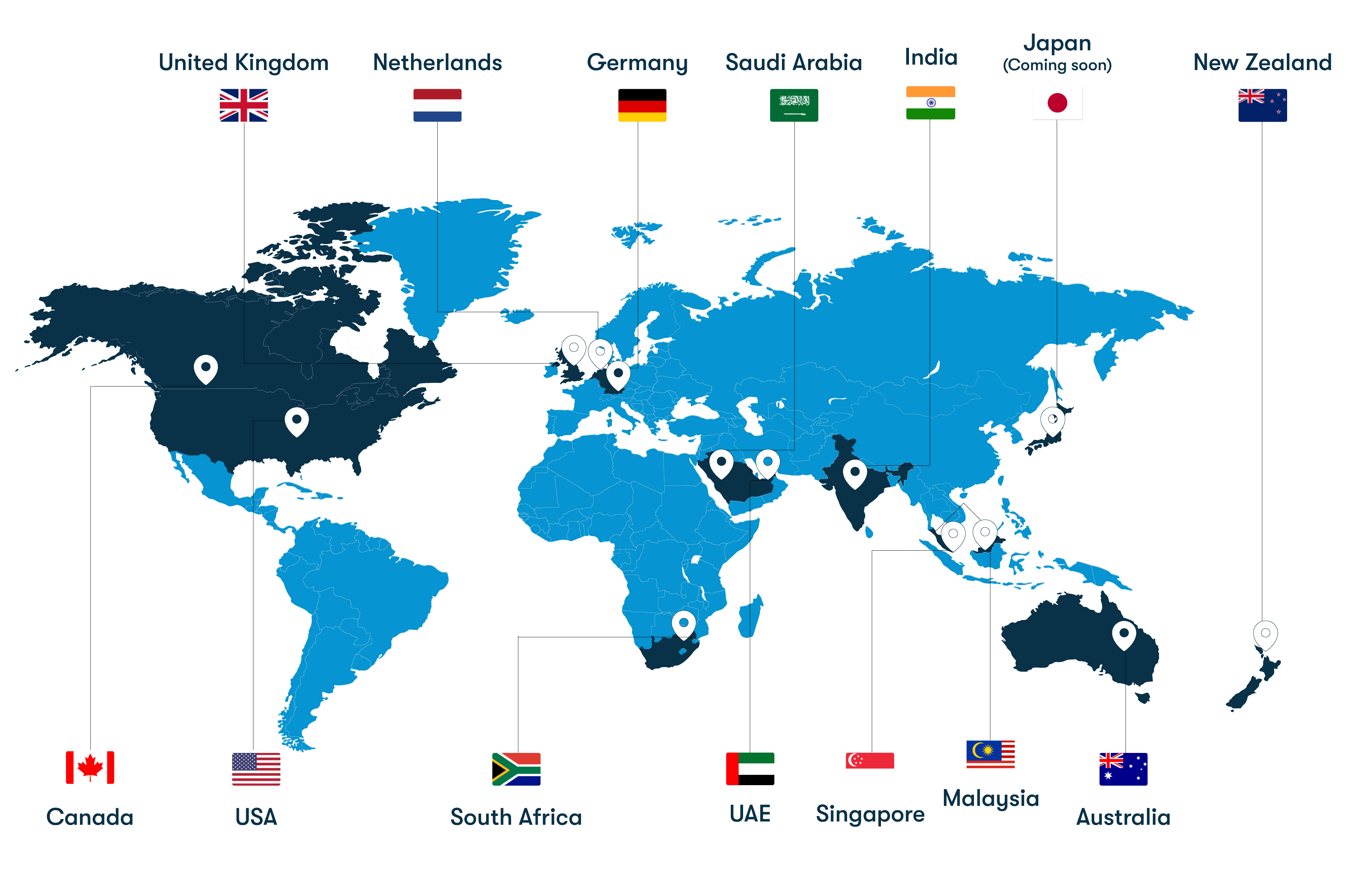
From our headquarters in India to training centers across UAE, Iraq, Saudi Arabia, UK, USA, Singapore, Australia, and more — Koenig delivers Microsoft certification training in 50+ countries.