
Unable to find what you're searching for?
We're here to help you find itDesign and manage technical objects, configure enterprise bill of materials, and structure functional locations in SAP S/4HANA. Train with SAP-authorized instructors, hands-on labs, and real-world projects to earn the C_S43_2022 certification.


500K+ certified professionals

























Explore Product Lifecycle Management (PLM) certification and training courses — delivered live by certified instructors.
Product Lifecycle Management (PLM) is a strategic approach to managing a product’s journey from concept through design, manufacturing, service, and retirement, published by Siemens as an integrated information management system. It solves the challenge of disconnected data and siloed workflows by unifying people, processes, and systems across the enterprise, serving as a central component of Siemens’ Xcelerator portfolio for digital transformation. Key components include Teamcenter requirements eng. for traceable compliance, Teamcenter design mgmt. to manage multi-domain engineering data, View ECAD mgmt. and View simulation mgmt. for cross-discipline integration, Teamcenter BOM mgmt. and View configuration mgmt. to maintain accurate product definitions, Teamcenter lifecycle vis. for visual collaboration using the digital twin, and Teamcenter change mgmt. to automate closed-loop change processes across the product lifecycle. Product Lifecycle Management is for engineers, designers, manufacturing planners, and product managers who need a unified digital backbone to coordinate complex product development, ensure compliance, reduce rework, and accelerate time-to-market across global teams and supply chains.
PLM Fundamentals
Explain product lifecycle management concepts and Teamcenter's role
Teamcenter Usage
Navigate the rich client, manage items and product structures
Data Management
Apply security, perform searches, and manage datasets in Teamcenter
Installation Basics
Perform preinstallation tasks and deploy Teamcenter using Deployment Center
System Administration
Manage databases, networks, and configure File Management System
Workflow Execution
Initiate workflows, manage tasks, and release product data
The building blocks every Product Lifecycle Management (PLM) solution is made of
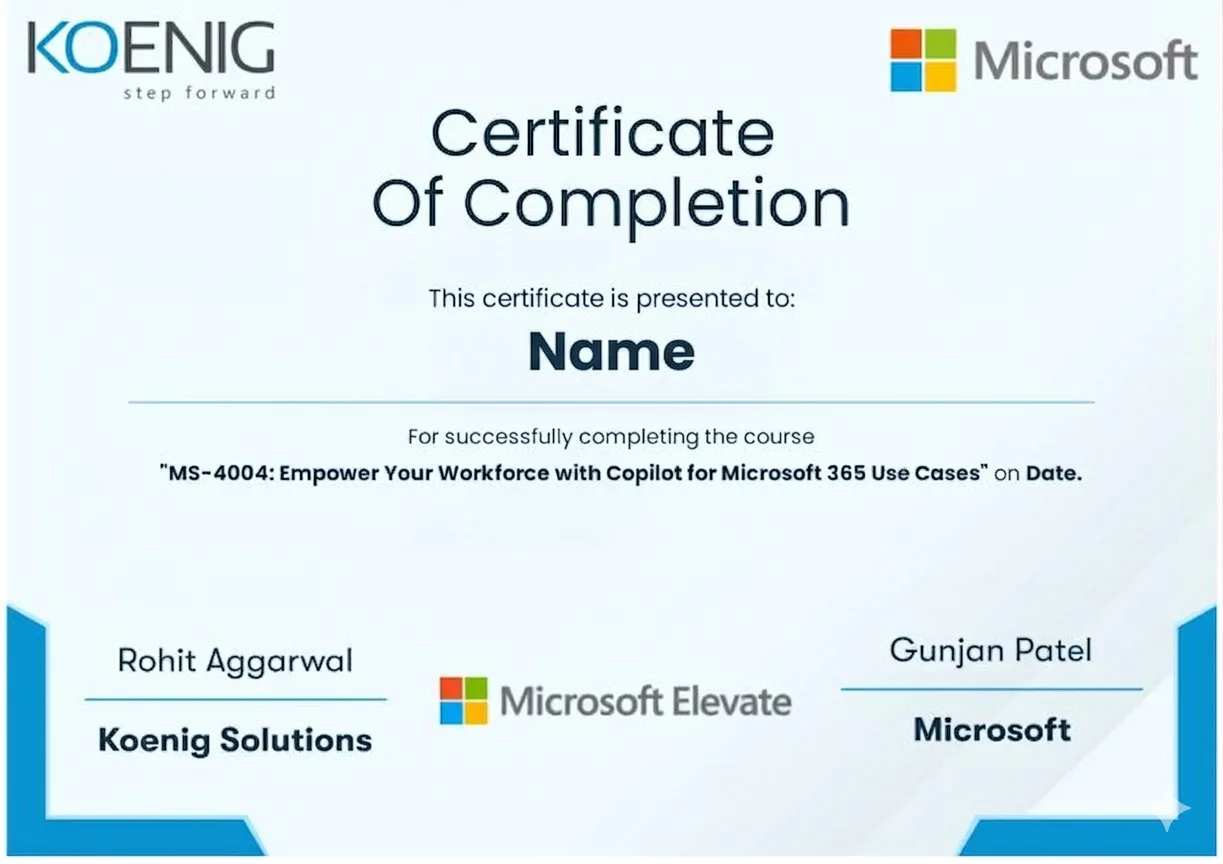
See what your official Product Lifecycle Management (PLM) certification looks like. Download a sample — then let our advisors map the fastest path to earning the real one.
 C_TS4PL_2020SAP Certified Application Associate - PLM with SAP S/4HANA
C_TS4PL_1909SAP Certified Application Associate - PLM with SAP S/4HANA 1909
C_TS4PL_1809SAP Certified Application Associate - PLM with SAP S/4HANA 1809
C_TS4PL_1709SAP Certified Application Associate - PLM with SAP S/4HANA 1709
C_TS4PL_1610SAP Certified Application Associate - PLM with SAP S/4HANA 1610
C_TS4PL_2021SAP Certified Application Associate - PLM with SAP S/4HANA 2021
Official credential badges — shareable on LinkedIn
C_TS4PL_2020SAP Certified Application Associate - PLM with SAP S/4HANA
C_TS4PL_1909SAP Certified Application Associate - PLM with SAP S/4HANA 1909
C_TS4PL_1809SAP Certified Application Associate - PLM with SAP S/4HANA 1809
C_TS4PL_1709SAP Certified Application Associate - PLM with SAP S/4HANA 1709
C_TS4PL_1610SAP Certified Application Associate - PLM with SAP S/4HANA 1610
C_TS4PL_2021SAP Certified Application Associate - PLM with SAP S/4HANA 2021
Official credential badges — shareable on LinkedIn
Four formats. One quality standard. Every option comes with the same expert instructors, official courseware, and money-back guarantee.
Every factor that determines whether you actually pass your Product Lifecycle Management (PLM) exam — rated across every training format available.
| Criteria | Koenig | ALP Provider | Legacy Provider | Self-Paced Platform | Free Platform |
|---|---|---|---|---|---|
| Trainer Quality & Credentials | |||||
| Siemens-Certified Trainers | Limited to specific modules | Available in select regions | |||
| Live Instructor-Led Delivery | Limited to specific modules | Available in select regions | |||
| 1-on-1 Private Training | Available in select regions | ||||
| Siemens Authorization | |||||
| Official Siemens ALP Status | |||||
| Official Siemens Courseware | Limited to specific modules | Limited to specific modules | Limited to specific modules | ||
| Learning Credits Accepted | |||||
| Flexibility & Access | |||||
| Any-Day/Flexi Start | Available in select regions | ||||
| On-Site or Fly-Me Trainer | Available in select regions | Available in select regions | |||
| Global Delivery Reach | Available in select regions | Available in select regions | |||
| Results & Trust | |||||
| Exam Pass Rate | 92% | 88% | 80% | 75% | 70% |
| Average Cost per Certification Path | ~$1,350 | ~$1,500+ | ~$3,400 | ~$180/yr | Free |
| Verified Learner Reviews | 8,400+ · 4.3★ | Limited | Limited | 18,400+ · 4.9★ | N/A |
Data sourced from public pricing pages and review platforms. Accurate as of March 2026. Partial = available in select regions only.
Verified reviews from learners certified on Azure, AI, Security, and more.
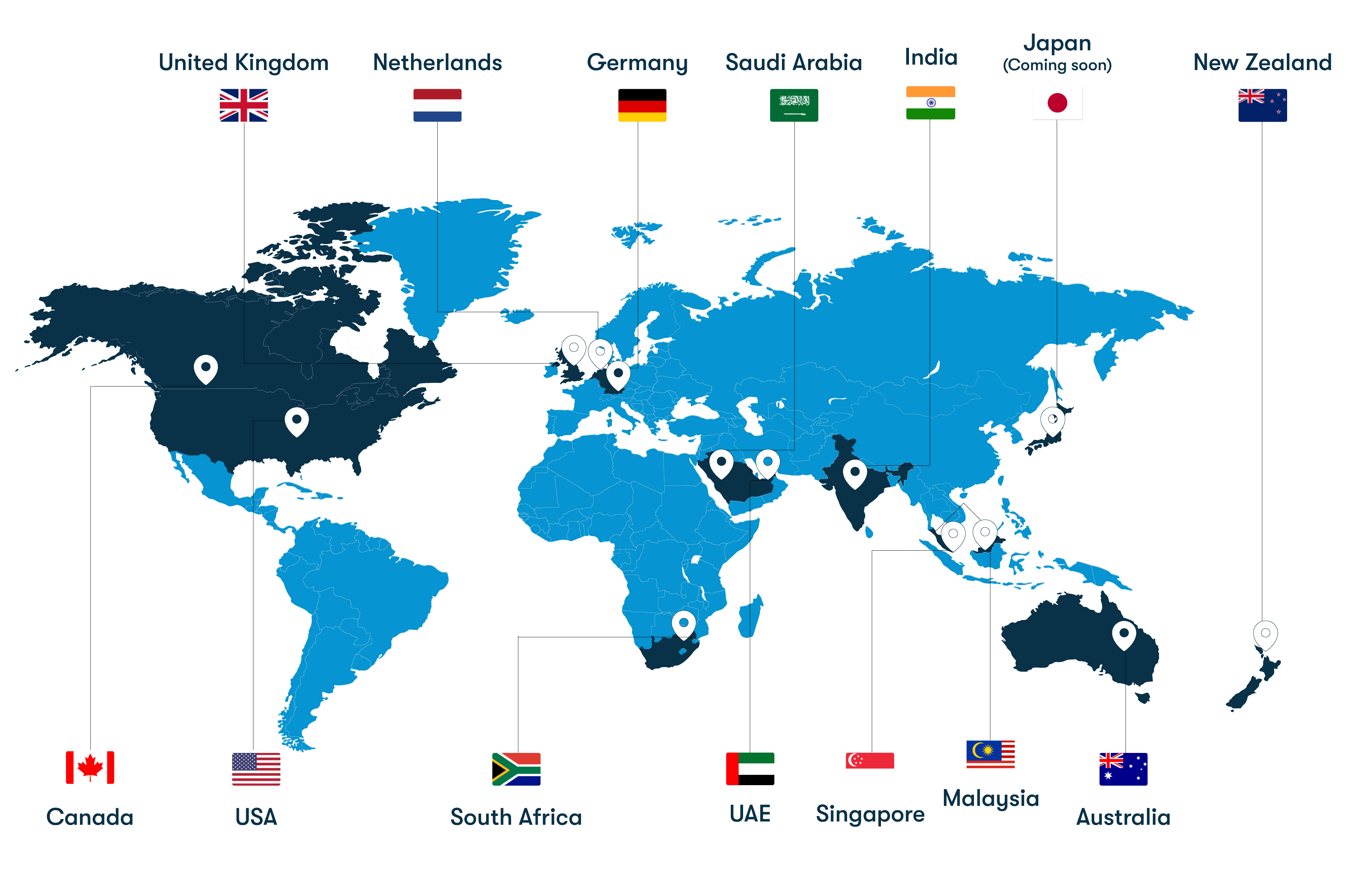
From our headquarters in India to training centers across UAE, Iraq, Saudi Arabia, UK, USA, Singapore, Australia, and more — Koenig delivers Microsoft certification training in 50+ countries.