
Unable to find what you're searching for?
We're here to help you find itKoenig FreeCAD training accelerates your engineering design workflow through expert-led labs and official courseware, helping you master parametric modeling, structural simulation, and precise technical drawing creation.


500K+ certified professionals



























Explore FreeCAD certification and training courses — delivered live by certified instructors.
FreeCAD is an open-source parametric 3D modeler designed for precise engineering and industrial workflows. Governed by the FreeCAD community, this platform is widely adopted by professional engineers and educators globally for its robust, vendor-neutral design capabilities. Users leverage its flexible environment to create complex, modifiable models across Windows, macOS, and Linux. Critical tools include the Sketcher Workbench for 2D geometry, the Part Design Workbench for parametric 3D modeling, and the TechDraw Workbench for technical documentation. By avoiding vendor lock-in, FreeCAD provides a reliable, cost-free solution for architects and designers seeking full control over their production processes without compromising on professional-grade functionality.
OpenGL Support
Graphics card or chipset must support OpenGL v2.0 or higher
System Memory
8GB of RAM or more is recommended for handling complex assemblies in FreeCAD
Operating System
System must run Windows 10/11, macOS 10.15+, or Linux distributions like Ubuntu 22.04+ to support FreeCAD
Python Knowledge
Required only for Advanced Scripting and Automation modules within FreeCAD
Basic 3D CAD Concepts
Familiarity with parametric modeling, sketching, and constraint-based design principles in FreeCAD
GUI Navigation
Navigate Qt-based interface components and workbenches in FreeCAD
The building blocks every FreeCAD solution is made of
See what your official FreeCAD certification looks like. Download a sample — then let our advisors map the fastest path to earning the real one.

Four formats. One quality standard. Every option comes with the same expert instructors, official courseware, and money-back guarantee.
Every factor that determines whether you actually pass your FreeCAD exam — rated across every training format available.
| Criteria | Description |
|---|---|
| Design & Modeling Skills | |
| Parametric Part Design | Create complex 3D models using constraint-based sketching and history-based modeling in FreeCAD. |
| Assembly Management | Utilize FreeCAD assembly workbenches to manage multi-part projects and mechanical constraints. |
| BIM & Architecture | Leverage FreeCAD BIM tools for architectural modeling, IFC export, and structural documentation. |
| Technical Documentation | |
| Drafting & TechDraw | Generate professional 2D technical drawings and documentation directly from 3D FreeCAD models. |
| Simulation & Analysis | Apply Finite Element Analysis (FEA) and path planning for manufacturing within the FreeCAD ecosystem. |
| Training Investment | |
| Software Cost | FreeCAD is open-source software and is free to download and use. |
| Training Services | Costs listed for third-party training providers range from $15/mo for self-paced resources to $1,500+ for instructor-led sessions. |
Data sourced from public pricing pages and review platforms. Accurate as of March 2026. Partial = available in select regions only.
Verified reviews from learners certified on Azure, AI, Security, and more.
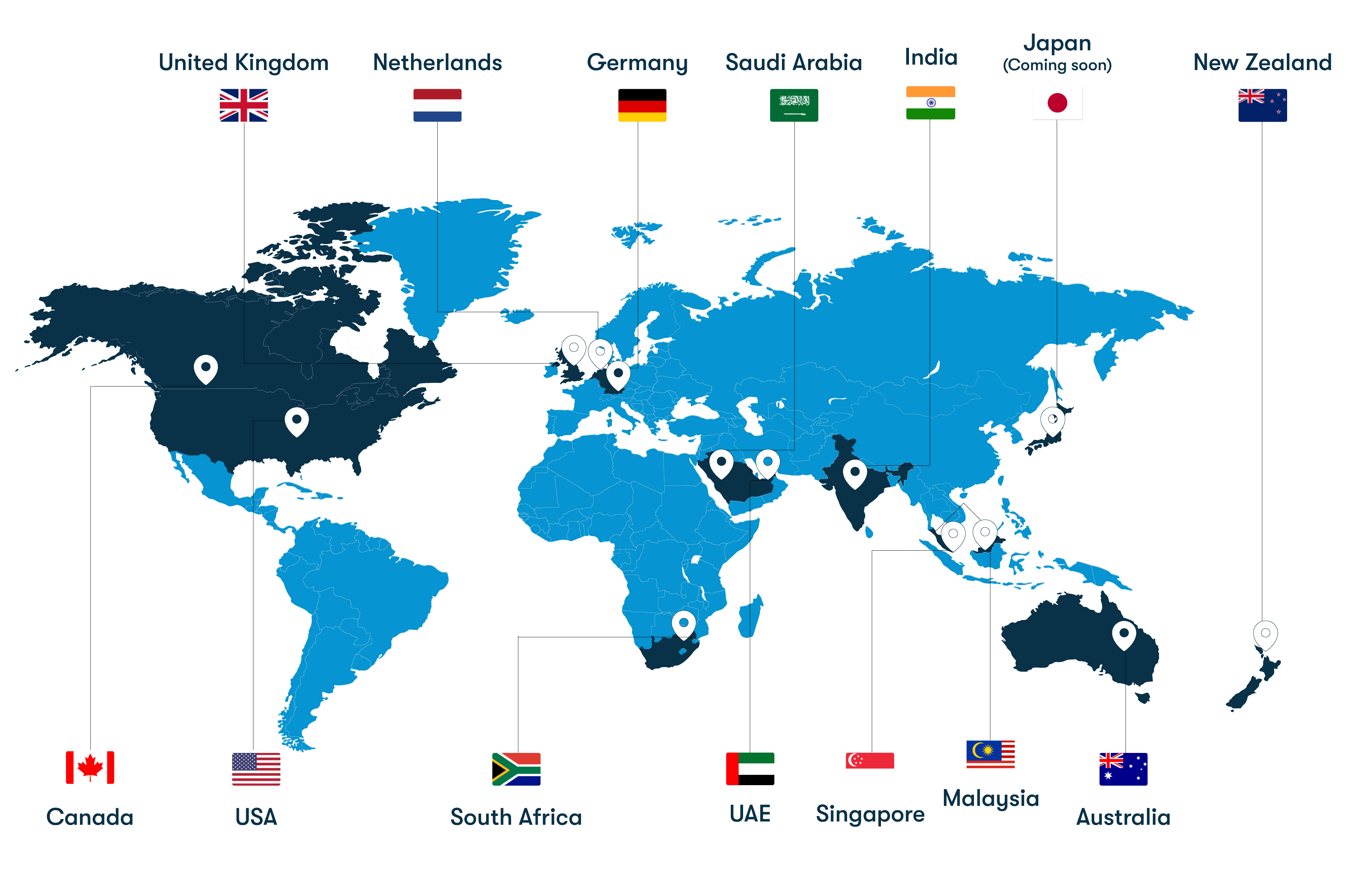
From our headquarters in India to training centers across UAE, Iraq, Saudi Arabia, UK, USA, Singapore, Australia, and more — Koenig delivers Microsoft certification training in 50+ countries.