
Unable to find what you're searching for?
We're here to help you find itMaster Scan-to-BIM workflows using Autodesk ReCap Pro and Revit. Learn from certified instructors to create accurate 3D models and earn your Autodesk Certified Professional credential.


500K+ certified professionals
























Explore Reality Capture / Scan-to-BIM certification and training courses — delivered live by certified instructors.
Reality Capture / Scan-to-BIM is a technology workflow developed by Autodesk that transforms real-world environments into accurate digital 3D models, solving the challenge of documenting existing structures for renovation, construction, or preservation. It sits within Autodesk’s AEC (Architecture, Engineering, and Construction) portfolio, bridging physical sites and digital design through precise spatial data. The workflow relies on key Autodesk products: ReCap Pro for processing laser scans and photographs into point clouds and 3D meshes, Revit for generating intelligent Building Information Models from captured data, and BIM Collaborate Pro for cloud-based coordination and collaboration across project teams. These tools enable users to register scans, extract features, and integrate as-built conditions into design and construction workflows. This technology is for architects, civil engineers, surveyors, and construction professionals who require precise as-built documentation to design renovations, verify construction progress, or preserve historic structures. By converting physical spaces into actionable digital models, it enables accurate decision-making throughout the project lifecycle.
Point Cloud Fundamentals
Understand point cloud data structure and coordinate systems
ReCap Pro Interface
Navigate ReCap Pro workspace and core tools
Scan Registration
Align and register multiple laser scan datasets
3D Navigation
Use RealView and minimap for spatial orientation
Measurement Tools
Apply dimensioning and labeling to point clouds
Data Export
Prepare and export scan data for BIM software
The building blocks every Reality Capture / Scan-to-BIM solution is made of
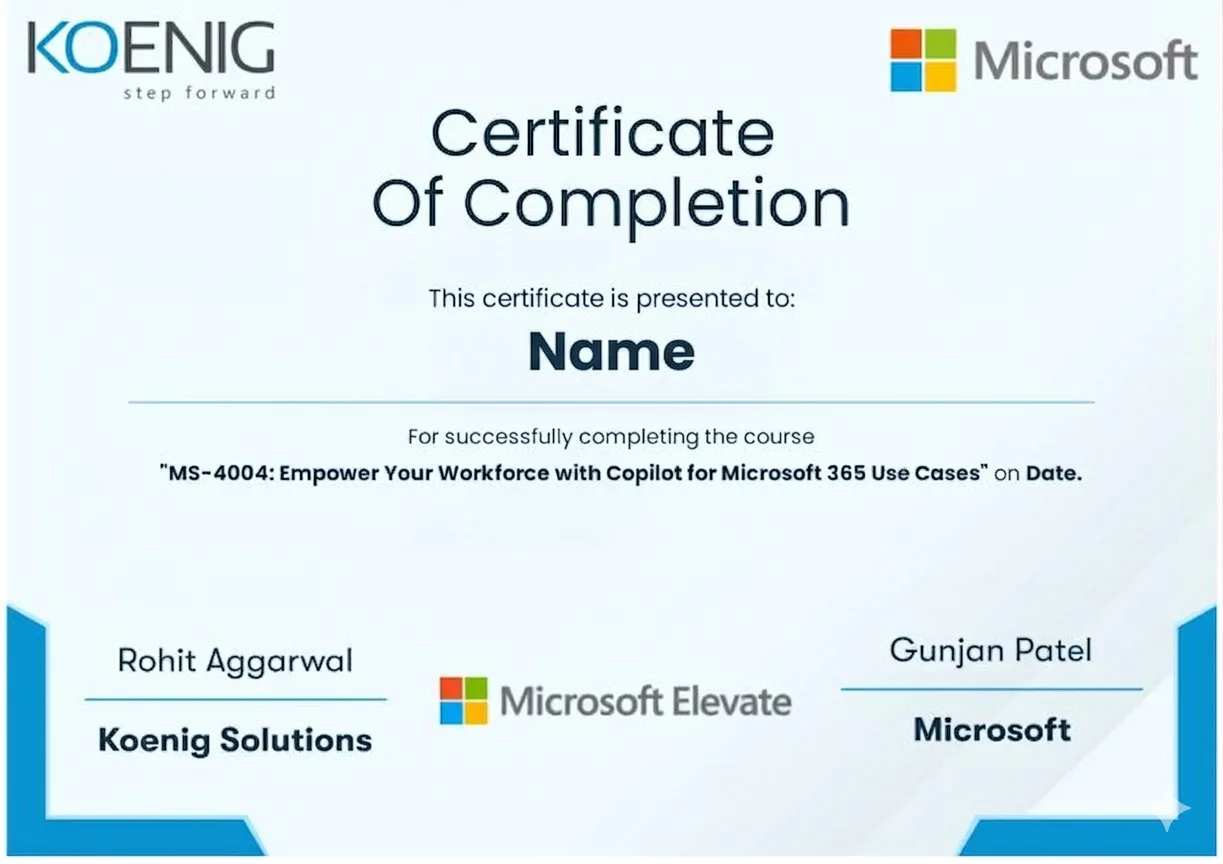
See what your official Reality Capture / Scan-to-BIM certification looks like. Download a sample — then let our advisors map the fastest path to earning the real one.
Four formats. One quality standard. Every option comes with the same expert instructors, official courseware, and money-back guarantee.
Every factor that determines whether you actually pass your Reality Capture / Scan-to-BIM exam — rated across every training format available.
| Criteria | Koenig | Free Platform | Self-Paced Platform | ALP Provider | Legacy Provider | Note |
|---|---|---|---|---|---|---|
| Trainer Expertise & Certification | ||||||
| MCT-Certified Trainers | — | |||||
| Live Instructor-Led Delivery | Partial | Partial | — | |||
| 1-on-1 Private Training | Partial | — | ||||
| Autodesk Authorization Standards | ||||||
| Official Autodesk ALP Status | — | |||||
| Official Courseware Product | Partial | Partial | — | |||
| Autodesk EBA Tokens Accepted | — | |||||
| Flexibility & Global Access | ||||||
| Any-Day / Flexi Start | Partial | — | ||||
| On-Site / Fly-Me Trainer | Partial | Partial | — | |||
| Global Delivery Reach | Partial | — | ||||
| Results & Learner Trust | ||||||
| Hands-on Lab Hours | Limited | Practical application of ReCap Pro and Revit workflows | ||||
| Entry Price (Fundamentals) | ~$745 | Free | $15-30/mo | ~$1,500+ | ~$1,200 | — |
| Verified Learner Reviews | 18,400+ · 4.9★ | N/A | 100,000+ · 4.7★ | Limited | Limited | — |
Data sourced from public pricing pages and review platforms. Accurate as of March 2026. Partial = available in select regions only.
Verified reviews from learners certified on Azure, AI, Security, and more.
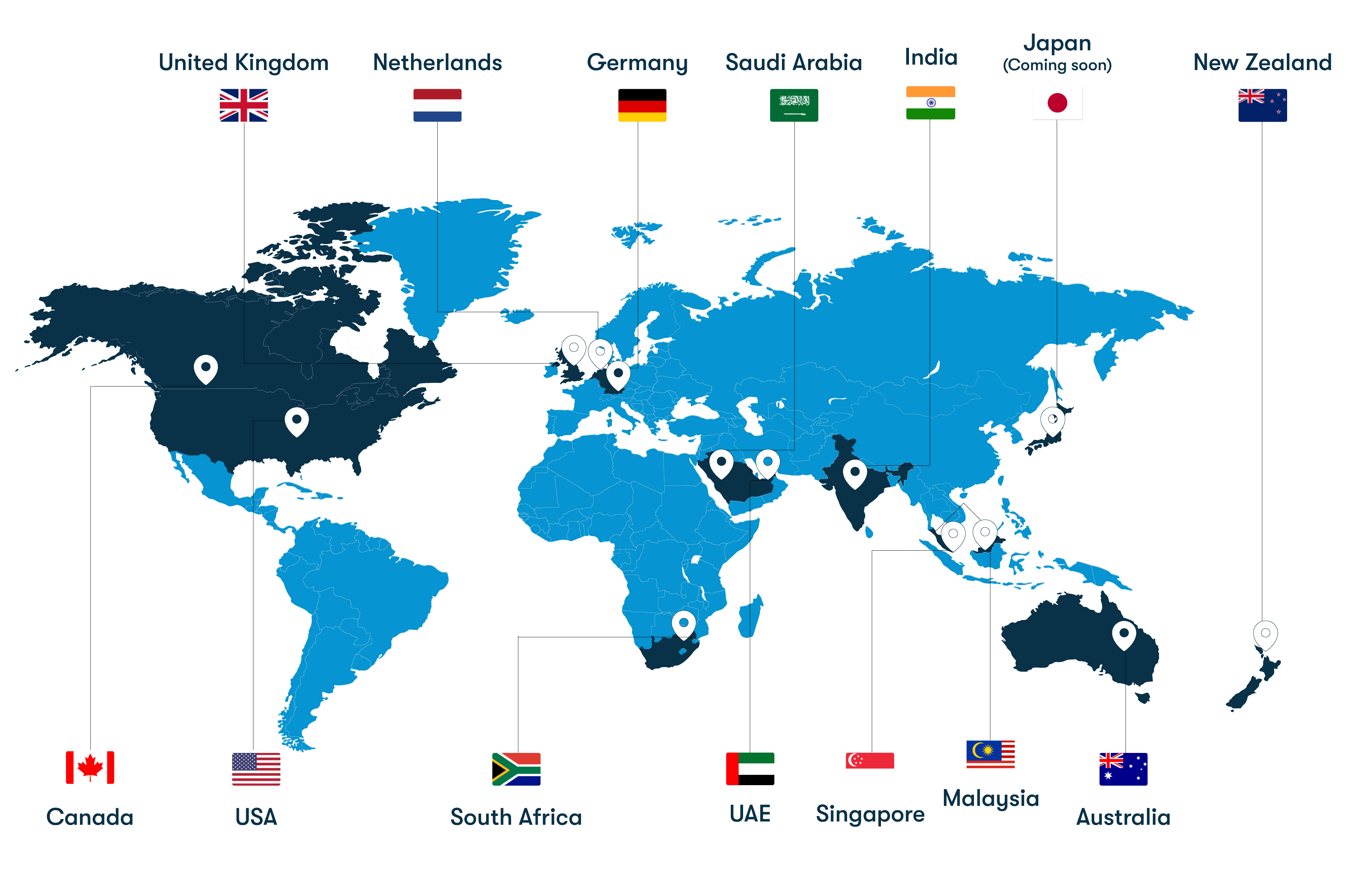
From our headquarters in India to training centers across UAE, Iraq, Saudi Arabia, UK, USA, Singapore, Australia, and more — Koenig delivers Microsoft certification training in 50+ countries.