
Unable to find what you're searching for?
We're here to help you find itMaster secure data modeling and automation with Microsoft Dataverse. Koenig provides expert-led training and hands-on labs to achieve your Power Platform Developer Associate certification.


500K+ certified professionals


























Explore Microsoft Dataverse certification and training courses — delivered live by certified instructors.
Microsoft Dataverse is a cloud-based data platform published by Microsoft that securely stores and manages data for business applications, solving the challenge of integrating disparate data sources into a unified, secure environment. It serves as the foundational data layer within the Microsoft Power Platform, enabling seamless data use across Power Apps, Power Automate, Power BI, and Dynamics 365. The platform includes Standard Tables for common business entities, Custom Tables to model unique organizational data, and Virtual Tables that connect to external data sources in real time. It supports Business Logic through calculated columns, workflows, and business rules, and integrates with Power Query for data transformation. Dataverse for Teams brings embedded data management within Microsoft Teams, while AI Builder enables intelligent automation using pre-built models. This technology is for business analysts, app makers, and developers who need a secure, scalable environment to model, manage, and act on enterprise data across applications and workflows.
Data Modeling
Create and configure tables, columns and relationships in Dataverse
Security Roles
Assign and manage Dataverse security roles and table privileges
Power Apps Portal
Navigate and use the Power Apps maker portal interface
Business Rules
Implement business rules and logic within Dataverse tables
Environment Access
Access and work within a Dataverse-enabled Power Platform environment
Solution Management
Create and manage solutions for Dataverse component deployment
The building blocks every Microsoft Dataverse solution is made of
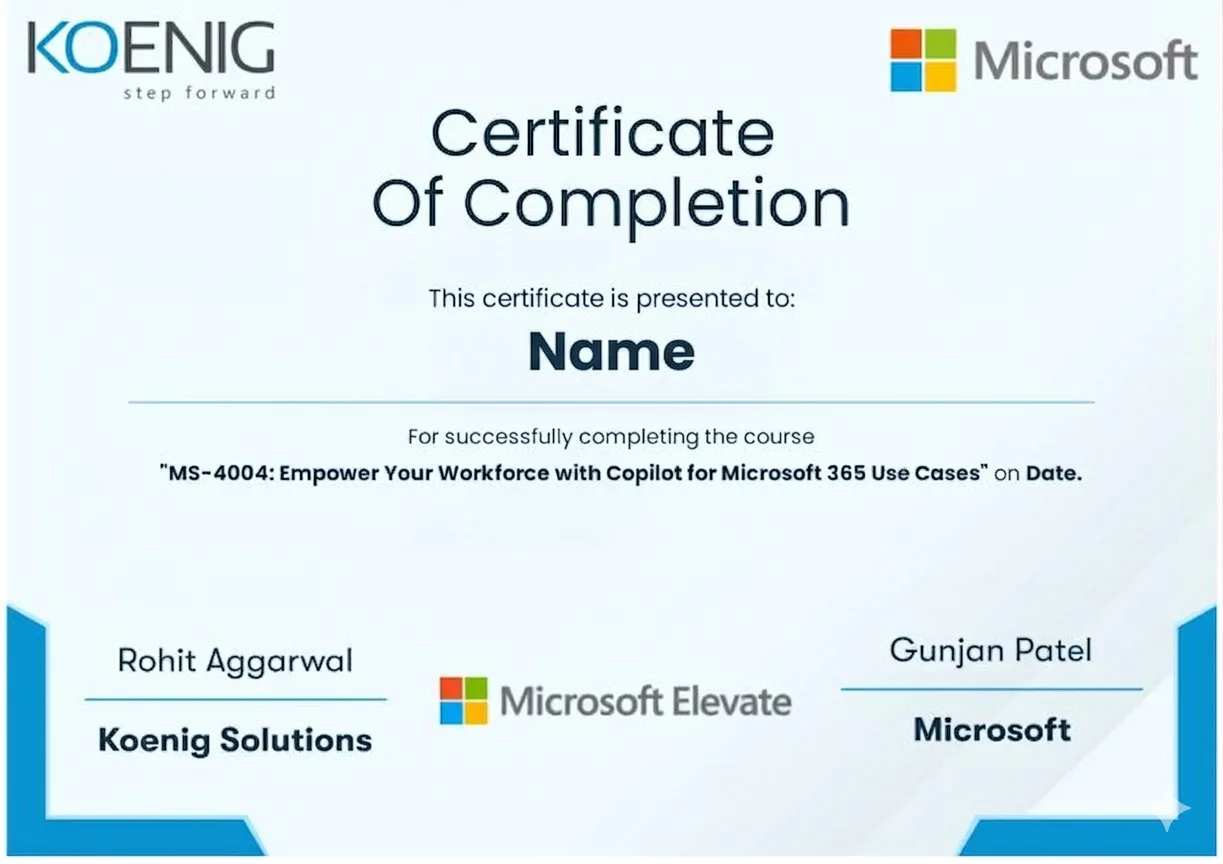
See what your official Microsoft Dataverse certification looks like. Download a sample — then let our advisors map the fastest path to earning the real one.
 PL-900Power Platform Fundamentals
PL-100Power Platform App Maker
PL-200Power Platform Functional Consultant
PL-400Power Platform Developer
PL-300Power BI Data Analyst
PL-600Power Platform Solution Architect
Official credential badges — shareable on LinkedIn
PL-900Power Platform Fundamentals
PL-100Power Platform App Maker
PL-200Power Platform Functional Consultant
PL-400Power Platform Developer
PL-300Power BI Data Analyst
PL-600Power Platform Solution Architect
Official credential badges — shareable on LinkedIn
Four formats. One quality standard. Every option comes with the same expert instructors, official courseware, and money-back guarantee.
Every factor that determines whether you actually pass your Microsoft Dataverse exam — rated across every training format available.
| Criteria | Koenig | ALP Provider | Legacy Provider | Self-Paced Platform | Free Platform |
|---|---|---|---|---|---|
| Trainer Quality & Credentials | |||||
| MCT-Certified Trainers | ✖ | ✖ | ✖ | ||
| Live Instructor-Led Delivery | Partial | ✖ | ✖ | ||
| 1-on-1 Private Training | ✖ | ✖ | ✖ | ✖ | |
| Microsoft Authorisation | |||||
| Official Microsoft ALP Status | ✖ | ✖ | |||
| Official Microsoft Courseware | Partial | ✖ | |||
| ESI / EA Credits Accepted | Partial | ✖ | ✖ | ||
| Flexibility & Access | |||||
| Any-Day / Flexi Start | ✖ | ✖ | |||
| On-Site / Fly-Me Trainer | ✖ | ✖ | |||
| Global Delivery Reach | Partial | Partial | |||
| Results & Trust | |||||
| Exam Pass Rate | 95% | Not published | Not published | Not tracked | Variable |
| Entry Price (Fundamentals) | ~$795 | ~$1,500+ | ~$1,400+ | $15-30/mo | Free |
| Verified Learner Reviews | 18,400+ · 4.9★ | Limited | Limited | High volume | N/A |
Data sourced from public pricing pages and review platforms. Accurate as of March 2026. Partial = available in select regions only.
Verified reviews from learners certified on Azure, AI, Security, and more.
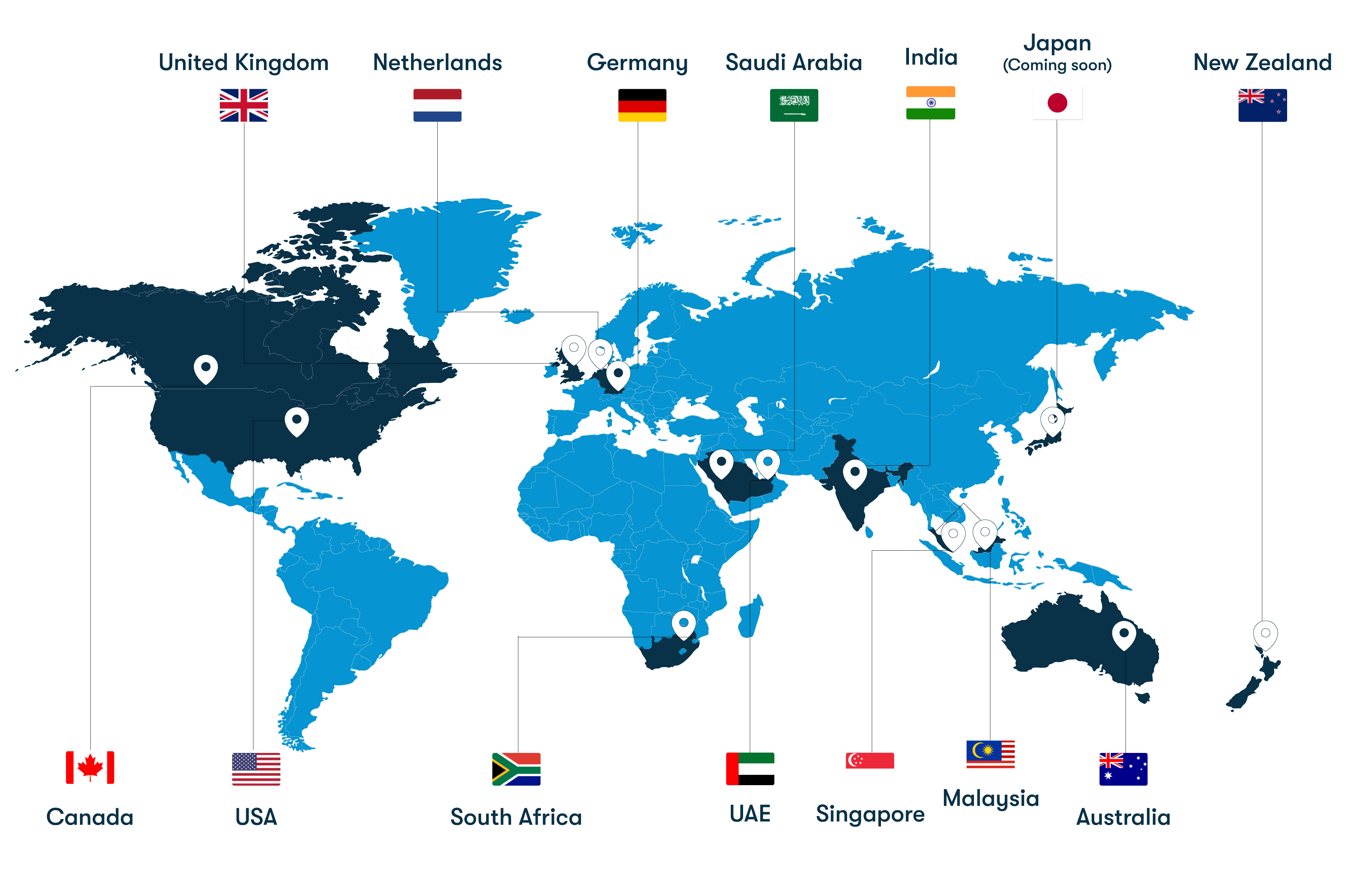
From our headquarters in India to training centers across UAE, Iraq, Saudi Arabia, UK, USA, Singapore, Australia, and more — Koenig delivers Microsoft certification training in 50+ countries.