
Unable to find what you're searching for?
We're here to help you find itDesign, integrate, and deploy modular UI components using Module Federation, independent deployment pipelines, and framework interoperability. Koenig delivers hands-on labs with React, Angular, and Webpack through officially credentialed trainers, leading to Micro-Frontends Architecture Certification.


500K+ certified professionals



























Explore Micro-frontends Architecture certification and training courses — delivered live by certified instructors.
Micro-frontends Architecture enables teams to decompose monolithic interfaces into independently deployable applications. This course provides hands-on labs using React and Webpack to ground architectural theory in practical implementation. By adopting these patterns, organizations typically achieve a 30 percent improvement in time-to-market by enabling autonomous development cycles. Designed for developers and engineering managers, this training covers Module Federation, container orchestration, and route-based decomposition. You will learn to decouple release cycles and manage complex codebases within bounded contexts. Master the skills required to scale frontend development across large teams while ensuring a unified user experience in this comprehensive, expert-led program.
Frontend Fundamentals
Build and debug JavaScript applications using modern browser tools
Component Integration
Compose independent UI components using Module Federation or Single SPA
Build Tools
Configure webpack or Rspack for modular, independent frontend builds
State Management
Manage local and shared state across isolated frontend modules
Deployment Pipelines
Implement CI/CD workflows for independently deployable frontend units
Cross-Cutting Concerns
Apply consistent logging, security, and design system practices
The building blocks every Micro-frontends Architecture solution is made of
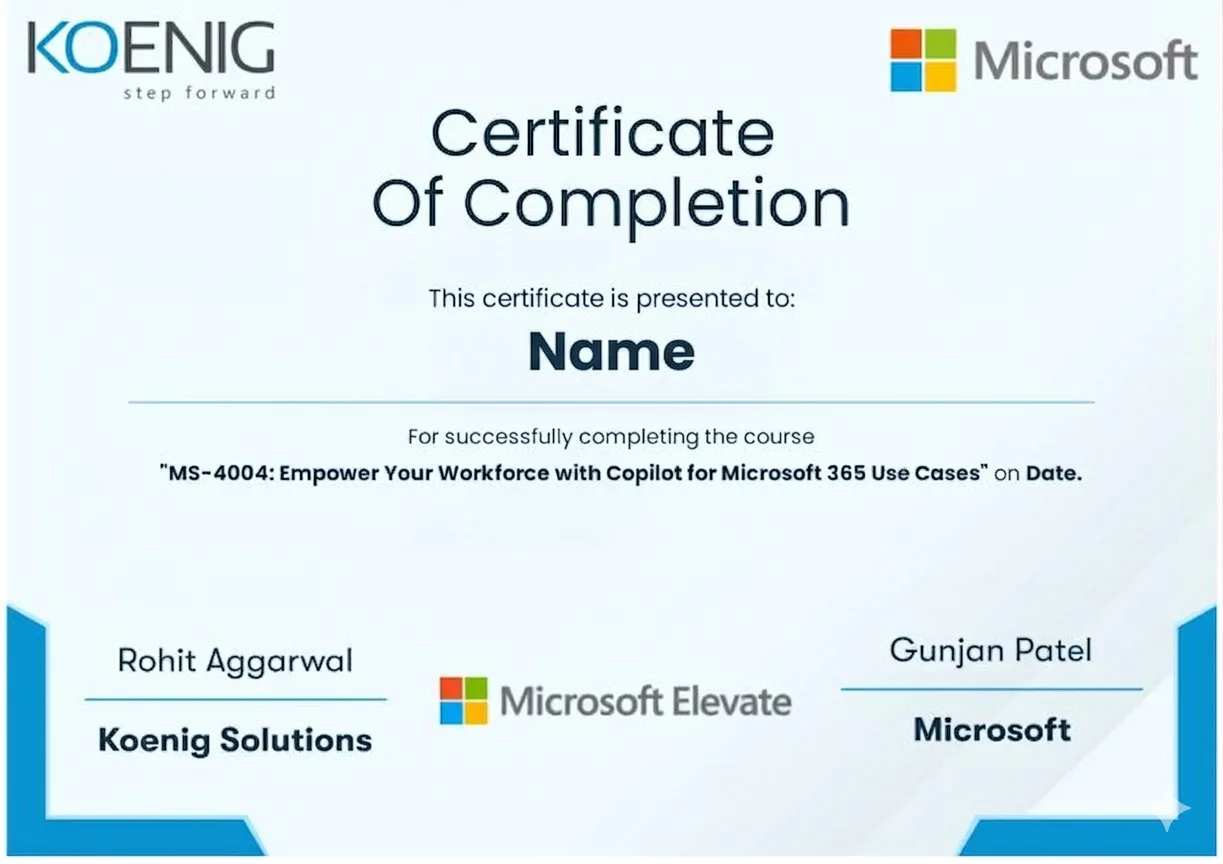
See what your official Micro-frontends Architecture certification looks like. Download a sample — then let our advisors map the fastest path to earning the real one.
Four formats. One quality standard. Every option comes with the same expert instructors, official courseware, and money-back guarantee.
Every factor that determines whether you actually pass your Micro-frontends Architecture exam — rated across every training format available.
| Criteria | Koenig | ALP Provider | Legacy Provider | Self-Paced Platform | Free Platform |
|---|---|---|---|---|---|
| Trainer Expertise & Certification | |||||
| MCT-Certified Trainers | Partial | Partial | |||
| Live Instructor-Led Classes | |||||
| 1-on-1 Private Training | |||||
| Microsoft Authorization Standards | |||||
| Official Microsoft ALP Status | Partial | ||||
| Customized Curriculum | Partial | ||||
| ESI / EA Credits Accepted | Partial | ||||
| Flexibility & Global Access | |||||
| Flexi / Any-Day Start | |||||
| On-Site / Fly-Me-A-Trainer | |||||
| Global Delivery (50+ countries) | Partial | Partial | |||
| Performance & Trust Signals | |||||
| Training Completion Rate | 95% | Not Disclosed | Limited | N/A | N/A |
| Entry Price | ~$745 · best value | ~$1,500+ | ~$1,500+ | $15-30/mo | Free |
| Verified Learner Reviews | 18,400+ · 4.9★ | Limited | Limited | 100,000+ · 4.5★ | Varies |
Data sourced from public pricing pages and review platforms. Accurate as of March 2026. Partial = available in select regions only.
Verified reviews from learners certified on Azure, AI, Security, and more.
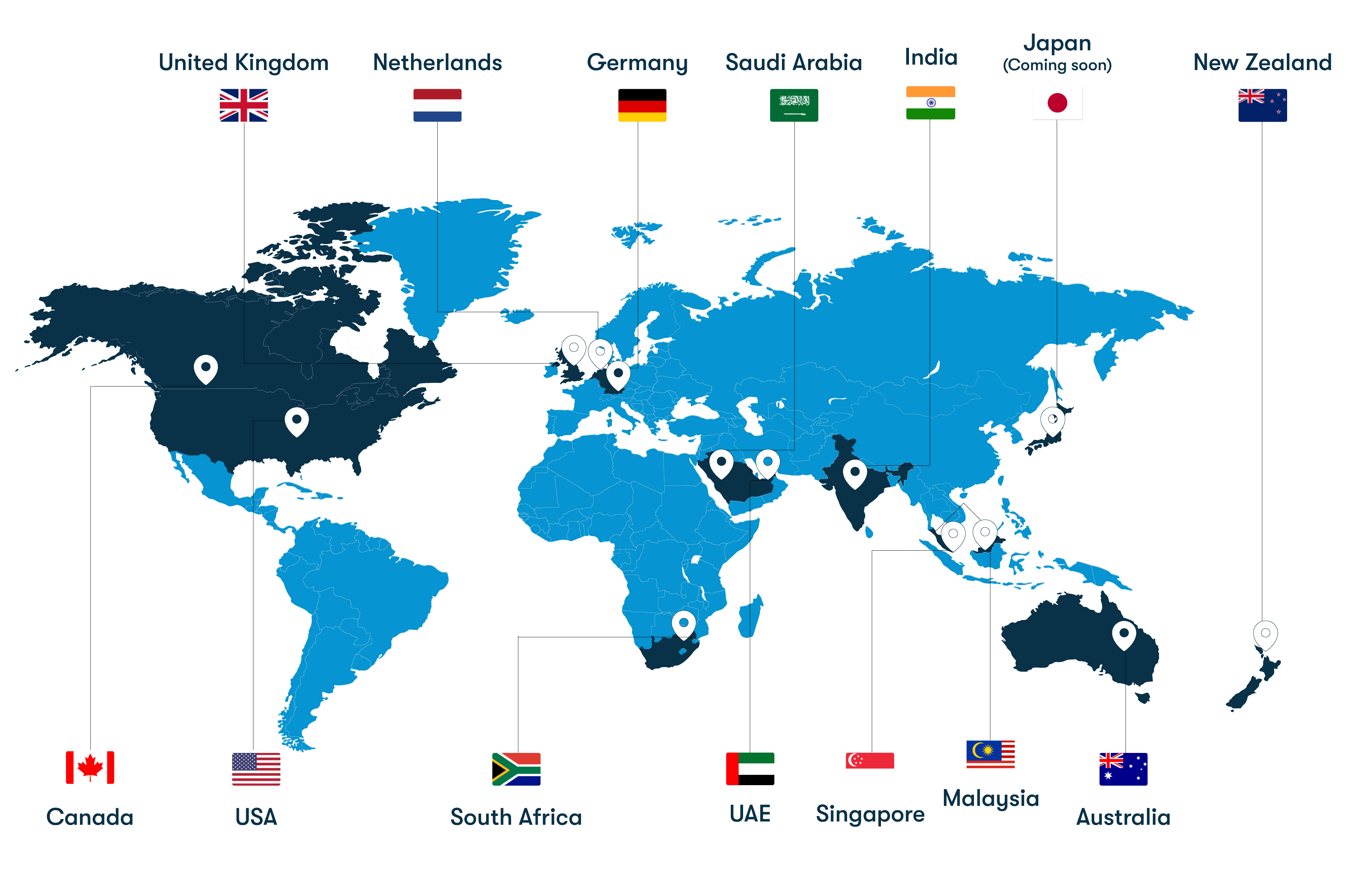
From our headquarters in India to training centers across UAE, Iraq, Saudi Arabia, UK, USA, Singapore, Australia, and more — Koenig delivers Microsoft certification training in 50+ countries.