
Unable to find what you're searching for?
We're here to help you find itKoenig Solutions offers Generative AI Platforms training, mastering RAG applications, LLM chains, and Unity Catalog governance to ensure success on the Databricks certification exam.


500K+ certified professionals
























Explore Generative AI Platforms certification and training courses — delivered live by certified instructors.
Generative AI Platforms are a category of artificial intelligence systems developed by Google to create original content such as text, images, code, and video by learning patterns from vast datasets. These platforms leverage foundation models like Gemini and Imagen, forming the core of Google's advanced AI ecosystem for enterprise and developer use. Key components include Gemini, a multimodal model for reasoning, chat, and code generation; Imagen, Google’s image generation model with enhanced prompt comprehension and SynthID watermarking; Veo for text-to-video and image-to-video creation; Chirp for speech-to-text conversion; and Model Garden, a curated library offering access to over 200 foundation, open, and third-party models for customization and deployment across diverse applications. This technology is designed for developers, data scientists, and enterprise AI teams who need scalable, secure, and customizable generative models integrated with grounding, function calling, and evaluation tools to build accurate, production-grade AI applications.
LLM Fundamentals
Explain transformer architecture, attention mechanisms, and tokenization processes
Prompt Engineering
Apply zero-shot, few-shot, and chain-of-thought prompting techniques effectively
Vector Data Handling
Design and query vector databases for retrieval-augmented generation workflows
Model Integration
Deploy and invoke foundation models via API using SDKs
AI Security Practices
Implement input validation, output filtering, and role-based access controls
GenAI Monitoring
Track latency, token usage, and model performance metrics in production
The building blocks every Generative AI Platforms solution is made of
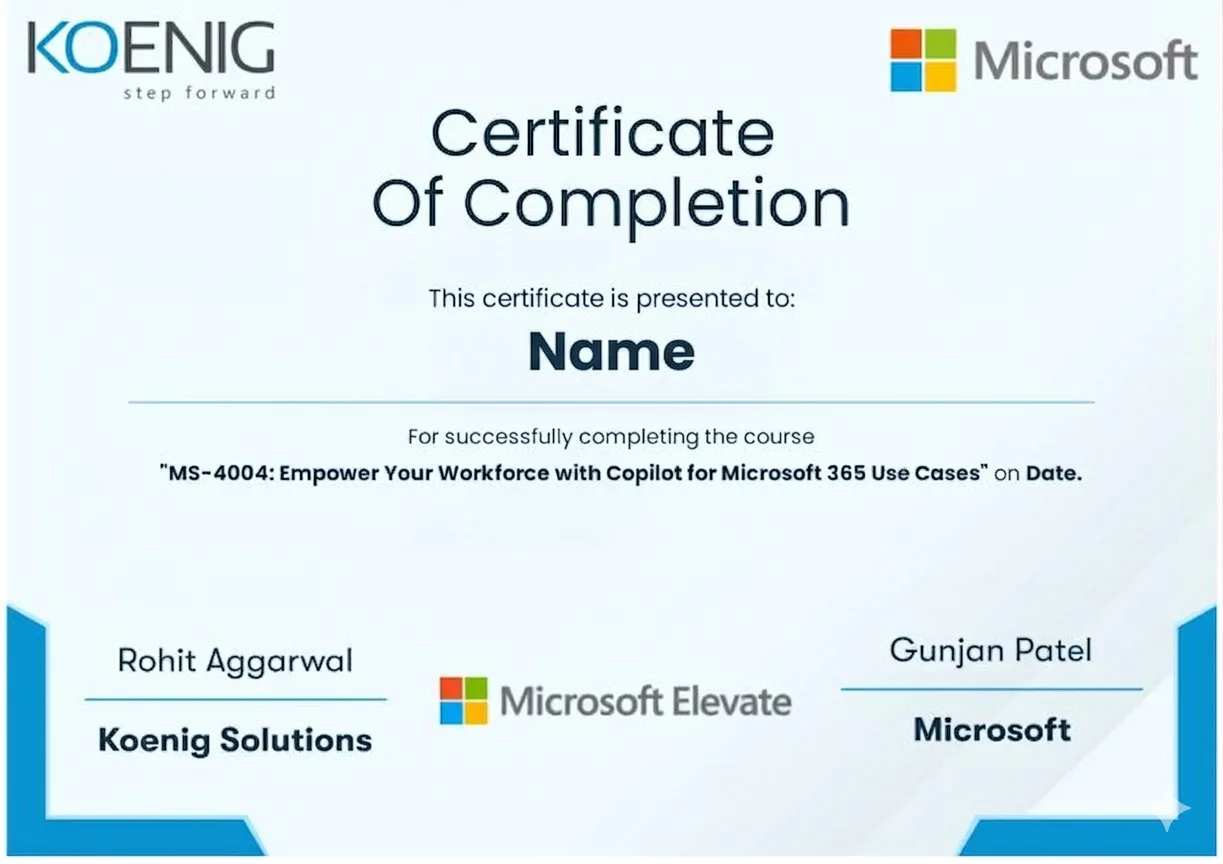
See what your official Generative AI Platforms certification looks like. Download a sample — then let our advisors map the fastest path to earning the real one.
 C1000-148IBM Certified Associate - AI Workflow V1
C1000-151IBM Certified Professional - Data Science V1
Databricks-Certified-Generative-AI-EngineerDatabricks Certified Generative AI Engineer
AI-102Microsoft Certified: Azure AI Engineer Associate
AWS-Certified-Machine-Learning-SpecialtyAWS Certified Machine Learning - Specialty
Google-Cloud-Professional-ML-EngineerGoogle Cloud Professional Machine Learning Engineer
Official credential badges — shareable on LinkedIn
C1000-148IBM Certified Associate - AI Workflow V1
C1000-151IBM Certified Professional - Data Science V1
Databricks-Certified-Generative-AI-EngineerDatabricks Certified Generative AI Engineer
AI-102Microsoft Certified: Azure AI Engineer Associate
AWS-Certified-Machine-Learning-SpecialtyAWS Certified Machine Learning - Specialty
Google-Cloud-Professional-ML-EngineerGoogle Cloud Professional Machine Learning Engineer
Official credential badges — shareable on LinkedIn
Four formats. One quality standard. Every option comes with the same expert instructors, official courseware, and money-back guarantee.
Every factor that determines whether you actually pass your Generative AI Platforms exam — rated across every training format available.
| Criteria | Koenig | ALP Provider | Legacy Provider | Self-Paced Platform | Free Platform |
|---|---|---|---|---|---|
| Trainer Expertise & Standards | |||||
| MCT-Certified Trainers | Partial | ✘ | ✘ | ✘ | |
| Live Instructor-Led Delivery | ✘ | ✘ | |||
| 1-on-1 Private Training | Partial | ✘ | ✘ | ||
| Official Partner Programs | |||||
| Official ALP Status | ✘ | ✘ | ✘ | ||
| Official Courseware Product | Partial | ✘ | |||
| Training Credits Accepted | ✘ | ✘ | ✘ | ||
| Learning Flexibility | |||||
| Any-Day/Flexi Start | Partial | ✘ | |||
| On-Site or Fly-Me Trainer | Partial | ✘ | ✘ | ||
| Global Delivery Reach | Partial | ||||
| Performance & Value | |||||
| Exam Pass Rate | ✘ | ✘ | ✘ | ✘ | |
| Entry Price (Fundamentals) | ~$745 · best value | ~$1,500+ | $15-30/mo | Free | Free |
| Verified Learner Reviews | 18,400+ · 4.9★ | Limited | N/A | N/A | N/A |
Data sourced from public pricing pages and review platforms. Accurate as of March 2026. Partial = available in select regions only.
Verified reviews from learners certified on Azure, AI, Security, and more.
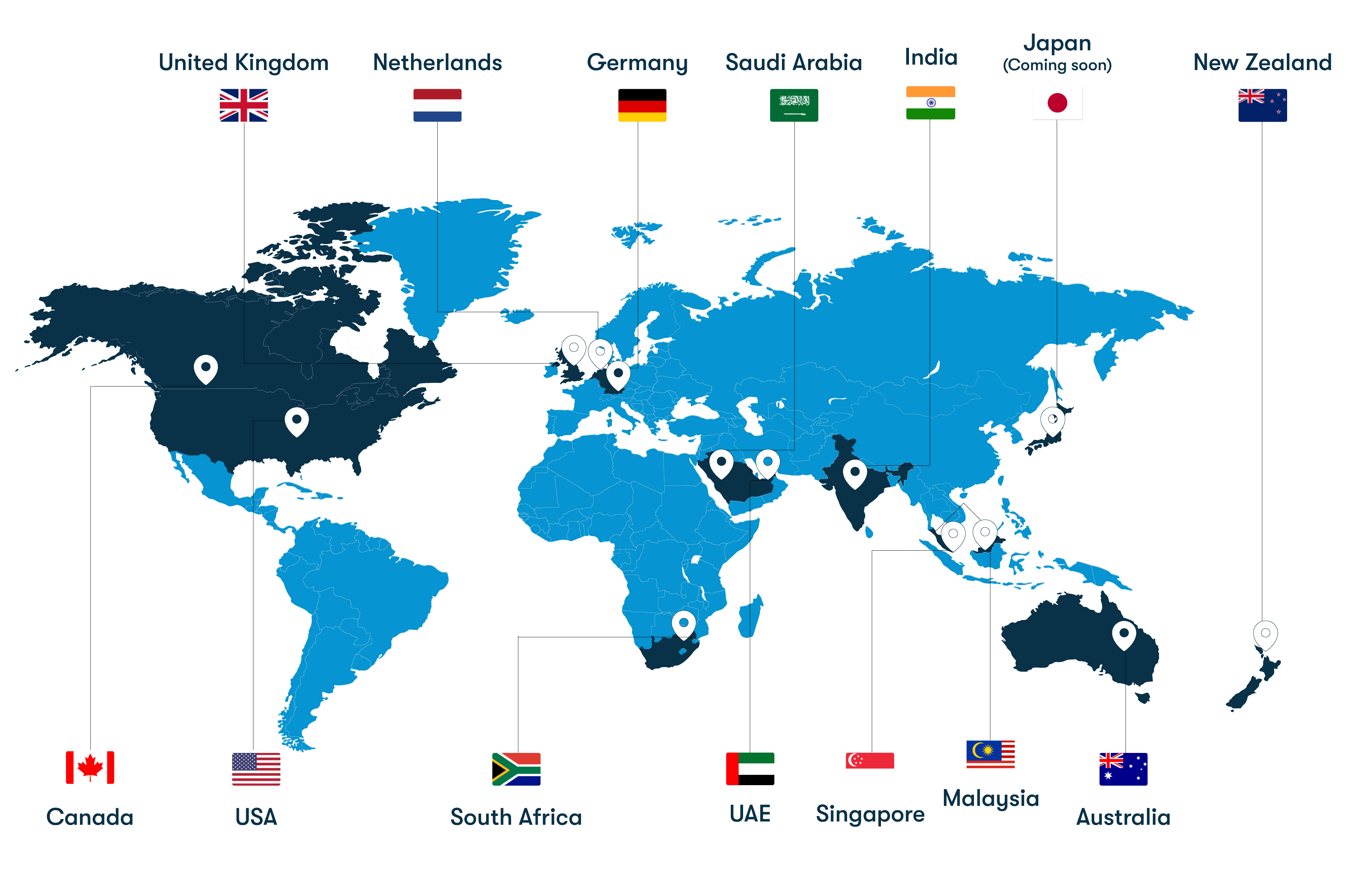
From our headquarters in India to training centers across UAE, Iraq, Saudi Arabia, UK, USA, Singapore, Australia, and more — Koenig delivers Microsoft certification training in 50+ countries.