
Unable to find what you're searching for?
We're here to help you find itMaster ARM and RISC-V assembly with Koenig. Build optimized code and interface with C-libraries through hands-on labs to earn your industry-recognized Assembly Programming certification today.


500K+ certified professionals

























Explore Assembly Programming certification and training courses — delivered live by certified instructors.
Assembly Programming is a low-level programming language that provides a direct, human-readable representation of machine code instructions, enabling precise control over hardware operations. It serves as the foundational layer for system-level programming, allowing developers to write highly optimized and efficient code tailored to specific processor architectures such as x86, ARM, or RISC-V. Key components include GNU Assembler (GAS), used widely in Unix-like systems for assembling code written in AT&T syntax; NASM (Netwide Assembler), known for its Intel syntax and popular in x86 architecture development; MASM (Microsoft Macro Assembler), designed for Windows platform development; ARM Assembler, utilized in embedded systems and mobile device programming; and FASM (Flat Assembler), favored for its self-hosting capability and high performance in generating compact code. This technology is for software engineers, reverse engineers, firmware developers, and security researchers who require fine-grained control over hardware resources, need to optimize performance-critical applications, or work at the operating system and driver level where high-level languages are impractical.
Programming Fundamentals
Write programs using control structures and functions in a high-level language like C
Binary and Hexadecimal
Convert between decimal, binary, and hexadecimal number systems fluently
CPU Architecture Basics
Identify registers, program counter, stack pointer, and instruction execution cycle
Memory Concepts
Explain pointers, memory addresses, stack frames, and basic memory layout
Command-Line Tools
Use terminal commands to compile, link, and debug programs on Linux or WSL
Debugging Experience
Trace program flow and inspect variables using a debugger like GDB
The building blocks every Assembly Programming solution is made of
See what your official Assembly Programming certification looks like. Download a sample — then let our advisors map the fastest path to earning the real one.
 IBM-Z-Mainframe-PractitionerIBM Z Mainframe Practitioner
CompTIA-Security-PlusCompTIA Security+
IBM-Z-Xplore-ConceptsIBM Z Xplore Concepts
IBM-Z-Mainframe-DeveloperIBM Z Mainframe Developer
CompTIA-Linux-PlusCompTIA Linux+
IBM-Z-Mainframe-SpecialistIBM Z Mainframe Specialist
Official credential badges — shareable on LinkedIn
IBM-Z-Mainframe-PractitionerIBM Z Mainframe Practitioner
CompTIA-Security-PlusCompTIA Security+
IBM-Z-Xplore-ConceptsIBM Z Xplore Concepts
IBM-Z-Mainframe-DeveloperIBM Z Mainframe Developer
CompTIA-Linux-PlusCompTIA Linux+
IBM-Z-Mainframe-SpecialistIBM Z Mainframe Specialist
Official credential badges — shareable on LinkedIn
Four formats. One quality standard. Every option comes with the same expert instructors, official courseware, and money-back guarantee.
Every factor that determines whether you actually pass your Assembly Programming exam — rated across every training format available.
| Criteria | Koenig | Free Platform | Note | Self-Paced Platform | ALP Provider | Legacy Provider |
|---|---|---|---|---|---|---|
| Technical Curriculum Depth | ||||||
| Architecture Coverage (x86 vs ARM) | Comprehensive | Limited | Evaluates breadth of instruction across modern CPU architectures. | Variable | Comprehensive | x86 Only |
| Toolchain Familiarity (NASM, MASM, GAS) | Full Suite | Minimal | Assesses coverage of standard assemblers and linkers. | Limited | Full Suite | Partial |
| Hands-on Debugging Support | GDB/LLDB Labs | Measures integration of interactive debugging exercises. | GDB/LLDB Labs | Basic | ||
| Pedagogical Support | ||||||
| Average hours of lab time | 40+ Hours | 0 Hours | Quantifies practical application time per course. | Variable | 35+ Hours | 20 Hours |
| Debugger integration | High | Depth of real-time code analysis tools provided. | Low | High | Medium | |
| Platform-specific documentation support | Extensive | Community-only | Availability of curated technical reference materials. | Low | Extensive | Moderate |
| Access and Flexibility | ||||||
| Live Instructor Access | Availability of real-time Q&A for complex low-level concepts. | |||||
| Customizable Curriculum | Ability to tailor Assembly Programming content to specific needs. | |||||
| Lab Environment Access | Cloud-based | Provision of pre-configured environments for Assembly coding. | Local-only | Cloud-based | Local-only | |
| Trust and Outcomes | ||||||
| Industry Alignment | High | Low | Relevance of Assembly Programming skills to current industry standards. | Low | High | Medium |
| Certification/Completion Proof | Verified | Formal recognition of course completion. | Verified | Certificate | ||
| Post-Course Support | Mentorship | Ongoing guidance for Assembly Programming learners. | Mentorship | |||
Data sourced from public pricing pages and review platforms. Accurate as of March 2026. Partial = available in select regions only.
Verified reviews from learners certified on Azure, AI, Security, and more.
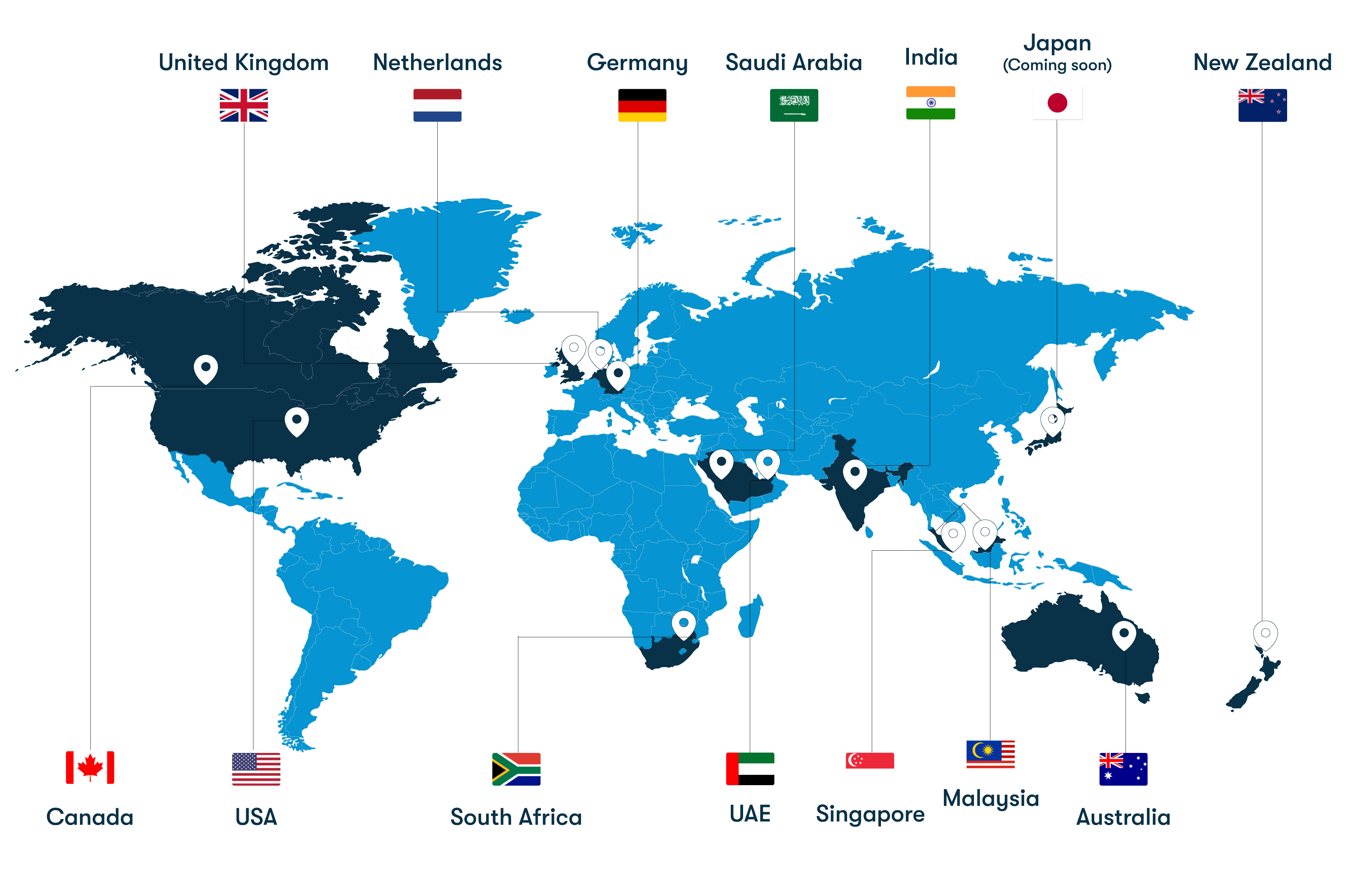
From our headquarters in India to training centers across UAE, Iraq, Saudi Arabia, UK, USA, Singapore, Australia, and more — Koenig delivers Microsoft certification training in 50+ countries.