
Unable to find what you're searching for?
We're here to help you find itMaster AI-Driven Generative Design with Koenig. Optimize lightweight manufacturing models in Fusion 360 through expert-led training, hands-on labs, and preparation for official Autodesk certification exams.


500K+ certified professionals



























Explore AI-Driven Generative Design certification and training courses — delivered live by certified instructors.
Course — AI-Driven Generative Design | Vendor: Autodesk | Section: course_overview AI-Driven Generative Design by Autodesk is an algorithmic methodology that automatically generates optimized design alternatives based on performance, material, and manufacturing constraints. Part of the Fusion platform, this technology integrates simulation and manufacturing workflows to enable rapid exploration of high-performance solutions. Generative Design can reduce part weight by up to 30% while maintaining structural integrity. By automating design exploration, it allows mechanical engineers and product designers to bypass manual iteration and achieve complex, production-ready results. This course empowers professionals to leverage machine learning to optimize for cost and strength, ultimately accelerating innovation beyond traditional design patterns through seamless integration with downstream fabrication processes.
Fusion 360 Navigation
Navigate the Fusion 360 interface and transition between environments
3D Modeling Fundamentals
Create sketches, extrusions, lofts and revolved features in Fusion 360
Assembly Management
Create and manage assemblies with joints and motion in Fusion 360
Generative Study Setup
Define materials, loads, constraints and manufacturing methods for studies
Form and Mesh Tools
Edit form bodies and manipulate mesh geometry using T-splines
Design Outcome Review
Solve, explore and post-process generative design outcomes in Fusion 360
The building blocks every AI-Driven Generative Design solution is made of
See what your official AI-Driven Generative Design certification looks like. Download a sample — then let our advisors map the fastest path to earning the real one.
 AC-GDFMAutodesk Certified Professional: Generative Design for Manufacturing
DSE-3DEXP3DEXPERIENCE Generative Designer
AWS-ML-SPECAWS Certified Machine Learning - Specialty
GCP-ML-ENGProfessional Machine Learning Engineer
DL-AI-GENAIGenerative AI with Large Language Models
MS-AI-ENGMicrosoft Certified: Azure AI Engineer Associate
Official credential badges — shareable on LinkedIn
AC-GDFMAutodesk Certified Professional: Generative Design for Manufacturing
DSE-3DEXP3DEXPERIENCE Generative Designer
AWS-ML-SPECAWS Certified Machine Learning - Specialty
GCP-ML-ENGProfessional Machine Learning Engineer
DL-AI-GENAIGenerative AI with Large Language Models
MS-AI-ENGMicrosoft Certified: Azure AI Engineer Associate
Official credential badges — shareable on LinkedIn
Four formats. One quality standard. Every option comes with the same expert instructors, official courseware, and money-back guarantee.
Every factor that determines whether you actually pass your AI-Driven Generative Design exam — rated across every training format available.
| Criteria | Koenig | Free Platform | Self-Paced Platform | ALP Provider | Legacy Provider | Note |
|---|---|---|---|---|---|---|
| Trainer Expertise and Credentials | ||||||
| MCT-Certified Trainers | ✘ | ✘ | ✘ | — | ||
| Live instructor-led delivery | ✘ | ✘ | Partial | — | ||
| 1-on-1 private training | ✘ | ✘ | ✘ | ✘ | — | |
| Autodesk Authorization Standards | ||||||
| Official Autodesk ALP Status | ✘ | ✘ | ✘ | — | ||
| Autodesk Official Courseware | ✘ | Partial | — | |||
| ESI / EA Credits Accepted | ✘ | ✘ | ✘ | — | ||
| Flexibility and Global Access | ||||||
| Any-day / Flexi start | ✘ | ✘ | — | |||
| On-site / Fly-me-a-trainer | ✘ | ✘ | ✘ | Partial | — | |
| Global delivery reach | Partial | — | ||||
| Results and Trust Signals | ||||||
| Exam pass rate | ✘ | ✘ | ✘ | ✘ | Row omitted on live page: unverified for this vendor | |
| Entry price (fundamentals) | ~$745 · best value | Free | $199/mo | ~$1,500+ | Limited | — |
| Verified learner reviews | 18,400+ · 4.9★ | N/A | N/A | Partial | Limited | — |
Data sourced from public pricing pages and review platforms. Accurate as of March 2026. Partial = available in select regions only.
Verified reviews from learners certified on Azure, AI, Security, and more.
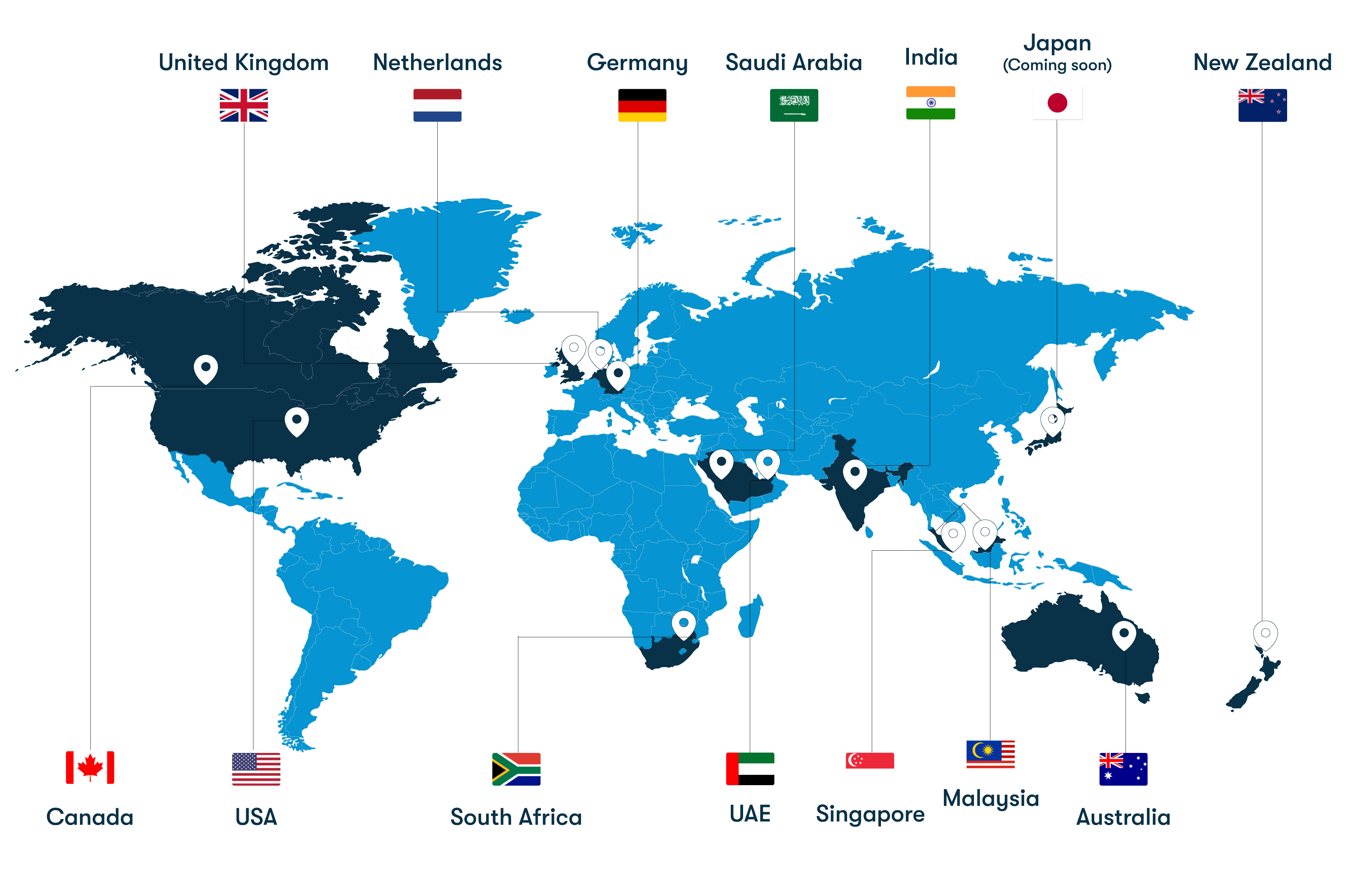
From our headquarters in India to training centers across UAE, Iraq, Saudi Arabia, UK, USA, Singapore, Australia, and more — Koenig delivers Microsoft certification training in 50+ countries.